
How to Manage Street Lighting Gateway Nodes?

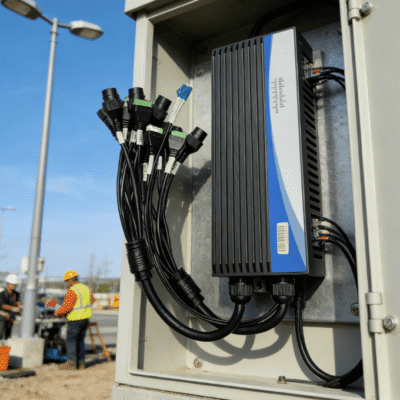
Efficiently managing a street lighting gateway requires a combination of robust hardware integration and cloud-based software oversight. To manage these nodes successfully, administrators must prioritize protocol standardization, real-time data monitoring, and automated maintenance alerts. By utilizing a centralized management system, city operators can reduce energy consumption by up to 30% through precision dimming schedules.
The primary role of the gateway is to bridge the gap between individual light controllers and the central server. Managing these nodes involves configuring communication parameters, ensuring secure data transmission, and monitoring signal strength. A well-managed street lighting gateway can support over 500 individual light nodes within a 5-kilometer radius using LoRaWAN or Zigbee technologies.
If the network experiences downtime, the gateway acts as the first line of defense. Proper node management ensures that local schedules continue to operate even if the backhaul connection fails. Implementing autonomous edge-computing capabilities within the gateway improves system reliability by 40% compared to purely cloud-dependent systems.
Optimizing a Smart Street Light Gateway for Centralized Control
A smart street Light gateway serves as the brain of modern urban lighting infrastructure. To manage these units effectively, operators must first establish a stable backhaul connection via 4G, 5G, or Ethernet. Optimizing the data polling interval is critical for balancing real-time responsiveness with network bandwidth costs.
System administrators should use specialized software to group nodes based on geographical zones or traffic density. This allows for bulk configuration updates and synchronized dimming profiles across entire districts. Automated fault detection algorithms can identify failed lamps within 60 seconds, reducing the need for manual night-time patrols.
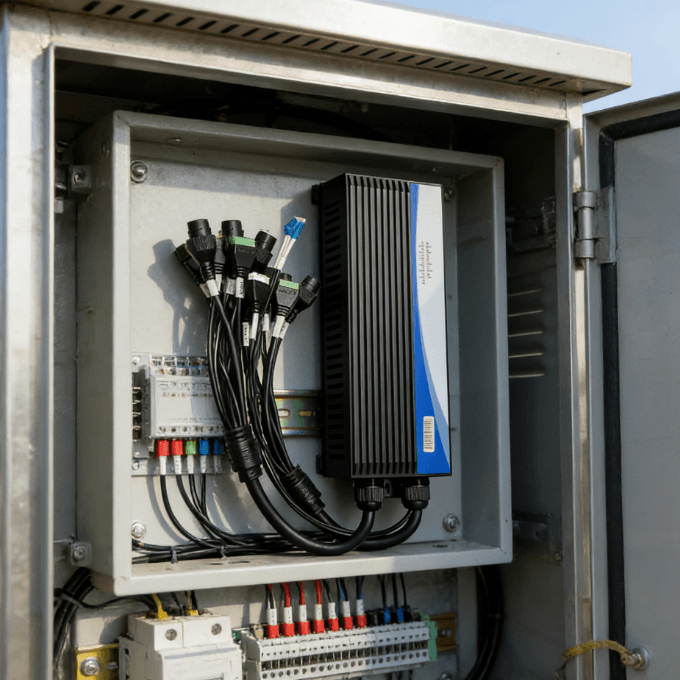
Configuration and Protocol Selection
Choosing the right communication protocol is the foundation of node management. Common choices include LoRaWAN for long-range connectivity or NB-IoT for deep urban penetration. Selecting an open-standard protocol like TALQ ensures interoperability between different hardware vendors and software platforms.
- Identify the transmission range requirements for the specific urban layout.
- Configure the gateway to filter redundant data packets to save energy.
- Set up AES-128 or higher encryption to protect the network from unauthorized access.
- Establish a secondary failover connection to ensure constant uptime.
- Validate the node registration process to prevent “orphan” nodes from losing connectivity.
Remote Firmware Management
Managing thousands of nodes manually is impossible in a large-scale deployment. A smart street Light gateway must support Over-the-Air (OTA) updates for both its own firmware and the connected light controllers. Regular firmware updates can improve battery life for wireless nodes by 15% through optimized sleep cycles.
Choosing the Right Gateway for Wireless Street Lighting Systems
A gateway for wireless street lighting must handle environmental stress while maintaining signal integrity. Management starts at the physical installation phase, ensuring that the antenna is positioned away from large metal obstructions. Signal interference can reduce the effective communication range by 50% if the gateway is placed too close to high-voltage transformers.
Operators must monitor the “Received Signal Strength Indicator” (RSSI) for every connected node. If a node consistently shows low RSSI, it may require a repeater or a more powerful antenna at the gateway. Maintaining an average Signal-to-Noise Ratio (SNR) above 5dB is essential for stable long-term wireless operations.
Environmental and Power Considerations
Gateway nodes are often exposed to extreme weather conditions and fluctuating power supplies. Professional management involves installing surge protectors and backup batteries to prevent hardware damage during electrical storms. Industrial-grade gateways with an IP67 rating can withstand heavy rain and dust without performance degradation.
- Operating Temperature: Ensure the unit can function between -40°C and +70°C.
- Power Consumption: Monitor the idle power draw to keep operational costs low.
- Mounting Height: Standardize installation at 6 to 10 meters for optimal line-of-sight.
- Material Quality: Use UV-resistant enclosures to prevent cracking and water ingress over time.
- Backup Connectivity: Integrate a dual-SIM slot for cellular redundancy in critical areas.
Scaling the Wireless Network
As city needs grow, the gateway for wireless street lighting must be scalable. Effective management includes periodic network audits to determine if additional gateways are needed to prevent congestion. Network density should not exceed the maximum packet-per-second limit of the gateway to avoid data collisions.
Maintaining Stability in a Street Light Control Gateway
A street light control gateway must be treated as a critical piece of IoT infrastructure. Management involves setting up comprehensive dashboards that visualize node health, energy usage, and sensor data. Real-time monitoring reduces the Mean Time to Repair (MTTR) by providing technicians with exact fault locations.
Security is a paramount concern when managing control nodes. Access logs should be reviewed weekly to identify any unauthorized attempts to manipulate the lighting schedules. Multi-factor authentication (MFA) for administrative access reduces the risk of malicious system overrides by 99%.
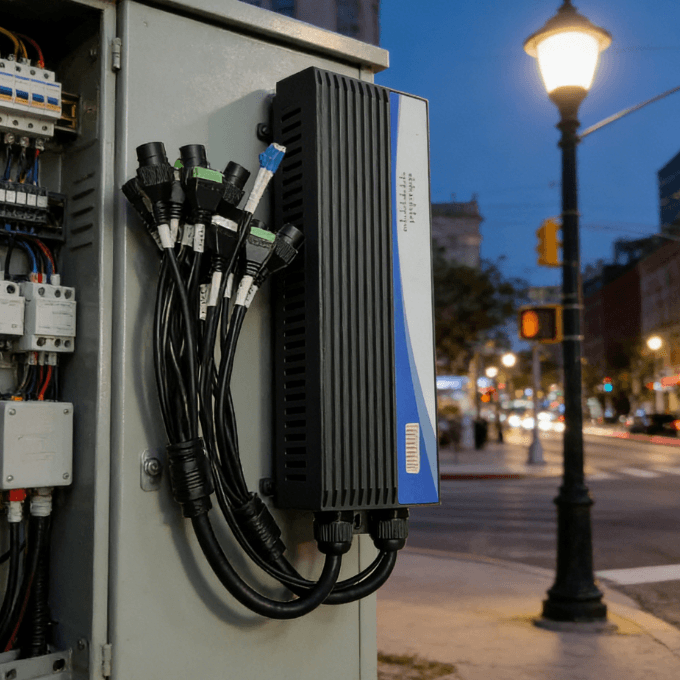
Troubleshooting Signal Obstructions
In dense urban environments, new construction can suddenly block previously clear signal paths. Effective management includes dynamic routing protocols that allow nodes to “mesh” or find alternative paths to the gateway. A self-healing mesh network can maintain 98% connectivity even if 10% of the nodes fail.
Solving Issues with a Street Lights Out Harbor Gateway
Specialized environments like ports require a high-reliability street lights out harbor gateway approach. Saline air and high humidity in harbors accelerate the corrosion of electronic components. Applying conformal coatings to the internal circuit boards extends the gateway’s lifespan by 3 to 5 years in coastal areas.
- Inspect harbor gateway nodes every six months for signs of salt corrosion.
- Use high-gain omnidirectional antennas to cover long, narrow piers and docks.
- Implement localized logic so harbor lights stay on if the main network goes down.
- Monitor vibration levels from heavy machinery to ensure mounting brackets stay secure.
- Coordinate with port security to ensure gateways do not interfere with radar systems.
Selecting Professional Smart Pole Solutions
Managing a gateway is significantly easier when the hardware is designed for integration. When choosing a street lighting gateway, B2B buyers should look for “Smart Pole” designs that combine lighting, connectivity, and sensing in one unit. This modularity reduces the complexity of node management by centralizing all peripherals through a single gateway interface.
High-quality connectivity solutions should offer multi-protocol support to accommodate future sensor additions like air quality monitors or CCTV cameras. It is vital to evaluate the software ecosystem provided by the manufacturer. Visit the Smart Light Pole Solutions category to understand how modern gateways integrate into comprehensive city management platforms.
Choosing a vendor that provides both hardware and a robust management API is essential for long-term scalability. This ensures that your gateway can evolve with the city’s needs without requiring a full hardware replacement. Standardizing your infrastructure with a reliable partner simplifies the training process for maintenance staff and ensures consistent system performance.
Summary
Managing a street lighting gateway effectively centers on proactive monitoring and standardized communication protocols. By focusing on OTA updates, RSSI optimization, and physical environmental protection, operators can ensure a 99.9% system uptime. Ultimately, a well-managed gateway network reduces operational costs, enhances public safety, and provides the foundation for broader smart city initiatives.
FAQ
1. How many nodes can a single street lighting gateway manage?
A single gateway can typically manage between 200 and 1,000 nodes. This number depends heavily on the communication protocol used and the frequency of data transmission. For example, LoRaWAN gateways can handle high node counts but with less frequent data updates compared to 5G nodes.
2. What happens if a street light control gateway loses its internet connection?
The gateway should have localized intelligence to continue running the pre-programmed lighting schedules. Most professional gateways store a local copy of the dimming calendar, ensuring that the “street lights out” scenario does not occur simply due to a temporary network outage.
3. Can I use different lamp brands with one smart street Light gateway?
Yes, provided that both the lamps and the gateway support an open communication standard. Standards such as the TALQ protocol or generic LoRaWAN allow for interoperability between different hardware brands within a single management platform.
4. What is the typical range of a gateway for wireless street lighting?
In an urban environment with many buildings, the range is typically 1 to 3 kilometers. In open areas, such as long highways or rural roads, the signal can reach up to 10 or 15 kilometers using low-power wide-area network (LPWAN) technologies.
5. How do I protect harbor gateways from corrosion?
Gateways used in harbor areas should have an IP67 or IP68 waterproof rating and a salt-spray resistant coating. It is also recommended to use stainless steel mounting hardware and N-type connectors with weatherproofing kits to prevent moisture ingress into the antenna cables.
Reference Sources
TALQ Consortium – Smart City Protocol Standards and Interoperability.
LoRa Alliance – LoRaWAN Specifications for Smart City Connectivity.
IEEE – Standards for Wireless Communication and IoT Infrastructure.