
What are Industrial Communication Protocols?

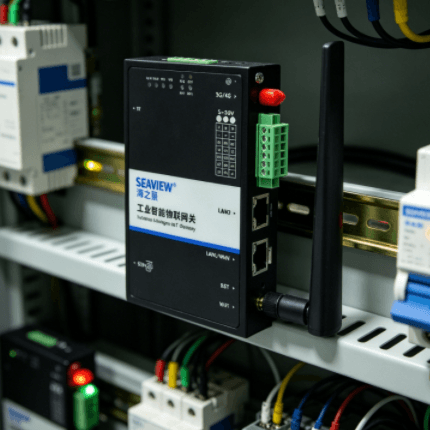
Industrial communication protocols represent the backbone of modern automated systems. They are specialized sets of rules for digital data exchange between devices. These standards allow sensors and controllers to interact reliably in harsh environments. In 2026, these protocols are more critical than ever for global manufacturing.
Digital transformation requires a seamless flow of data across the factory floor. These protocols define how information packets are structured and transmitted. They also manage error correction to prevent dangerous system failures. Choosing the correct protocol is essential for building a scalable network.
Reliability is the primary requirement for any industrial-grade network. Standard office networks focus mostly on high bandwidth and raw speed. Industrial systems prioritize deterministic communication and extremely low latency. This ensures that every command reaches its destination at the exact millisecond required.
What are Industrial Communication Protocols and Why Do They Matter?
Industrial communication protocols provide the synchronization needed for complex robotic tasks. They eliminate the need for thousands of individual manual wires. A single digital cable can now carry massive amounts of data. This significantly reduces installation costs and simplifies maintenance for engineers.
Security has become a major focus for protocol developers in 2026. Many modern standards now include native encryption and device authentication. These features protect sensitive production data from external cyber threats. Secure communication is vital as more factories connect to global cloud networks.
Interoperability allows equipment from different manufacturers to work together seamlessly. Engineers can select the best hardware for their specific production needs. This flexibility prevents vendor lock-in and reduces overall capital expenditure. It also makes upgrading older machinery much more cost-effective.
Data accuracy is another critical benefit of using standardized protocols. These systems use advanced checksums to verify every piece of information. This prevents corrupted data from causing machine errors or product defects. High data integrity is a requirement for modern quality control standards.
The physical layer of these protocols has evolved significantly recently. While serial connections were once the standard, Ethernet now dominates the market. Most factories in 2026 utilize a mix of wired and wireless solutions. This hybrid approach offers the best balance of speed and mobility.
Key Types of Industrial Communication Protocols in 2026
Modbus is one of the most enduring industrial communication protocols available today. It was originally developed in 1979 for programmable logic controllers (PLCs). Its simplicity makes it very easy to deploy on basic hardware. It remains a top choice for simple sensor monitoring tasks.
Profinet is a leading Ethernet-based standard used in high-speed automation. It offers excellent performance for motion control and complex robotics. Profinet supports advanced diagnostics and functional safety features natively. It is widely adopted across European and Asian manufacturing sectors.
EtherNet/IP is another dominant protocol in the current industrial landscape. It utilizes the Common Industrial Protocol (CIP) over standard Ethernet layers. This makes it highly compatible with existing corporate IT infrastructure. It is the preferred standard for North American automotive industries.
EtherCAT is famous for its incredible speed and processing efficiency. It uses a unique “processing on the fly” method for data. This allows for cycle times often measured in mere microseconds. It is ideal for high-precision machining and high-speed packaging lines.
| Protocol Type | Speed (Typical) | Main Advantage | Industry Focus |
| Modbus RTU | 115.2 kbps | Simple & Low Cost | Energy & Water |
| Profinet | 100 Mbps – 1 Gbps | High Performance | Automotive |
| EtherCAT | 100 Mbps | Ultra-low Latency | Robotics |
| EtherNet/IP | 100 Mbps | IT Compatibility | Food & Beverage |
How Do Industrial Communication Protocols Support IIoT?
The Industrial Internet of Things (IIoT) requires highly efficient data standards. Traditional protocols are sometimes too heavy for small battery-powered sensors. New industrial communication protocols focus on minimizing power and bandwidth usage. They allow data to travel from the edge to the cloud.
MQTT is a lightweight messaging protocol designed for high-latency connections. It uses a publish-subscribe model to reduce network congestion. This is perfect for remote monitoring of oil and gas pipelines. It ensures that critical alerts are delivered even over weak signals.
OPC UA serves as a secure, vendor-neutral bridge for data exchange. It provides a rich data model that describes information context. This makes it easier for AI software to analyze production trends. Standardized data modeling is the key to achieving true smart manufacturing.
Wireless protocols are also expanding their footprint in 2026 facilities. These systems replace bulky physical cables with reliable radio or cellular signals. They are essential for autonomous mobile robots (AMRs) and rotating equipment. Reliable wireless connectivity reduces physical wear and installation time.
Latency in IIoT applications must be carefully managed for safety. While cloud analysis can be slow, local control must remain fast. Modern protocols often use edge computing to process data locally. This hybrid architecture ensures both deep insights and immediate machine response.
Choosing the Right Connectivity Hardware for Your Infrastructure
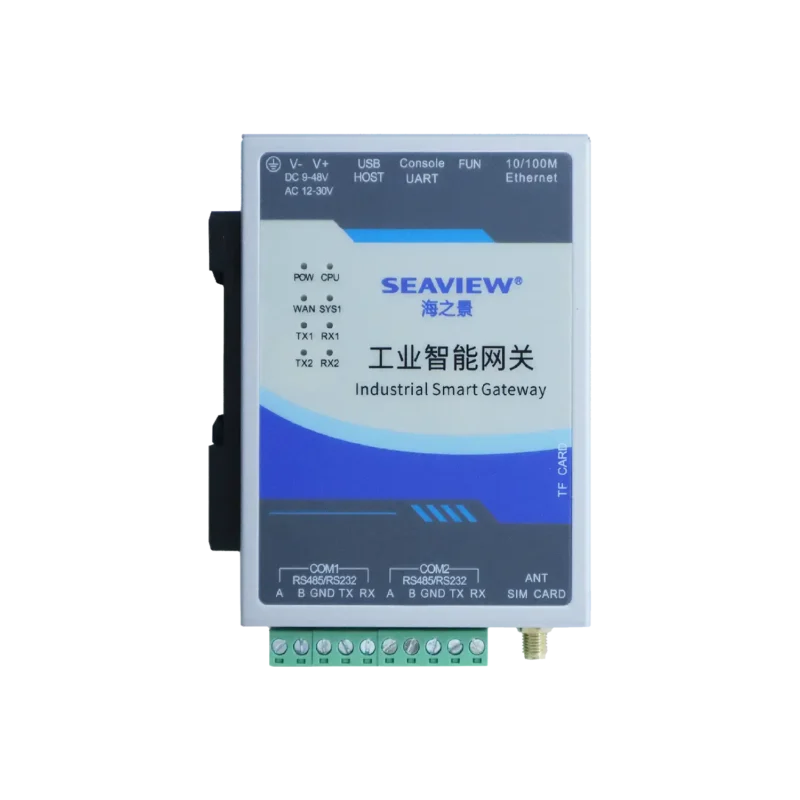
Selecting the correct hardware is just as vital as the protocol. You must decide if your application requires local or remote connectivity. High-performance 4G/5G edge computing gateways are excellent for complex protocol conversion. They can bridge the gap between legacy factory machines and the cloud.
The operating environment is a major factor in hardware longevity. Industrial sites often face extreme temperatures and heavy electrical noise. You should always choose devices with ruggedized industrial-grade certifications. This ensures stable operation in dusty or high-vibration manufacturing zones.
For remote serial equipment, industrial wireless data terminals (DTU) offer a perfect solution. They provide transparent data transmission over reliable cellular networks. These terminals are simple to install and require minimal ongoing maintenance. They are ideal for monitoring geographically dispersed assets.
Power consumption is another critical consideration for remote industrial sites. Low-power hardware helps extend the life of battery-operated sensor nodes. You should evaluate the power efficiency of your gateways and terminals. Efficient hardware reduces the frequency of site visits for battery replacement.
Scale and density of devices will dictate your hardware needs. A large factory may require gateways that handle hundreds of simultaneous connections. Always verify that your chosen hardware supports the specific protocols you use. Compatibility between hardware and software is the foundation of network uptime.
High-Performance Networking Standards and Data Trends
In 2026, data throughput requirements have reached record high levels. Industrial Ethernet now accounts for over 68% of new node installations. This shift is driven by the need for real-time video and analytics. Older serial-based systems are slowly being phased out for these faster alternatives.
Time-Sensitive Networking (TSN) is the latest evolution of standard Ethernet. It allows deterministic and non-deterministic traffic on the same physical wire. This convergence simplifies the overall network architecture significantly. TSN is becoming a standard feature in many high-end industrial controllers.
| Metric | 2020 Estimate | 2026 Projection |
| Industrial Ethernet Share | 52% | 68% |
| Wireless Node Growth | 12% CAGR | 22% CAGR |
| Average Network Latency | 10-50 ms | < 1 ms (TSN/5G) |
| Cyber-Security Adoption | 35% | 85% |
Security protocols like TLS and IPsec are now common in factory networks. These layers encrypt data as it moves between different production cells. This prevents unauthorized users from intercepting or altering sensitive control commands. Protecting the integrity of the control loop is a top priority.
Cloud integration is no longer an optional feature for modern factories. Most protocols now include direct hooks for AWS, Azure, or private clouds. This allows managers to monitor production status from anywhere in the world. Real-time visibility is the biggest competitive advantage in the 2026 market.
Summary
Industrial communication protocols are the essential languages that enable machine-to-machine connectivity. They provide the reliability, speed, and security required for modern 2026 automation. From Modbus to EtherCAT, these standards allow factories to operate with maximum efficiency. Proper protocol and hardware selection are the keys to successful digital transformation.
FAQ
1. Which industrial communication protocol is best for high-speed motion control?
EtherCAT is generally considered the best protocol for high-speed motion control. It offers sub-millisecond cycle times and extremely low jitter for precision tasks.
2. Can I use standard Wi-Fi for critical industrial communication?
Standard Wi-Fi is usually not recommended for critical real-time control. Industrial-grade wireless or 5G should be used to ensure the necessary reliability and latency.
3. What is the main difference between Modbus RTU and Modbus TCP?
Modbus RTU uses serial communication lines like RS-485 for data transmission. Modbus TCP uses standard Ethernet networks to carry the same data structure.
4. How does a gateway help with different industrial communication protocols?
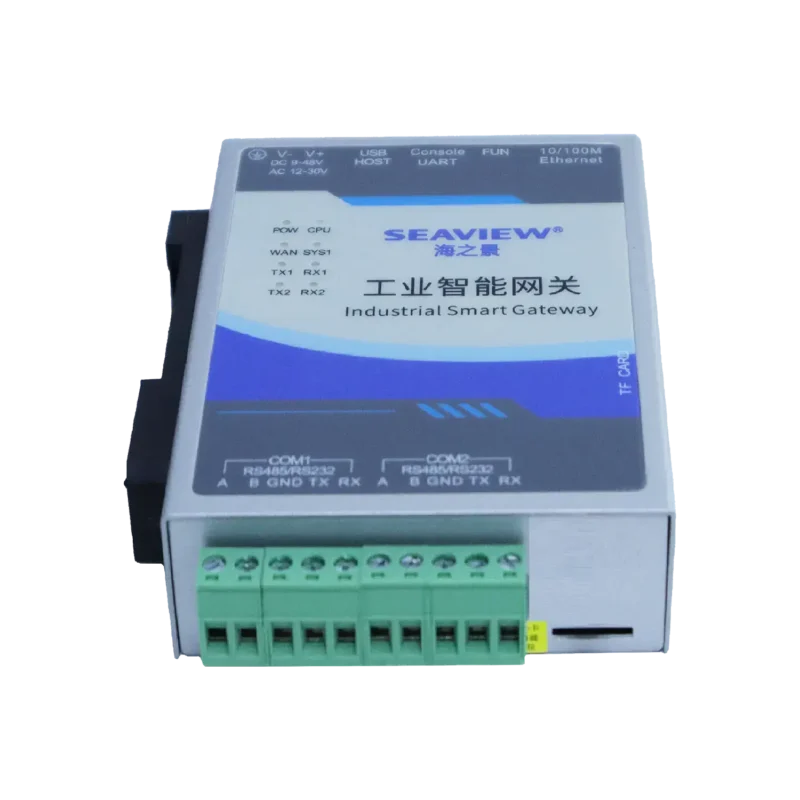
A gateway acts as a translator between two different communication standards. It allows a Modbus sensor to talk to a Profinet controller or a cloud database.
5. Why is the transition to Industrial Ethernet happening so quickly in 2026?
The transition is driven by the need for higher bandwidth and better IT integration. Industrial Ethernet supports more data and faster speeds than traditional serial protocols.
Reference Sources
International Electrotechnical Commission (IEC) – Industrial Communication Networks