
How to Fix Industrial IoT Gateway Cloud Latency ?

Fixing latency in an industry iot gateway for cloud connectivity requires a strategic combination of edge processing, protocol optimization, and high-speed network hardware. High latency typically stems from network congestion, excessive packet overhead, or the physical distance between the gateway and the cloud server. To solve this, you must move critical data processing to the edge and utilize a high-performance industrial iot 4g lte router gateway. By filtering data locally before transmission, you reduce the volume of traffic sent over the wide area network (WAN). This ensures that critical industrial alerts reach the cloud in milliseconds rather than seconds.
Industrial environments often operate in remote or high-interference areas where standard connectivity fails. A primary fix involves upgrading to hardware that supports low-latency communication protocols like MQTT or CoAP. These protocols use a publish-subscribe model that is significantly lighter than traditional HTTP requests. Recent industry studies show that edge computing can reduce data traffic by up to 80%, directly lowering latency. Furthermore, implementing an industrial iot gateway with gnss and gps allows for precise data timestamping. This synchronization ensures that the cloud receives sequenced data, preventing lag caused by reordering packets.
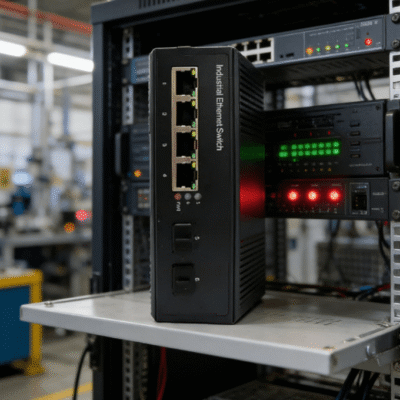
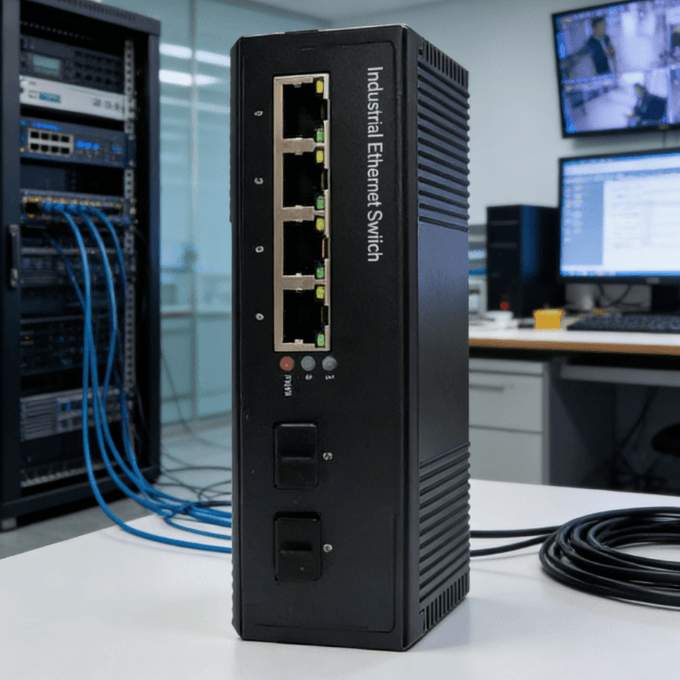
Network hardware quality is the final pillar in reducing communication delays. Even the best gateway fails if the local area network (LAN) is bottlenecked by consumer-grade switches. Integrating professional-grade industrial switches provides the high-bandwidth backbone necessary for high-frequency data polling. These switches offer advanced Quality of Service (QoS) features that prioritize time-sensitive IoT traffic. When the local infrastructure is robust, the industrial iot gateway for cloud connectivity can maintain a steady stream of information. This proactive approach prevents the common “bottleneck” effect seen in older industrial networks.
Why Latency Occurs in an Industrial IoT Gateway for Cloud Connectivity
Latency in an industrial iot gateway for cloud connectivity is rarely caused by a single factor. It is usually a cumulative result of hardware limitations, software overhead, and network instability. In many factories, the distance to the central cloud server introduces a natural propagation delay. If your gateway uses unoptimized polling methods, it may waste cycles waiting for responses from hundreds of sensors. Optimizing the polling frequency can improve response times by as much as 30% in dense sensor networks.
The Role of Edge Computing in Delay Reduction
Edge computing is the most effective technical solution for high-latency environments. Instead of sending every raw data point to the cloud, the gateway analyzes the data locally. It only transmits “meaningful” changes or anomalies to the remote server. This reduces the burden on the industrial iot 4g lte router gateway and prevents WAN saturation. Data indicates that edge-enabled gateways can respond to local events in under 10 milliseconds. This speed is vital for safety systems that cannot wait for a cloud round-trip to trigger an emergency stop.
Impact of Communication Protocols on Speed
The choice of protocol defines the “weight” of each data packet sent through the industry iot gateway for cloud connectivity. HTTP headers are bulky and add significant overhead to every transaction. MQTT (Message Queuing Telemetry Transport) is designed for low-bandwidth, high-latency environments. Research shows that MQTT can be 90% faster than HTTP for small data payloads common in IoT. By switching to lightweight protocols, you maximize the efficiency of your existing network bandwidth without increasing costs.
Troubleshooting with an Industrial IoT 4G LTE Router Gateway
When wired fiber is unavailable, an industrial iot 4g lte router gateway becomes the primary link to the cloud. Cellular latency is influenced by signal strength, tower congestion, and the specific LTE category of the modem. A common fix for high cellular latency is the use of high-gain external antennas and dual-SIM failover. These features ensure that the gateway remains connected to the strongest available signal. Stable 4G LTE connections typically provide latencies between 30ms and 60ms, which is sufficient for most industrial monitoring.
Optimizing Cellular Signal and Bandwidth
Poor signal quality is a leading cause of packet loss and retransmission, which creates perceived latency. To fix this, you must perform a site survey to identify the best antenna placement for your industrial iot 4g lte router gateway. Using low-loss coaxial cables prevents signal degradation between the antenna and the gateway. Maintaining a Signal-to-Noise Ratio (SNR) above 20dB is critical for high-speed industrial data transit. If the signal is weak, the gateway will drop to lower modulation schemes, drastically increasing delay.
Implementing Load Balancing and Failover
High-latency spikes often occur when a single cellular carrier experiences local congestion. An industrial iot 4g lte router gateway with multi-carrier support can automatically switch to a secondary provider. This “seamless failover” prevents the system from hanging during network transitions. Load balancing can distribute traffic across multiple cellular links to prevent any single channel from becoming overwhelmed. This ensures that even during peak usage hours, your critical cloud connectivity remains responsive.
Improving Accuracy with an Industrial IoT Gateway with GNSS and GPS
Precise timing is often overlooked as a fix for latency issues. An industrial iot gateway with gnss and gps provides a highly accurate external clock source. In distributed systems, sensors often report data at slightly different times due to internal clock drift. GPS-based synchronization ensures that data packets are timestamped with microsecond precision. This allows the cloud server to process data in the correct chronological order without needing to wait for late-arriving packets.
Benefits of Global Navigation Satellite Systems (GNSS)
Using an industrial iot gateway with gnss and gps is essential for mobile industrial assets like automated guided vehicles (AGVs). GNSS provides the location context necessary for geographic-based data routing. Knowing the physical location of the gateway allows the network to route data to the nearest cloud availability zone. This reduces the physical distance the data must travel, which is a fundamental law of physics for reducing latency. Geofencing capabilities also allow the gateway to adjust its transmission frequency based on its operational zone.
Syncing Time-Sensitive Networks (TSN)
Time-Sensitive Networking (TSN) is an emerging standard for deterministic communication over Ethernet. An industrial iot gateway with gnss and gps can act as a master clock for a TSN-enabled local network. This ensures that every switch and sensor on the floor is perfectly synced to the same nanosecond. TSN can guarantee sub-microsecond latency for critical control loops within the factory. By aligning the local network with the gateway’s GPS clock, you create a seamless path for time-critical data to exit the facility.
How to Select Reliable Hardware for Industrial Connectivity
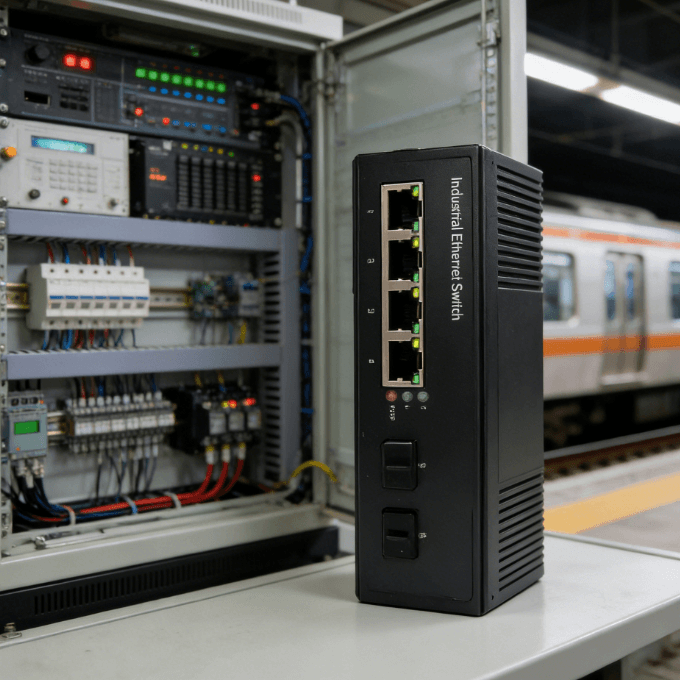
Selecting the right hardware is the first step in building a low-latency IoT architecture. You must judge the suitability of your network components based on their environmental ratings and throughput capacity. A professional industry iot gateway for cloud connectivity should feature a ruggedized housing and a wide operating temperature range. However, the gateway is only as fast as the switches connecting it to the sensors. High-quality industrial switches are the “highways” that carry data to the gateway entrance.
When evaluating your network design, look for switches that support gigabit speeds and industrial-grade reliability. Using switches with managed features allows you to implement VLANs to isolate IoT traffic from general office data. This isolation prevents large file transfers or video streams from delaying your critical sensor data. You should also verify if the hardware supports Power over Ethernet (PoE) to simplify the deployment of cameras and sensors. You can explore a wide range of professional-grade networking solutions at the Seaview Industry industrial switch category to find the backbone for your IoT system. Choosing a vendor that specializes in industrial-grade hardware ensures that your connectivity remains stable under the harshest conditions.
Summary
To fix industrial IoT gateway cloud latency, you must implement edge computing, optimize MQTT protocols, and utilize high-speed 4G LTE hardware. Precise synchronization using an industrial iot gateway with gnss and gps further improves data sequencing and system responsiveness. By combining these technical strategies with high-grade industrial switches, you create a robust, low-latency path for your critical industrial data.

FAQ
1. What is the most effective way to reduce latency in an industry iot gateway for cloud connectivity?
The most effective way is to implement edge computing. Edge computing allows the gateway to process data locally, which significantly reduces the volume of data that needs to be sent to the cloud. This minimizes the round-trip time and prevents network congestion during peak operation hours.
2. Can an industrial iot 4g lte router gateway be as fast as a wired connection?
While fiber is generally faster, a high-quality industrial iot 4g lte router gateway can provide very low latency. Using LTE Category 6 or higher modems can achieve latencies below 40ms, which is sufficient for most industrial monitoring. However, signal stability and antenna quality are critical for maintaining this performance.
3. Why is GNSS important for an industrial iot gateway with gnss and gps?
GNSS is important because it provides a precise, universal time source for data timestamping. An industrial iot gateway with gnss and gps ensures that all data is perfectly synced, even across multiple geographic sites. This prevents data reordering issues at the cloud level, which can cause significant processing delays.
4. How does the choice of protocol affect the industrial iot gateway for cloud connectivity?
The protocol determines the overhead of each packet. Lightweight protocols like MQTT use up to 90% less overhead than HTTP, making them much faster for industrial sensors. Using MQTT allows the gateway to transmit more data points per second without overwhelming the cloud connection.
5. Do I need managed switches to support my industrial iot gateway?
Managed switches are highly recommended for industrial IoT. Managed switches allow you to prioritize IoT traffic using Quality of Service (QoS) and isolate it using VLANs. This ensures that critical sensor data is never delayed by lower-priority network traffic like guest Wi-Fi or administrative tasks.
Reference Sources
IEEE Xplore – Research on Edge Computing and IoT Latency
GSMA – 4G and 5G Industrial Connectivity Standards
Industrial Internet Consortium (IIC) – Best Practices for IoT Gateways