
Managed vs Unmanaged Industrial Switches: A Technical Selection Guide

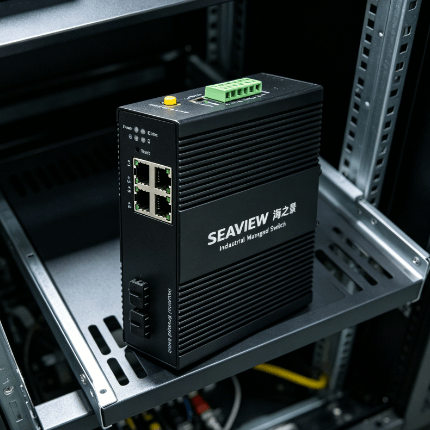
Selecting between a managed and an unmanaged industrial switch is rarely a matter of price alone. In mission-critical automation environments, the decision impacts network deterministic behavior, MTBF (Mean Time Between Failures), and long-term maintenance costs.
While both devices facilitate communication between Ethernet-enabled hardware, they operate at different levels of the OSI model and offer vastly different capabilities regarding traffic control and diagnostic visibility.
What is the Fundamental Difference?
An unmanaged industrial switch is a plug-and-play device. It allows Ethernet devices to communicate with one another by providing basic data link layer connectivity. It has no configuration interface and functions as a transparent bridge.
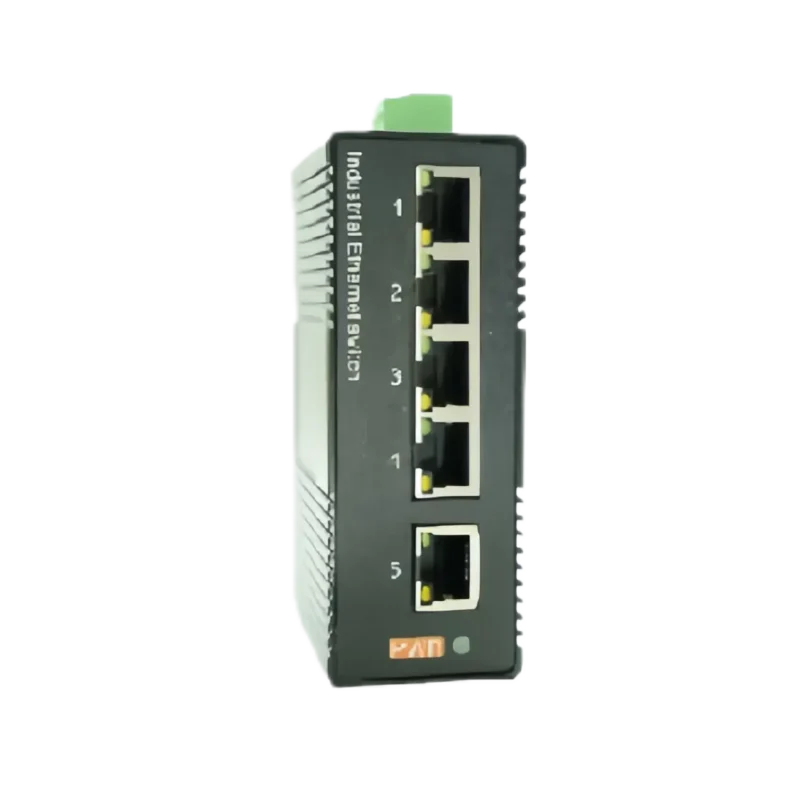
A managed industrial switch provides the same connectivity but adds a sophisticated software layer. This allows engineers to configure, manage, and monitor the LAN. It supports advanced protocols for network redundancy, cybersecurity, and traffic prioritization (QoS), which are essential for complex industrial control systems (ICS).
Technical Comparison: At a Glance
The following table outlines the hardware and software capabilities typically found in high-grade industrial networking equipment, such as the Seaview Industry industrial switch line.
| Feature | Unmanaged Industrial Switch | Managed Industrial Switch |
| Configuration | None (Plug-and-Play) | Web, CLI, SNMP, Telnet |
| Redundancy | None | ERPS, STP, RSTP, MSTP |
| Traffic Control | None (Best Effort) | VLANs, QoS, IGMP Snooping |
| Security | Physical Security Only | Port Security, ACLs, 802.1X |
| Diagnostics | Port LEDs Only | Port Mirroring, Syslog, SNMP Traps |
| Best For | Simple edge device connectivity | Backbone networks, SCADA, High-uptime apps |
When to Deploy Unmanaged Industrial Switches
Unmanaged switches are the “workhorses” of the industrial edge. They are preferred when the network architecture is flat and the primary goal is cost-effective connectivity for a small cluster of devices.
Key Advantages:
Zero-Touch Deployment: No software setup is required. This is ideal for remote sites where on-site technical expertise is limited.
Lower Initial Capital Expenditure (CAPEX): Significantly lower per-port cost compared to managed alternatives.
Reduced Failure Points: Without a management firmware layer, there are fewer software-related vulnerabilities or configuration errors that could lead to downtime.
Ideal Use Cases:
Connecting field sensors to a local PLC (Programmable Logic Controller).
Small-scale IP surveillance clusters in non-critical areas.
Temporary data logging setups where network complexity is minimal.
The Strategic Value of Managed Industrial Switches
In modern “Industry 4.0” environments, data transparency and uptime are paramount. Managed switches provide the tools necessary to prevent “broadcast storms” and hardware loops that can take down an entire production line.
1. Network Redundancy (Self-Healing)
Industrial environments cannot afford the 30-second recovery times of standard commercial switches. Managed industrial switches utilize protocols like ERPS (Ethernet Ring Protection Switching) to provide sub-20ms recovery times. If a fiber link is severed, the network reroutes traffic almost instantly, preventing PLC timeouts.
2. Traffic Prioritization (QoS)
In a converged network, high-bandwidth video traffic can interfere with time-sensitive control data. Quality of Service (QoS) allows engineers to prioritize “heartbeat” packets from controllers over standard background traffic, ensuring deterministic performance.
3. Enhanced Cybersecurity
An unmanaged switch is a wide-open door. Managed switches allow for Port Security, where specific MAC addresses are locked to specific ports. They also support VLANs (Virtual Local Area Networks), which segment the network to ensure that a breach in the office network does not migrate to the factory floor.
4. Remote Monitoring and Diagnostics
Using SNMP (Simple Network Management Protocol), maintenance teams can monitor the health of every port from a central control room. You can receive automated alerts for high error rates, power supply failures, or unauthorized access attempts before they result in a system crash.
Environmental Hardening: A Non-Negotiable Factor
Regardless of management capabilities, an industrial switch must differ from commercial hardware in its physical construction. When reviewing specifications, look for the following “Industrial Grade” indicators:
Operating Temperature: Support for -40°C to +85°C.
Ingress Protection: Minimum IP30 or IP40 rated metal housings.
EMC/EMI Protection: High resistance to electromagnetic interference (common in motor-heavy environments).
Mounting: DIN-Rail or 19-inch rackmount options to fit industrial cabinets.
Power Redundancy: Dual DC power inputs to protect against power supply failure.
Cost Analysis: Initial Price vs. Total Cost of Ownership (TCO)
While an unmanaged switch is cheaper upfront, the Total Cost of Ownership (TCO) of a managed switch is often lower in large-scale operations.
Consider the cost of one hour of downtime in a manufacturing plant—often exceeding $10,000. If a managed switch’s redundancy protocol prevents even one such outage, it has paid for itself many times over. Furthermore, the ability to troubleshoot remotely saves thousands in “truck roll” costs for field technicians.
Selection Framework: Which Should You Choose?
Choose an Unmanaged Switch if:
You have a small network (< 5-10 devices).
The network is physically isolated.
The cost of 1-2 hours of downtime is negligible.
No specialized IT/OT staff are available for configuration.
Choose a Managed Switch if:
You are implementing a SCADA or DCS system.
You require high availability and sub-second failover.
You need to segment traffic (e.g., separating VoIP, Video, and Control).
Regulatory compliance requires network monitoring and access logs.
Your network scale involves more than 15-20 nodes.
For professionals looking to balance performance and budget, Seaview Industry provides a tiered range of both Layer 2 and Layer 3 managed switches, as well as ruggedized unmanaged options, ensuring the hardware matches the specific criticality of the application.
FAQ
Q1: Can I mix managed and unmanaged switches in the same network?
Yes. A common architecture involves a managed switch at the “Core” or “Distribution” layer for redundancy and VLAN management, while unmanaged switches are used at the “Edge” to connect simple clusters of sensors or end-devices.
Q2: Does a managed switch provide better speed than an unmanaged one?
Not necessarily. Both can support 10/100/1000 Mbps (Gigabit) speeds. However, a managed switch provides better throughput efficiency by eliminating unnecessary broadcast traffic through IGMP Snooping and VLANs.
Q3: Are “Smart Managed” switches a middle ground?
Yes. Web-smart or “Lite” managed switches offer basic VLAN and QoS features through a web interface but lack the full CLI (Command Line Interface) and complex routing protocols of full Layer 3 managed switches. They are an excellent compromise for mid-sized industrial applications.
Q4: Do unmanaged switches support PoE?
Yes, many unmanaged industrial switches support PoE (Power over Ethernet), such as IEEE 802.3at/bt standards, to power IP cameras or wireless access points directly. Management and Power are independent features.
Reference Sources
IEEE 802.3: Standard for Ethernet. ieee802.org
IEC 62443: International standards for the security of Industrial Automation and Control Systems (IACS). iec.ch
ODVA: Network infrastructure guidelines for EtherNet/IP in industrial automation. odva.org
ISA (International Society of Automation): Technical resources for industrial networking. isa.org