
Outdoor Industrial Switches: Technical Features & Uses

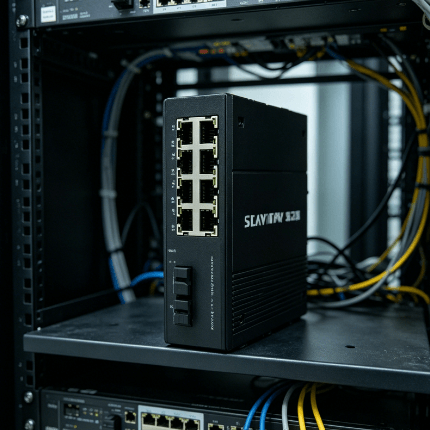
Outdoor networking environments are inherently hostile to standard electronics. While a commercial-grade switch performs reliably in a climate-controlled data center, deploying that same hardware in a roadside traffic cabinet or an oil refinery invites immediate failure. This is where the outdoor industrial switch becomes a critical infrastructure component.
An outdoor industrial switch is not merely a “tougher” version of a home router; it is a specialized piece of networking hardware engineered to maintain connectivity under extreme thermal stress, electromagnetic interference, and physical vibration. For engineers and system integrators, understanding the architectural differences between commercial and industrial-grade silicon is the first step in building a resilient network.
What Defines a Truly “Hardened” Outdoor Industrial Switch?
The term “hardened” refers to the device’s ability to operate without traditional cooling fans while resisting environmental contaminants. Unlike commercial switches that rely on active airflow, an outdoor industrial switch utilizes passive cooling—usually through high-thermal-conductivity aluminum housings that act as a giant heat sink.
The internal components are also “industrial-grade,” meaning the capacitors, resistors, and circuit boards are rated for higher temperature thresholds. This eliminates the “thermal throttling” common in consumer gear, ensuring that data throughput remains consistent even when the ambient temperature inside an uncooled outdoor enclosure exceeds 60°C (140°F).
Critical Environmental Ratings and Standards
When evaluating hardware for outdoor deployment, engineers prioritize specific certifications that guarantee survivability.
1. Ingress Protection (IP) Ratings?
For outdoor use, the IP rating is the primary indicator of environmental sealing.
- IP30/IP40: Common for switches housed inside NEMA-rated outdoor cabinets. These provide protection against solid objects but rely on the outer enclosure for water resistance.
- IP67/IP68: Required for “pole-mount” or exposed deployments. These switches are completely dust-tight and can withstand immersion in water, making them ideal for marine environments or areas prone to flooding.
2. Wide Operating Temperature Range?
A standard office switch operates between 0°C and 40°C. In contrast, a high-performance outdoor industrial switch is typically rated for -40°C to +75°C (-40°F to 167°F). This wide range is necessary because outdoor enclosures in direct sunlight can quickly reach temperatures 20-30 degrees higher than the external air temperature.
3. Electromagnetic Compatibility (EMC)?
Outdoor environments, particularly near power grids or heavy machinery, are rife with electrical noise. Industrial switches must comply with high-level ESD (Electrostatic Discharge) and surge protection standards (such as IEC 61000-4-5). This prevents the switch from “rebooting” or suffering permanent damage during localized lightning strikes or power surges.
Essential Technical Features for Remote Infrastructure
Beyond physical durability, the internal logic of an outdoor industrial switch must handle the specific demands of remote sites.
| Feature | Technical Benefit | Industrial Necessity |
| PoE/PoE+ (802.3at/bt) | Delivers up to 90W per port. | Powers PTZ cameras and wireless APs without separate power lines. |
| Redundancy (ERPS) | Ethernet Ring Protection Switching (sub-50ms recovery). | Ensures the network stays up even if one fiber link is severed. |
| Dual Power Inputs | Connects to two independent DC power sources. | Prevents downtime if a primary power supply or solar battery fails. |
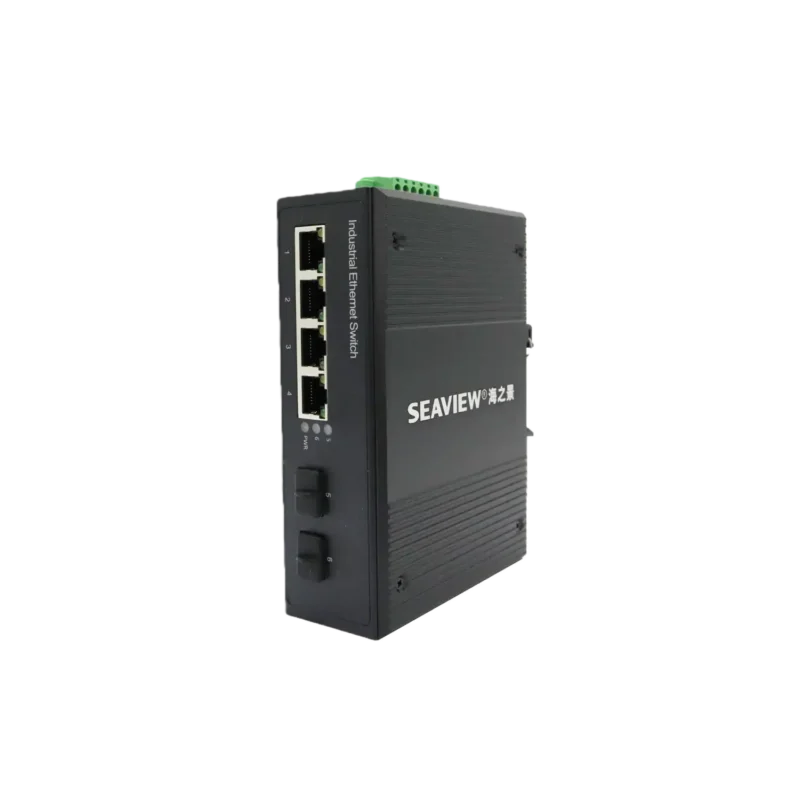
| DIN-Rail Mounting | Standardized mechanical attachment. | Allows for rapid installation in compact industrial cabinets. |
Power over Ethernet (PoE) Management
In many outdoor applications, the switch acts as the power source for peripheral devices like IP surveillance cameras or loRaWAN gateways. Industrial switches often include “Scheduled PoE Reset” or “Auto-PD Healing,” which monitors the heartbeat of connected devices and automatically cycles power to a port if a remote camera freezes, reducing the need for costly “truck rolls” to remote sites.
Strategic Applications of Outdoor Industrial Switches
The deployment of these switches is no longer limited to heavy manufacturing. They are now the backbone of modern decentralized infrastructure.
Smart City and Traffic Management
Modern intersections require high-speed data for AI-driven traffic signals and automated license plate recognition (ALPR). Outdoor industrial switches sit in curbside cabinets, managing high-definition video feeds while enduring the constant vibration of passing heavy vehicles and the corrosive effects of road salt and exhaust.
Renewable Energy: Solar and Wind Farms
Solar arrays and wind turbines are often located in geographically remote, climatically extreme locations. Switches here manage the SCADA (Supervisory Control and Data Acquisition) systems that monitor inverter health and turbine blade pitch. The ability to handle wide-voltage DC inputs (such as 12/24/48V DC) is critical here, as these sites often run on battery or solar-rectified power.
Oil, Gas, and Mining
In these sectors, switches must often meet Class I, Division 2 (C1D2) certifications, ensuring that the device will not produce a spark that could ignite volatile gases. The “fanless” nature of industrial switches is a safety requirement in these environments.
Technical Comparison: Commercial vs. Industrial Switches
| Specification | Commercial Switch | Outdoor Industrial Switch |
| Cooling | Active (Fans) | Passive (Fanless / Heat Sink) |
| MTBF (Mean Time Between Failure) | ~50,000 – 100,000 Hours | Up to 500,000+ Hours |
| Power Input | AC 100-240V | Redundant DC 12-48V or 110-370VDC |
| Casing | Plastic or Thin Steel | Reinforced Aluminum or IP67 Alloy |
| Vibration/Shock | None | IEC 60068-2-6 / 2-27 Rated |
Designing for Longevity: Selection Criteria
When selecting hardware from a specialized provider like Seaview Industry, engineers should look beyond port count.
- Managed vs. Unmanaged: For simple outdoor camera extensions, an unmanaged switch suffices. However, for critical infrastructure, a Managed Industrial Switch is mandatory to support VLANs (for traffic isolation) and SNMP (for remote health monitoring).
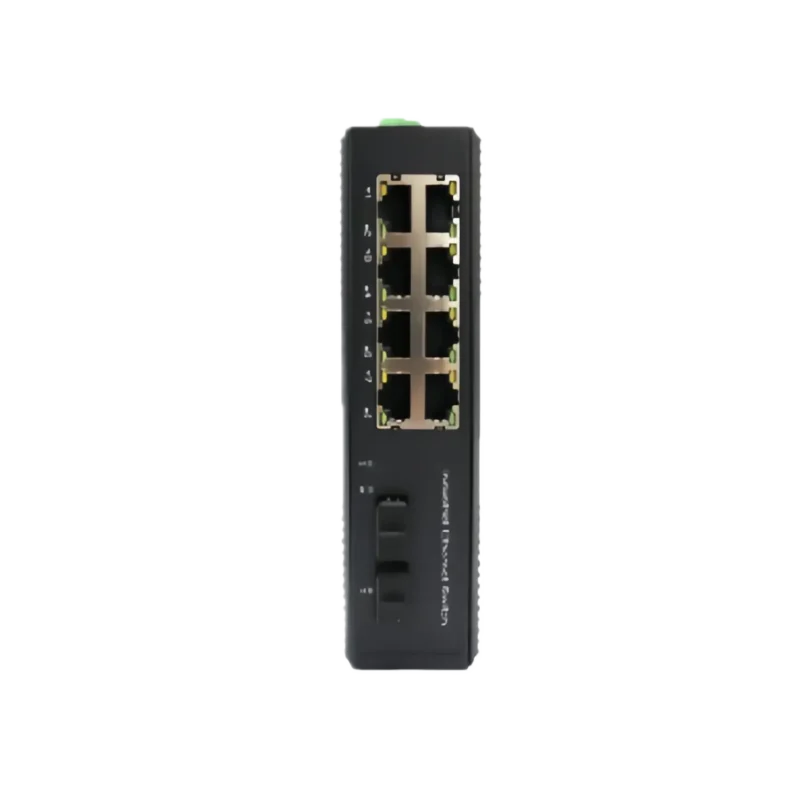
- Fiber Uplinks (SFP Slots): Outdoor deployments often cover long distances. Copper Ethernet is limited to 100 meters and is susceptible to EMI. Choosing a switch with SFP slots allows for multi-mile fiber optic backhaul, which is immune to electrical interference.
- Voltage Flexibility: Many industrial environments do not provide a clean 110V AC outlet. A switch that supports a wide range of DC inputs ensures compatibility with industrial power rails and battery backup systems.
Summary
Choosing an outdoor industrial switch requires balancing mechanical protection with high-level networking protocols. By prioritizing IP ratings, thermal resilience, and redundancy features like ERPS, organizations can ensure that their remote infrastructure remains connected regardless of external conditions.
FAQ
1. Can I use a commercial switch in an outdoor cabinet?
It is not recommended. Even in a waterproof box, a commercial switch will struggle with “heat soak.” Without active fans, the internal temperature of a commercial switch will exceed its operating limit, leading to packet loss and hardware failure.
2. What is the significance of a “Fanless” design?
Fans are the most common mechanical point of failure. In outdoor environments, fans suck in dust and moisture. A fanless design uses thermal engineering to dissipate heat through the chassis, significantly increasing the Mean Time Between Failure (MTBF).
3. How does an industrial switch handle lightning strikes?
Most outdoor switches feature integrated surge protection (e.g., 6kV). While a direct hit may still cause damage, this protection handles “induced surges” that occur when lightning strikes nearby, preventing the electrical spike from destroying the device.
4. Is PoE+ or PoE++ necessary for outdoor switches?
It depends on the peripheral. Standard IP cameras use PoE (15W), but outdoor PTZ cameras with internal heaters often require PoE+ (30W) or even PoE++ (60W-90W) to function correctly in freezing temperatures.
Reference Sources
Official IEEE Standard for Ethernet and PoE Powering