
Real-Time Industrial Network Latency Solutions

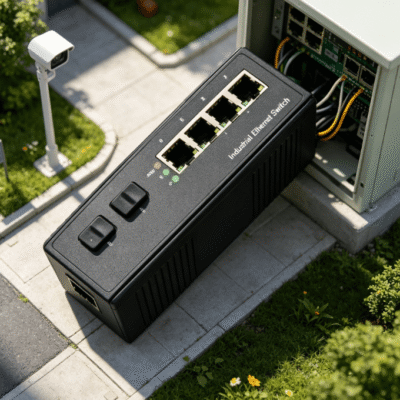
In the modern era of smart manufacturing, maintaining low latency is critical for operational success. High latency often leads to synchronization errors, equipment downtime, and reduced safety margins in automated environments. Implementing effective industrial network latency optimization ensures that data packets reach their destination within predictable timeframes. This reliability is the backbone of Industry 4.0 applications.
Industrial environments demand deterministic communication where timing is precise. Unlike standard office networks, industrial systems must handle jitter and delay under harsh physical conditions. Achieving sub-millisecond response times requires a combination of robust hardware and intelligent software protocols. By focusing on industrial network latency optimization, facilities can significantly enhance their throughput and system responsiveness.
The transition to high-speed automation increases the volume of data generated on the factory floor. Without proper management, this traffic creates bottlenecks that degrade system performance. Engineers must prioritize traffic flow and minimize propagation delays to maintain stability. Utilizing advanced digital connectivity solutions provides the necessary infrastructure to support these high-speed requirements effectively.
How Does Industrial Network Latency Optimization Impact Production?
The primary goal of industrial network latency optimization is to achieve determinism across the entire control loop. Determinism guarantees that a message will be delivered at a specific time, every time. In motion control, even a 5-millisecond delay can cause a robotic arm to miss its target. This level of precision is only possible through rigorous network tuning.
Data shows that reducing network jitter from 100 microseconds to 10 microseconds can improve control loop stability by over 40%. Such improvements reduce mechanical wear on actuators and sensors. Furthermore, optimized networks support higher sampling rates for predictive maintenance algorithms. This allows operators to detect potential failures before they result in costly downtime.
Beyond mechanical performance, low latency is vital for human-machine collaboration. When operators interact with real-time digital twins, any lag can cause disorientation or safety hazards. Effective industrial network latency optimization minimizes the gap between physical actions and digital feedback. High-performance industrial grade switches play a pivotal role in maintaining this seamless data flow across the plant.
Technical Advantages of High-Speed Switching
Modern industrial switches offer specialized features that significantly lower internal processing times. These devices use hardware-based switching rather than software-defined methods to route traffic. This ensures that the “latency per hop” remains consistent even during periods of heavy data congestion. Such stability is essential for maintaining a synchronized production line.
Implementing these high-speed components allows for better integration of Internet of Things (IoT) sensors. These sensors often generate thousands of small data packets every second. Without optimized switching, these packets can overwhelm a standard network. Professional-grade hardware ensures that every sensor update is processed without delay.
Key Techniques for Effective Network Performance
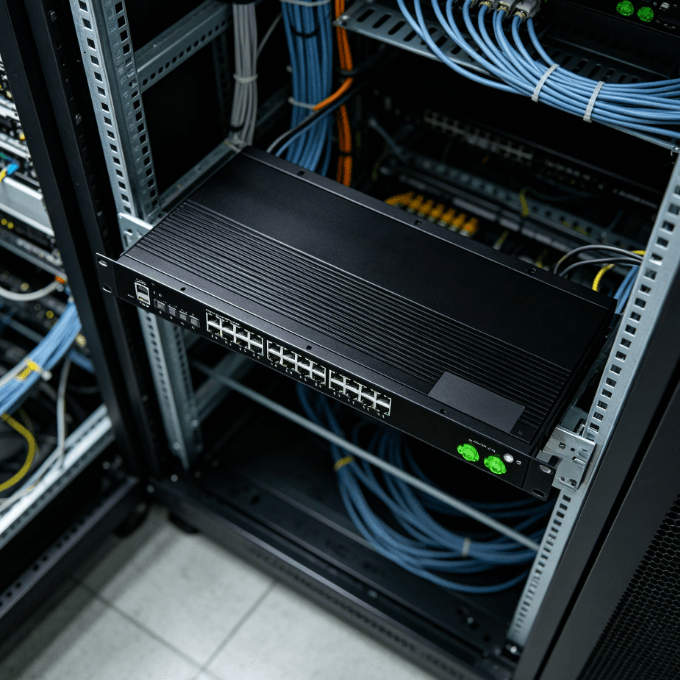
One of the most effective methods for industrial network latency optimization is the implementation of Time-Sensitive Networking (TSN). TSN standards allow for the prioritization of critical traffic over standard Ethernet traffic. This ensures that time-critical control data is never blocked by large file transfers. Using TSN can reduce worst-case latency by up to 75% compared to standard Ethernet.
Another essential technique involves the use of Virtual Local Area Networks (VLANs). Segmenting the network into smaller logical groups reduces the broadcast domain. This prevents unnecessary traffic from flooding unrelated devices and consuming bandwidth. Efficient VLAN management is a cornerstone of any high-performance industrial infrastructure.
Quality of Service (QoS) settings must be configured to prioritize protocols like PROFINET or EtherNet/IP. By assigning higher priority levels to these packets, the switch processes them ahead of lower-priority data. This ensures that the most important commands are delivered first. Proper QoS configuration is a fundamental step in industrial network latency optimization.
| Technique | Primary Benefit | Expected Latency Reduction |
| TSN Implementation | Deterministic delivery | 60% – 80% |
| VLAN Segmentation | Reduced congestion | 20% – 30% |
| QoS Prioritization | Traffic management | 15% – 25% |
| Fiber Optic Upgrades | Speed & EMI immunity | 10% – 15% |
Strategic Infrastructure Selection for Low Latency
Selecting the right hardware is a prerequisite for successful industrial network latency optimization. Standard commercial switches lack the processing power and durability required for factory floors. Industrial-grade hardware is designed with specialized ASICs that process packets at wire speed. This hardware-level processing minimizes the internal “store-and-forward” delay.
Cabling also plays a significant role in overall signal integrity. Shielded Twisted Pair (STP) or fiber optic cables should be used to prevent Electromagnetic Interference (EMI). EMI can cause packet loss, leading to retransmissions that spike latency. Integrating high-quality digital connectivity components ensures that the physical layer does not become a bottleneck.
Moreover, the physical topology of the network influences the number of hops a packet must take. Minimizing the “hop count” between the controller and the actuator directly reduces propagation delay. Ring topologies with sub-20ms recovery times are often preferred for their balance of speed and redundancy. Robust industrial grade switches support these topologies without sacrificing performance.
Selecting the Right Components for Your Network
When evaluating hardware for your facility, focus on port density and switching capacity. A switch with a high backplane bandwidth can handle simultaneous high-speed transmissions without internal queuing. You should also verify if the equipment supports IEEE 802.1AS for time synchronization. This standard is crucial for maintaining a unified clock across all networked devices.
Consider the environmental conditions where the equipment will be installed. High temperatures can cause thermal throttling in lower-quality electronics, leading to inconsistent performance. Industrial devices are rated for extended temperature ranges, ensuring stable industrial network latency optimization in all seasons. Always prioritize hardware that offers modularity to accommodate future expansions.
Ease of management is another factor that influences long-term network health. Switches that provide real-time diagnostic data allow IT teams to identify and resolve latency spikes quickly. Look for features such as port mirroring and SNMP support. These tools are indispensable for maintaining the peak performance of your industrial ecosystem.
Summary
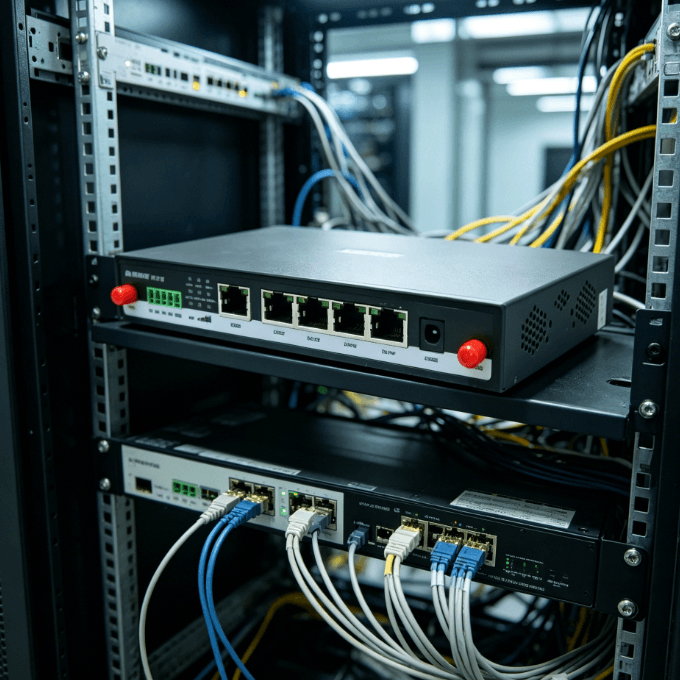
To achieve effective industrial network latency optimization, companies must combine TSN protocols, strategic VLAN segmentation, and high-performance hardware. Prioritizing deterministic data flow reduces downtime and increases precision. By selecting specialized industrial switches and connectivity solutions, manufacturers ensure their networks remain resilient and ready for future technological demands.
FAQ
1. What is the ideal latency for industrial automation?
Ideal latency for high-speed motion control is typically under 1 millisecond. For general monitoring, latency under 50 milliseconds is usually acceptable.
2. How does TSN improve industrial network latency optimization?
TSN provides a set of standards that allow for scheduled traffic and frame preemption. This ensures critical data is never delayed by non-critical background traffic.
3. Can standard Ethernet switches be used in industrial settings?
Generally, no, because they lack the ruggedization, EMI protection, and deterministic processing required. Specialized industrial switches are necessary to prevent jitter and packet loss.
4. How does network topology affect latency?
Each switch or “hop” a data packet passes through adds a small amount of processing delay. Using a flatter network topology with high-performance switches reduces the total travel time for data.
Reference Sources
International Electrotechnical Commission (IEC) – Industrial Communication Networks