
10 Essential Industrial Switch Features for Harsh Zones

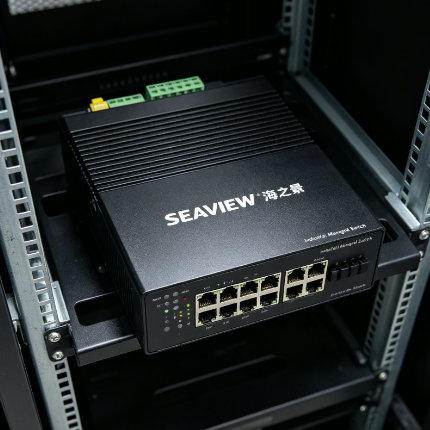
Standard networking hardware is designed for climate-controlled data centers and carpeted offices. However, in the “field”—which includes oil rigs, manufacturing floors, and outdoor transportation hubs—commercial gear fails almost instantly. Industrial environments subject electronics to extreme thermal swings, heavy electromagnetic interference (EMI), and constant mechanical stress.
To maintain network integrity, engineers must specify hardware that moves beyond basic connectivity. Understanding the specific industrial switch features required for these conditions is the difference between a resilient automated system and a catastrophic production shutdown.
Extended Operating Temperature Range
The most common point of failure for electronics in harsh environments is thermal stress. Commercial switches typically operate between 0°C and 40°C. In contrast, industrial-grade switches are engineered to withstand a “wide-temp” range, typically from -40°C to 85°C.
This resilience is achieved through high-grade components and fanless cooling designs. Fans are a liability in industrial settings; they are mechanical parts that fail and suck in dust. Instead, industrial switches utilize heavy-duty metal chassis with integrated heat sinks to dissipate thermal energy via convection.
Ingress Protection (IP) Ratings
Dust, moisture, and chemical vapors are inherent in industrial manufacturing. A critical feature to evaluate is the Ingress Protection (IP) rating. This standard defines the level of sealing effectiveness of electrical enclosures against intrusion from foreign bodies and moisture.
Most DIN-rail mounted switches feature an IP30 or IP40 rating, which protects against solid objects like tools or wires. For environments with heavy wash-downs or high humidity, IP67-rated switches are necessary. These units are fully sealed and can even survive temporary immersion in water, making them ideal for outdoor or marine applications.
Redundant Power Inputs
In a factory, power quality is rarely perfect. Voltage spikes, sags, and complete power failures occur frequently. One of the most vital industrial switch features is the inclusion of dual, redundant DC power inputs.
This allows the switch to be connected to two independent power supplies simultaneously. If the primary power source fails, the switch automatically draws power from the secondary source without any packet loss or downtime. Furthermore, these units often include a relay alarm to notify operators immediately of a power failure event.
Electromagnetic Interference (EMI) and EMC Shielding
Industrial environments are “noisy” in an electrical sense. Large motors, welding equipment, and high-voltage lines generate significant electromagnetic interference (EMI). Without proper shielding, this interference causes data corruption, high latency, and frequent disconnections.
Industrial switches are built to meet stringent Electromagnetic Compatibility (EMC) standards, such as IEC 61000-4. They utilize high-quality isolation transformers and metal enclosures to shield the internal circuitry from external electrical noise, ensuring consistent data transmission.
High Shock and Vibration Resistance
Whether mounted on a moving vehicle or placed near a heavy stamping press, industrial switches face constant mechanical stress. Commercial RJ45 ports and internal circuit boards can easily crack or dislodge under vibration.
Industrial switches are tested according to standards like IEC 60068-2-6 (vibration) and IEC 60068-2-27 (shock). Many high-vibration environments also utilize M12 connectors instead of standard RJ45 ports. M12 connectors provide a threaded, screw-on connection that remains secure even under extreme physical movement.
Comparison: Commercial vs. Industrial Switch Features
| Feature | Commercial Switch | Industrial Switch |
| Operating Temp | 0°C to 40°C | -40°C to +85°C |
| Cooling | Internal Fans | Fanless / Passive Heat Sinks |
| Housing | Plastic / Light Metal | Ruggedized Metal (IP30/40/67) |
| Power Supply | Single AC Input | Dual Redundant DC Inputs |
| Mounting | 19″ Rack / Desktop | DIN-Rail / Wall Mount |
| Vibration Tolerance | Low (Stationary Only) | High (IEC 60068-2 Testing) |
Network Redundancy Protocols (Self-Healing)
Network downtime in a manufacturing environment can cost thousands of dollars per minute. While standard switches use Spanning Tree Protocol (STP) to prevent loops, STP is often too slow to recover in critical industrial applications.
Modern industrial switches support advanced ring protocols like ERPS (Ethernet Ring Protection Switching) or proprietary ring technologies. These protocols allow the network to “self-heal” in less than 20 milliseconds if a fiber link or switch fails, ensuring that the control system never loses communication with its sensors or actuators.
Power over Ethernet (PoE) Support
In many harsh environments, running separate power cables to remote devices like IP cameras or wireless access points is cost-prohibitive. Industrial PoE switches solve this by delivering both data and power over a single Ethernet cable.
However, industrial PoE must be more robust than office PoE. These switches must handle high-wattage requirements (PoE+ or PoE++) and manage power budgets in high-temperature conditions where thermal throttling might occur.
Industrial Certifications
Specific industries require specialized compliance. When selecting a switch, engineers must look for certifications that match their specific sector:
- IEC 61850-3 / IEEE 1613: Required for electrical power substations.
- EN 50155: Necessary for railway and rolling stock applications.
- Class 1 Division 2 (C1D2): Crucial for hazardous locations (Oil & Gas) where explosive gases may be present.
Management and Security (L2/L3 Features)
While unmanaged switches are common for simple plug-and-play needs, managed switches are preferred for complex harsh environments. They provide features like VLAN (Virtual Local Area Network) tagging for traffic isolation and QoS (Quality of Service) to prioritize critical control traffic over standard data.
Security is also a major concern in the era of IIoT (Industrial Internet of Things). Industrial switches should offer port security (MAC address filtering), 802.1X authentication, and encrypted management interfaces (HTTPS/SSH) to prevent unauthorized access to the operational technology (OT) network.
Compact DIN-Rail Design
Space is a premium in industrial control cabinets. Unlike the wide 19-inch racks found in IT closets, industrial enclosures are often shallow and vertically oriented.
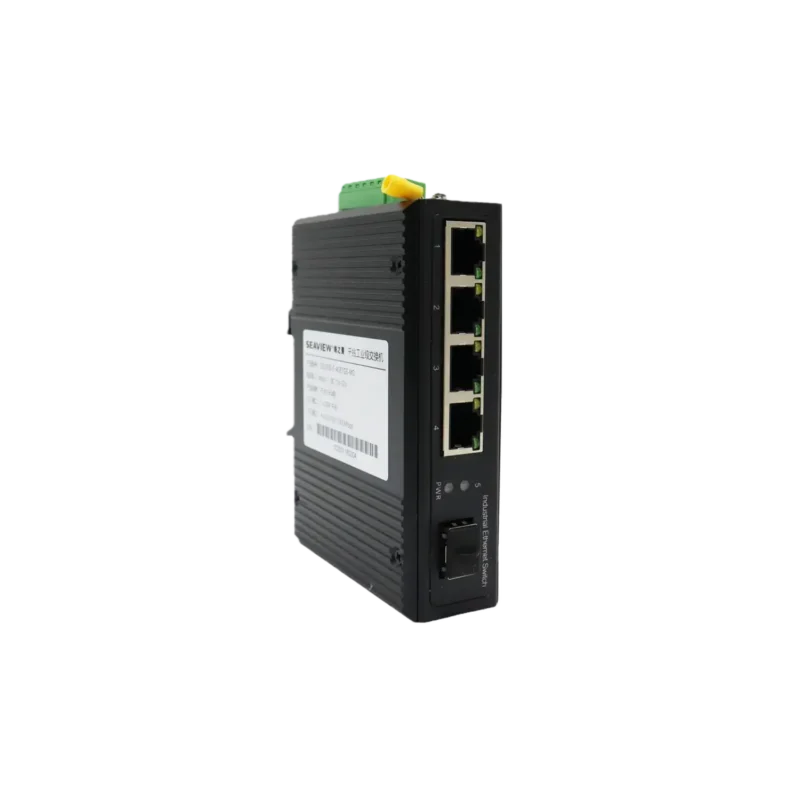
Industrial switches are designed with a slim form factor and integrated DIN-rail clips. This allows for high-density mounting on the same rails used by PLCs (Programmable Logic Controllers) and circuit breakers, simplifying the wiring and integration process within the cabinet.
Summary
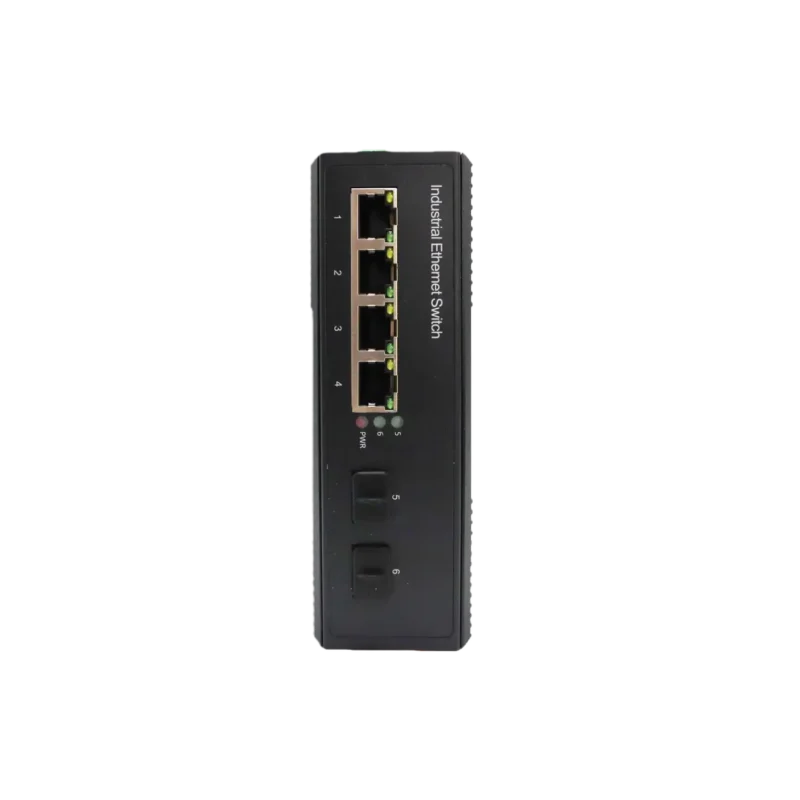
Selecting the right hardware depends heavily on the specific “harshness” of the application. For standard factory automation, a fanless, wide-temperature DIN-rail switch is usually sufficient. However, for utility-grade or marine environments, the ingress protection and specific industry certifications become the primary selection criteria.
Manufacturers like SeaView Industry provide specialized solutions that bridge the gap between IT performance and OT durability, offering a range of unmanaged and managed options tailored for these rigorous demands.
FAQ
1. What is the difference between hardened and industrial?
While the terms are often used interchangeably, “hardened” usually refers specifically to the ability to withstand extreme temperatures and environmental factors. An “industrial” switch typically includes both hardened hardware and industrial software features like ring redundancy and DIN-rail mounting.
2. Do industrial switches require more maintenance?
Actually, they require less. Because they are fanless and utilize industrial-grade capacitors, they have a significantly higher Mean Time Between Failures (MTBF). They are designed for “set it and forget it” deployment in remote locations.
3. Can I use a commercial switch in a cooled cabinet?
While possible, it is not recommended. External cooling systems (like AC units for cabinets) can fail. Furthermore, a commercial switch still lacks the EMI shielding and vibration resistance required to handle the electrical noise and mechanical stress generated by industrial machinery.
4. Why is 24V DC power standard for these switches?
Most industrial control panels operate on 24V DC to power PLCs, sensors, and relays. Using a switch that accepts DC power allows it to integrate directly into the existing power infrastructure without needing a separate AC/DC converter.
Reference Sources
Official IEEE 1613 Substation Networking Standards.