
How to Build a Private 5G Smart Factory Network

The global manufacturing sector is currently undergoing a rapid digital evolution in 2026. Traditional networking solutions no longer meet the demands of high-speed automated production lines. Consequently, the private 5g smart factory model has emerged as the definitive standard for industrial connectivity. This specialized network offers the dedicated bandwidth and security required for sensitive industrial operations. It operates entirely on-site, ensuring that critical data never leaves the factory premises. By utilizing localized spectrum, these networks avoid the congestion often found in public cellular systems. This architectural guide provides a comprehensive roadmap for implementing these advanced communication systems. We will examine the core components and strategic steps necessary for a successful deployment.
Building a private 5g smart factory requires a deep understanding of both hardware and software integration. Unlike standard consumer networks, industrial environments present unique challenges like high metallic interference and extreme temperatures. Robust wireless coverage is essential for supporting a fleet of autonomous mobile robots and high-definition sensors. Modern factories rely on this infrastructure to achieve real-time synchronization between disparate machine units. Furthermore, the transition to 5G enables the massive machine-type communications necessary for comprehensive IoT scaling. As we move through 2026, the ability to process data at the edge becomes a competitive necessity. This article analyzes how to structure these networks to maximize operational efficiency and reliability.
What is the Architecture of a Private 5G Smart Factory?
The architecture of a private 5g smart factory is traditionally divided into four distinct functional layers. The first layer is the perception or device layer, consisting of sensors, actuators, and controllers. These devices generate the raw data that fuels the entire manufacturing ecosystem. In a modern setup, these components connect via high-performance industrial wireless data terminals (DTU) to ensure stable serial-to-wireless transmission. This layer is the foundation of the digital twin concept in smart manufacturing.
The second layer is the Radio Access Network (RAN), which facilitates wireless communication across the floor. It typically involves a series of small cells and radio units distributed strategically throughout the facility. These units must be placed to overcome physical obstructions like heavy machinery and steel beams. In a private 5g smart factory, the RAN provides the low-latency link required for motion control. Precise signal engineering at this stage prevents packet loss during high-speed equipment transitions. This layer acts as the vital bridge between physical machines and the digital core.
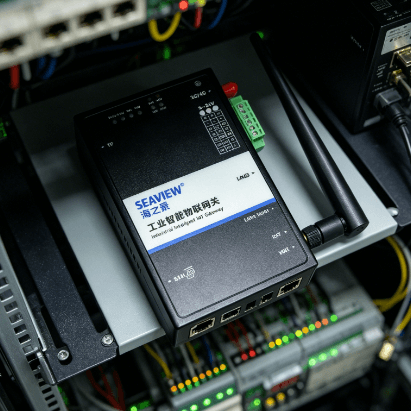
The third and fourth layers comprise the 5G Core (5GC) and the Application layer. The core network manages user authentication, mobility management, and data routing functions internally. By hosting the core on-site, manufacturers maintain absolute control over their network traffic and security policies. Meanwhile, the application layer hosts the software that analyzes data and manages production workflows. To optimize this process, many facilities deploy specialized 4G/5G edge computing gateways to handle local data filtering. This prevents the central core from becoming overwhelmed by redundant sensor information.
| Layer Component | Function in 2026 Factory | Typical Hardware Requirement |
| Device Layer | Data acquisition and execution | Industrial DTUs and Sensors |
| Network Layer | Wireless signal distribution | Small Cells and 5G Routers |
| Edge Layer | Real-time data processing | Edge Computing Gateways |
| Core Layer | Network management and security | On-site 5G Core Servers |
How to Build a Private 5G Smart Factory Network Step-by-Step?
The first phase of building a private 5g smart factory involves meticulous spectrum acquisition and site planning. You must determine whether to use licensed spectrum from a carrier or locally licensed industrial bands. Following this, a comprehensive RF (Radio Frequency) survey is conducted to identify potential dead zones. Engineers use specialized software to simulate signal propagation through metallic structures and thick walls. This data informs the exact placement of radio units to ensure 100% coverage. Proper planning at this stage reduces the need for expensive hardware adjustments later.
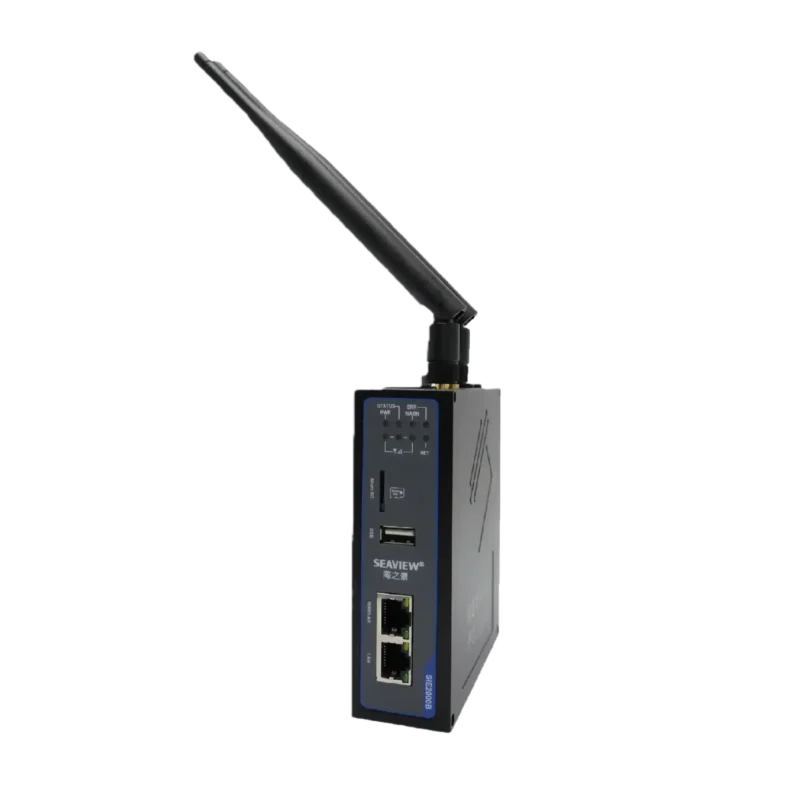
Once the plan is finalized, the hardware installation phase begins on the factory floor. It is critical to integrate reliable 4G/5G industrial routers/CPE into every mobile asset. These routers provide the high-speed interface needed for autonomous vehicles and portable diagnostic tools. They should be configured to prioritize critical traffic via network slicing protocols. For example, emergency stop signals must always receive the highest priority on the network. This ensures that safety mechanisms remain responsive even during peak data traffic periods.
How Do 5G Routers and CPE Improve Connectivity?
The integration of industrial-grade routers is the primary method for connecting legacy equipment to the 5G network. Many older machines lack built-in wireless modules and rely on Ethernet or Serial ports for communication. An industrial CPE acts as a sophisticated bridge, converting these wired signals into high-speed 5G packets. This allow for the modernization of old production lines without replacing expensive mechanical components. Furthermore, these devices often feature rugged enclosures to withstand the vibration of heavy industrial environments. Reliable connectivity at the machine level is the prerequisite for any private 5g smart factory initiative.
In 2026, these routers also support advanced multi-path technologies to enhance signal stability. They can simultaneously connect to multiple radio cells to prevent any single point of failure. This redundancy is vital for moving robots that navigate through complex, shifting environments. If one signal is blocked by a moving crane, the router instantly switches to an alternative cell. This “seamless handover” capability is a core feature of high-end industrial networking hardware. Robust connectivity ensures that the factory maintains a 99.999% uptime rating for all automated processes.
Why is Low Latency Critical for 2026 Smart Manufacturing?
Low latency is the most significant technical advantage of a private 5g smart factory network. In precision manufacturing, a delay of even 20 milliseconds can lead to synchronization errors between robotic arms. 5G technology, specifically in the Standalone (SA) mode, can achieve end-to-end latency of under 5 milliseconds. This enables “closed-loop” control systems where sensors and actuators communicate in near real-time. According to recent industrial data, reducing latency from 30ms to 5ms can increase production precision by up to 25%. This improvement directly translates to higher product quality and reduced waste.
Furthermore, ultra-low latency is essential for the safety of human workers in shared spaces. Collaborative robots (cobots) must be able to detect human movement and stop instantly to avoid accidents. The high-speed data transfer of 5G allows for the continuous streaming of 3D lidar data to safety controllers. If an obstruction is detected, the command to stop is issued and executed in a fraction of a second. This level of responsiveness is simply not possible with older Wi-Fi or 4G technologies. Consequently, 5G is the key enabler for safer and more efficient human-robot collaboration.
Evaluating Hardware Selection Criteria?
Choosing the right hardware is a critical decision that determines the longevity of your private 5g smart factory. The first criterion to evaluate is the environmental durability and industrial certifications of the devices. Factories often involve high levels of electromagnetic interference (EMI) from large motors and welding equipment. Ensure that your 4G/5G industrial routers/CPE are shielded against these electrical disturbances. Additionally, look for wide operating temperature ranges, typically from -40°C to +75°C, to ensure stability. Hardware failures in an industrial setting can lead to thousands of dollars in lost production time per hour.
The second criterion involves the software capabilities and protocol support of the networking equipment. In a private 5g smart factory, hardware must support a variety of industrial protocols such as Modbus, Profinet, and OPC UA. Using 4G/5G edge computing gateways allows you to translate these various languages into a unified data format. This interoperability is essential for creating a cohesive view of the entire production ecosystem. Furthermore, choose hardware that offers robust security features like hardware-based VPNs and integrated firewalls. Protecting the network at the hardware level is the first line of defense against cyber-physical attacks.
Finally, consider the scalability and future-proofing of the selected connectivity modules. As your factory grows, you will likely need to add hundreds or thousands of new sensor nodes. The hardware should support “Zero Touch Provisioning” to allow for rapid deployment and configuration of new units. Integrating compact industrial wireless data terminals (DTU) is an efficient way to scale your monitoring capabilities. These terminals should be compatible with the latest 5G standards to ensure they remain functional throughout the decade. Investing in high-quality, standardized hardware reduces the total cost of ownership over the network’s lifecycle.
Summary
Building a private 5g smart factory requires a strategic combination of layered architecture and ruggedized industrial hardware. By implementing high-performance routers and edge gateways, manufacturers can achieve the low latency and high reliability needed for 2026 automation. This infrastructure secures data sovereignty while providing the scalability to support thousands of connected devices.
FAQ
1. What are the primary hardware components needed for a private 5G network?
The core hardware includes a 5G core server, small cell radio units, and industrial-grade user equipment. Specifically, you need 4G/5G industrial routers/CPE for machine connectivity and 4G/5G edge computing gateways for local data processing and protocol conversion.
2. How does a private 5G network ensure data security in a factory?
Private 5G networks keep all data traffic within the local facility, preventing exposure to the public internet. Security is further enhanced through SIM-based authentication and hardware encryption found in industrial devices. This creates a “walled garden” environment that is highly resistant to external cyber threats.
3. Can legacy industrial equipment be connected to a private 5G network?
Yes, legacy equipment can be integrated using industrial wireless data terminals (DTU) or industrial routers. These devices connect to the machine’s Serial or Ethernet ports and transmit the data over the 5G network. This allows for modern connectivity without requiring expensive machine upgrades.
4. What is the difference between 5G Non-Standalone (NSA) and Standalone (SA) for factories?
NSA uses existing 4G core infrastructure to provide 5G speeds, while SA uses a dedicated 5G core. For a private 5g smart factory, SA is preferred because it offers the ultra-low latency required for robotics. SA also supports advanced network slicing, which is essential for managing diverse industrial applications.
Reference Sources
3GPP 5G System Architecture for Industrial IoT
GSMA Private 5G Network Deployment Guide for Manufacturing
NIST Framework for Cyber-Physical Systems in Smart Manufacturing
IEEE Communications Society Industrial 5G Standardization Reports