
What Role Does a Gateway Play in Industrial IoT?

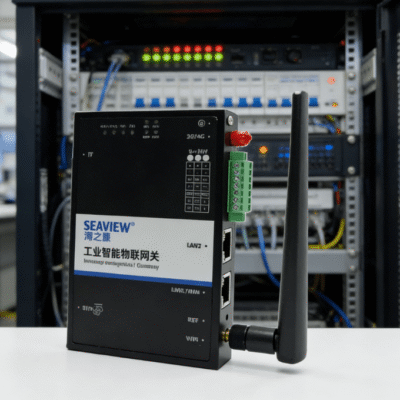
An industrial IoT gateway functions as a critical bridge between local hardware and remote servers. What role does a gateway play in iot environments? It primarily manages data flow, performs protocol translation, and secures the entire network. Without a gateway, thousands of sensors would struggle to communicate with cloud platforms. It acts as the intelligent brain of a distributed industrial system.
This device ensures that legacy machinery can participate in modern digital ecosystems. It collects signals from various sources and converts them into standardized web formats. Furthermore, it manages high-volume traffic to prevent network congestion. For B2B operations, the gateway provides the reliability needed for 24/7 automated production. It transforms raw sensor signals into actionable business intelligence.
Modern gateways are now evolving into sophisticated edge computing devices. They do not just pass data; they analyze it in real-time. This reduces the burden on central cloud servers and lowers operational costs. Every industrial digital strategy begins with a robust gateway infrastructure. It is the essential foundation for any scalable IoT deployment.
Bridging Communication in Industrial IoT
The primary communication role involves connecting diverse hardware that speaks different technical languages. Industrial sensors often use specialized local protocols that cloud servers cannot understand. The gateway functions as a multi-protocol interpreter for the entire network. A gateway ensures seamless data exchange between incompatible systems.
Protocol Translation for Legacy Systems
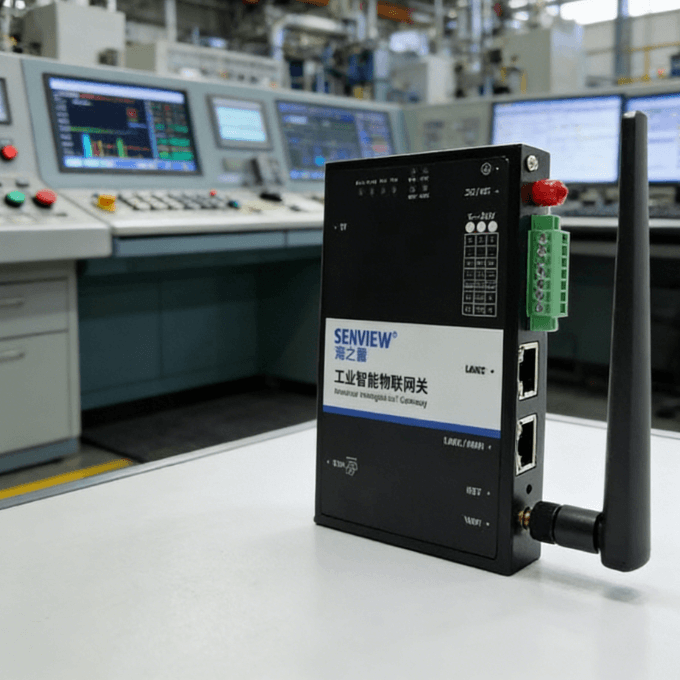
Most older industrial machines use serial connections or specific fieldbus protocols. Modern analytics platforms require internet-friendly formats like MQTT or JSON. The gateway translates these complex signals into a readable data stream. Protocol conversion is the most essential function of an IoT gateway. It allows companies to digitize old factories without replacing expensive machinery.
To understand the complexity, consider the common protocol types handled by gateways:
- Modbus RTU/TCP for industrial controllers and power meters.
- OPC UA for secure machine-to-machine industrial automation.
- Zigbee or LoRaWAN for long-range wireless sensor networks.
- PROFINET for high-speed data exchange in manufacturing.
Data Aggregation and Bandwidth Optimization
Sending every single vibration or temperature reading to the cloud is inefficient. Industrial gateways collect these thousands of data points and aggregate them into packets. This process filters out noise and redundant information before transmission. Efficient data aggregation can reduce cellular bandwidth usage by over 30%. This optimization is vital for remote sites using metered 4G or 5G connections.
Enhancing Security and Edge Intelligence
Security remains the biggest concern for any business adopting connected technologies. The gateway serves as the primary security guard for the local network layer. It separates the vulnerable field devices from the public internet. A gateway provides a hardware-level firewall for industrial equipment.
Gateway-Level Security Measures
IoT gateways use advanced encryption standards like AES-256 for all data transfers. They also manage identity authentication for every connected sensor in the facility. This ensures that only authorized devices can send or receive sensitive information. Implementing a secure gateway reduces the risk of local network breaches. It creates a protected environment for mission-critical industrial operations.
The following security features are typically integrated into professional gateways:
- VPN Support for creating encrypted tunnels to the central office.
- Hardware Root of Trust to prevent unauthorized firmware tampering.
- Stateful Firewalls to block malicious incoming traffic automatically.
- Automatic Security Patching to defend against emerging cyber threats.
Local Processing via Edge Computing
Edge computing gateways allow for near-instantaneous decision-making on the factory floor. They process critical alarms and logic locally without waiting for cloud responses. This reduces system latency from hundreds of milliseconds to nearly zero. Edge intelligence ensures that safety systems respond immediately to failures. It also keeps the system running if the internet connection is lost.
Choosing Reliable Digital Connectivity Solutions
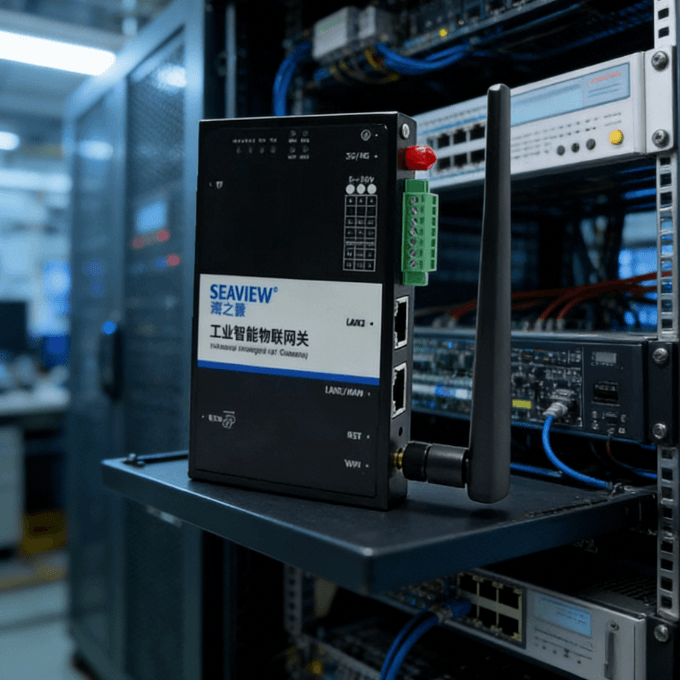
Selecting the right hardware requires a deep understanding of your operational environment. You must evaluate the number of ports, supported protocols, and environmental durability. The right choice prevents future bottlenecks and reduces long-term maintenance costs. Professional-grade hardware is the backbone of industrial reliability.
Industrial-Grade Hardware Requirements
Standard office routers are not built for the heat and vibration of a factory. Industrial gateways feature rugged metal shells and fanless cooling designs for extreme conditions. They must support wide power input ranges to handle voltage fluctuations. Ruggedized hardware ensures continuous operation in harsh industrial settings. This durability is essential for preventing costly production downtime.
Selecting the Right 4G/5G Edge Gateway
For businesses requiring high-speed data transfer, selecting advanced wireless models is critical. You can explore a variety of 4G/5G/Edge Computing Gateways to find the ideal match for your needs. These gateways provide the high bandwidth required for high-definition monitoring and AI analysis. They integrate the latest cellular technology with powerful local processing cores. Modern 5G gateways enable the next generation of smart manufacturing.
Summary
An IoT gateway plays the essential role of a bridge, a security shield, and a local processor. It enables legacy machines to talk to the cloud while protecting them from cyber threats. By using edge computing, it ensures your system remains fast and reliable. Choosing the right gateway is the most important decision for a successful B2B IoT project.
FAQ
1. What is the main difference between a gateway and a router?
A router simply moves data between networks using the same protocol. A gateway performs complex protocol translation and data processing before moving the information. It acts as an intelligent translator rather than a simple mail sorter.
2. Why do I need a gateway for wireless sensors?
Most wireless sensors use low-power signals like Zigbee that cannot connect to the internet. The gateway receives these signals and converts them into Wi-Fi or Ethernet formats. It provides the internet access that small sensors lack.
3. Can a gateway function without an internet connection?
Yes, an edge-enabled gateway can manage local logic and data storage offline. It will synchronize its data with the cloud once the connection is restored. This feature is vital for remote mining or maritime operations.
4. How many devices can a single industrial gateway handle?
A high-performance industrial gateway can typically manage hundreds of simultaneous sensor connections. The exact number depends on the data frequency and the processing power of the gateway. Always check the hardware specifications for maximum device limits.
Reference Sources
IEEE Xplore – Edge Computing in IoT Gateways