
Top Benefits of Industrial Ethernet in Smart Manufacturing

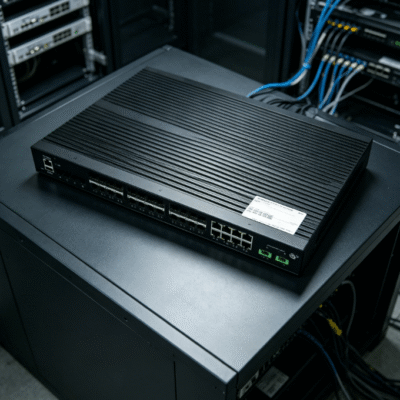
The rapid evolution of Industry 4.0 has transformed traditional factories into highly integrated digital ecosystems. At the heart of this transformation lies a robust communication backbone known as Industrial Ethernet. Unlike standard office networks, these systems handle extreme temperatures, heavy vibrations, and electromagnetic interference. Implementing this technology allows manufacturers to synchronize complex machinery with enterprise-level software seamlessly. By adopting these advanced networking standards, companies can achieve unprecedented levels of operational transparency and control.
One of the most significant industrial ethernet benefits is the ability to support massive data throughput across long distances. Modern smart factories generate terabytes of data from sensors, actuators, and vision systems daily. Traditional fieldbus systems often struggle with the bandwidth required for these high-speed applications. Industrial Ethernet provides a scalable environment that supports speeds from 100 Mbps to 10 Gbps. This capacity ensures that time-critical information reaches its destination without latency or packet loss.
| Feature | Traditional Fieldbus | Industrial Ethernet |
| Data Speed | Low (Kbps to Mbps) | High (100 Mbps to 10 Gbps) |
| Network Topology | Limited (mostly Bus) | Flexible (Star, Ring, Tree) |
| Interoperability | Vendor-specific | High (TCP/IP standard) |
| Distance | Short distances | Long distances via fiber |
Why Industrial Ethernet is Essential for Real-Time Automation
The shift toward Industrial Ethernet is driven by the need for deterministic communication in motion control. In a smart manufacturing setup, multiple robotic arms must move in perfect synchronization. Even a microsecond delay can cause mechanical collisions or production defects. Modern protocols like PROFINET and EtherCAT leverage the physical layer of Ethernet to provide real-time performance. These protocols ensure that control commands take priority over standard diagnostic traffic.
Enhancing Reliability in Harsh Environments
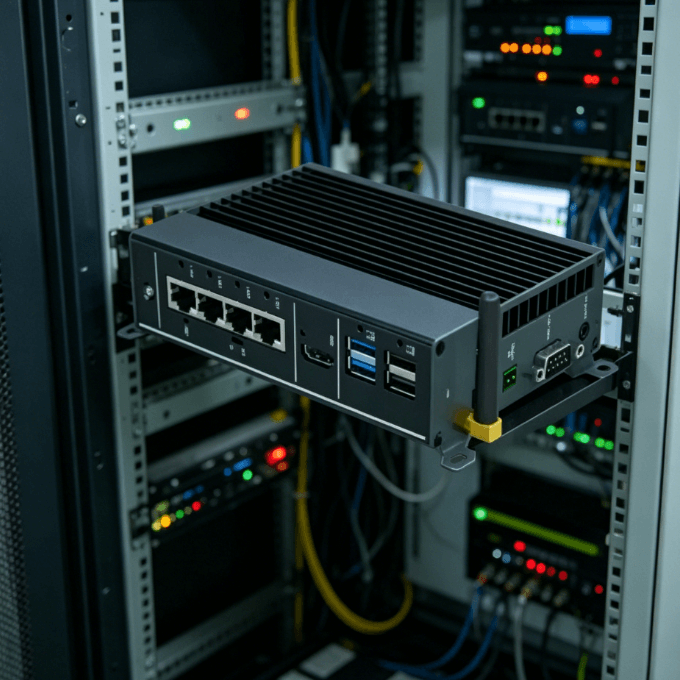
Reliability in demanding conditions remains a cornerstone of this technology. High-quality hardware is designed with IP-rated enclosures to resist dust and moisture effectively. Many systems feature redundant power inputs to prevent network downtime during electrical failures. By utilizing Industrial Ethernet, manufacturers ensure that their critical infrastructure remains operational in temperatures ranging from -40°C to 75°C. This resilience is vital for heavy industries like steel milling or chemical processing.
Streamlining Safety and Efficiency
Furthermore, Industrial Ethernet facilitates the integration of safety protocols directly into the network architecture. Functional safety, often referred to as “Safety over Ethernet,” allows emergency signals to travel over the same cable as standard data. This integration reduces the need for extensive hardwiring, which simplifies maintenance and lowers installation costs. Recent industry data suggests that integrated safety networks can reduce wiring time by up to 35% compared to traditional relay-based systems.
Key Industrial Ethernet Benefits for Data Integration
The primary advantage of using an Ethernet-based backbone is the seamless flow of information from the shop floor to the top floor. In older systems, data silos prevented managers from seeing real-time production metrics. Industrial Ethernet utilizes the standard TCP/IP suite, making it compatible with existing IT infrastructure. This compatibility allows Cloud platforms and ERP systems to pull data directly from PLC controllers. Consequently, decision-makers can monitor Key Performance Indicators (KPIs) from anywhere in the world.
Advanced Diagnostics and Maintenance
Enhanced diagnostics represent another vital aspect of industrial ethernet benefits. Modern network management tools allow technicians to monitor port traffic and cable integrity remotely. If a connection begins to degrade, the system sends an automated alert before a total failure occurs. This proactive approach to maintenance significantly reduces unplanned downtime. Studies indicate that predictive maintenance powered by networked sensors can increase equipment uptime by 10% to 20% on average.
Scalability and Future-Proofing
Scalability ensures that a network can grow alongside the manufacturing facility. Adding a new production line with Industrial Ethernet is often as simple as plugging into a nearby switch. Standardized connectors like M12 and RJ45 make physical expansions quick and error-free. This flexibility allows manufacturers to adapt to changing market demands without overhauling their entire communication strategy. It supports a “plug-and-play” environment that is essential for modular factory designs.
How to Select the Right Connectivity Infrastructure
Choosing the appropriate networking hardware is critical for maximizing the industrial ethernet benefits mentioned above. Manufacturers must first evaluate the environmental conditions of their facility. If the area is prone to high electromagnetic interference, shielded cabling and fiber optic options become necessary. For applications requiring high availability, industrial grade switches with Rapid Spanning Tree Protocol (RSTP) are essential. These features allow the network to recover from a broken link in milliseconds.
The distinction between managed and unmanaged switches is a key decision point for engineers. Unmanaged switches offer a cost-effective solution for simple, isolated segments. However, managed switches provide the VLAN support and Quality of Service (QoS) features needed for complex traffic. For those integrating advanced automation, modern digital connectivity solutions must support high-bandwidth protocols. Evaluating specific port density and power-over-ethernet (PoE) requirements ensures the hardware supports all peripheral devices efficiently.
Security remains a paramount concern when connecting factory floors to the internet. Robust Industrial Ethernet hardware includes built-in security features like port authentication and access control lists. Selecting devices that adhere to international cybersecurity standards helps protect the production line from external threats. Ultimately, the right infrastructure acts as a bridge between physical hardware and digital intelligence. Professional networking components ensure that this bridge remains stable, secure, and fast under all operating conditions.
Summary
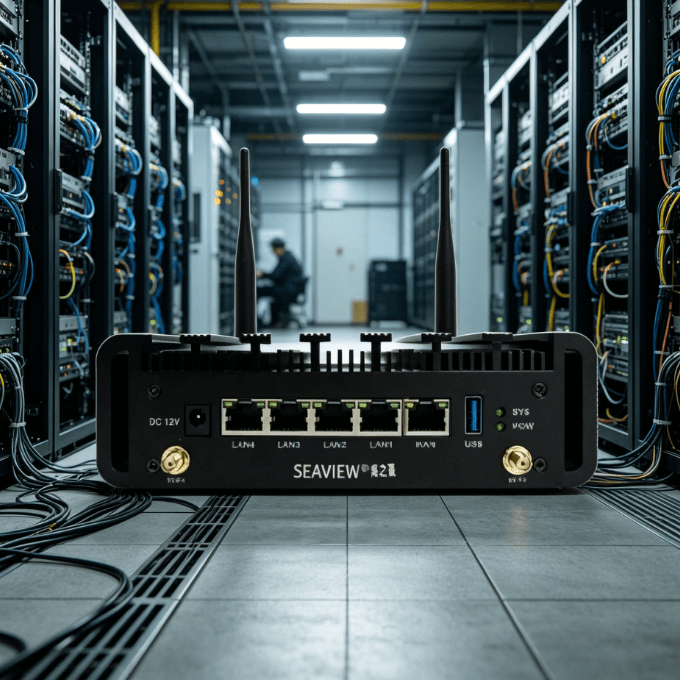
Industrial Ethernet provides high-speed, reliable, and scalable connectivity that is fundamental to smart manufacturing success. It enables real-time synchronization, simplifies data integration between IT and OT layers, and supports proactive maintenance. By choosing industrial-grade hardware, manufacturers can ensure their network survives harsh conditions while providing the bandwidth necessary for future digital growth.
FAQ
1. What are the main industrial ethernet benefits?
The main benefits include high data transfer speeds, long-distance connectivity, and seamless integration with IT systems.
It also supports real-time determinism required for high-precision motion control and automation in complex manufacturing environments.
2. How does Industrial Ethernet differ from standard Ethernet?
While they share the same basic protocols, Industrial Ethernet hardware is specifically ruggedized for extreme factory environments.
It includes features like vibration resistance, extended temperature ranges, and specialized protocols designed for real-time performance and reliability.
3. Can Industrial Ethernet improve factory safety?
Yes, it supports safety-over-ethernet protocols which allow safety signals to run on the same network as control data.
This reduces complex wiring requirements and allows for faster, more reliable emergency responses across the entire production facility.
4. Is it difficult to upgrade to an Ethernet-based network?
Upgrading is often straightforward because it uses standardized cabling and globally recognized communication protocols.
Modern gateways also allow legacy fieldbus devices to communicate with a new Ethernet backbone, effectively protecting existing capital investments.
Reference Sources
IEEE Xplore – Research on Industrial Ethernet Performance
ODVA – EtherNet/IP Technology and Applications
PI (Profibus & Profinet International) – Industrial Communication Standards