
Understanding Industrial Network Data Transfer

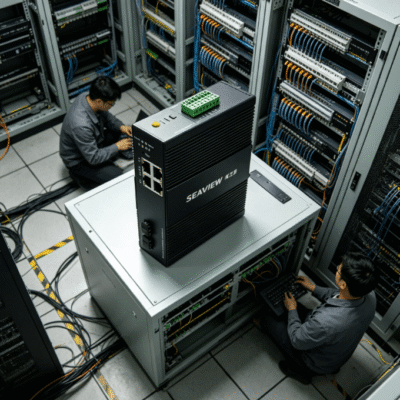
An industrial network is the backbone of modern manufacturing and automation. Unlike standard office setups, these systems connect sensors, controllers, and heavy machinery across vast distances. They must operate flawlessly in environments with extreme temperatures, high humidity, and electromagnetic interference. By facilitating real-time data exchange, these networks ensure that automated production lines remain synchronized and efficient.
What Is an Industrial Network and How Does It Work?
An industrial network is a specialized communication system designed to handle large-scale data transfer between industrial devices. It functions by connecting field devices, such as programmable logic controllers (PLCs), to centralized management systems. The core mechanism involves transmitting digital signals over physical media like copper cables or fiber optics.
At its heart, the process relies on specific protocols like Modbus, Profinet, or EtherNet/IP. These protocols define how data packets are addressed, transmitted, and acknowledged within the system. For instance, a sensor detects a temperature change and sends a packet to a controller. The controller processes this data in milliseconds to adjust the machinery speed.
Modern setups frequently utilize an industrial network to bridge the gap between Information Technology (IT) and Operational Technology (OT). This integration allows factory managers to monitor floor operations from a remote office. High-speed data throughput ensures that even complex visual inspection systems can transmit high-resolution images without lag.
| Feature | Standard Enterprise Network | Industrial Network |
| Operating Temp | 0°C to 40°C | -40°C to 75°C |
| Vibration Resistance | Low | High (IEC 60068-2-6) |
| Communication Mode | Best-effort delivery | Real-time / Deterministic |
| Mounting Style | Rack or Desktop | DIN-Rail or Wall Mount |
Essential Components of an Industrial Network Architecture
Reliable connectivity depends on specialized hardware that can survive industrial rigors. Industrial switches serve as the primary nodes, directing traffic between various connected devices. Unlike commercial versions, these devices feature fanless cooling and rugged metal casings to dissipate heat.
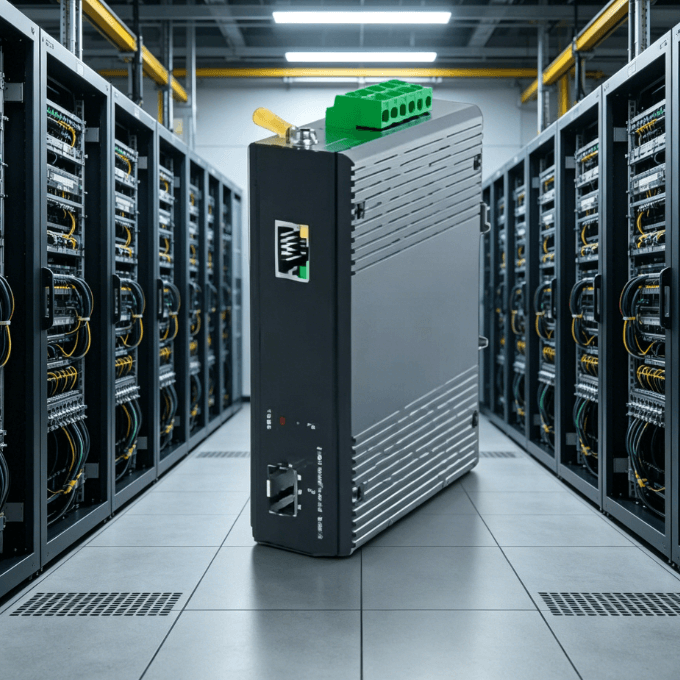
The Role of Signal Amplification
Repeaters play a vital role in extending the reach of these networks. An industrial Ethernet repeater boosts electrical signals, allowing data to travel over longer distances without degradation. This is crucial in large-scale plants where cable runs exceed the standard 100-meter limit for copper.
Specialized Hardware for Factory Control
Automation-specific hardware is also required for seamless integration. High-performance automation industry switches are often pre-configured to prioritize control traffic over standard data. This prioritization prevents network congestion from delaying critical “stop” commands or safety alerts.
The reliability of these components is backed by rigorous testing standards. For example, high-end industrial hardware often boasts a Mean Time Between Failures (MTBF) of over 500,000 hours. This equates to roughly 57 years of continuous operation under specific conditions. Furthermore, they typically support Redundant Ring technology, which can recover a broken connection in less than 20 milliseconds.
The Role of Ethernet in Industrial Data Transfer
Ethernet has become the dominant technology for the modern industrial network due to its scalability. While traditional fieldbuses were limited in bandwidth, Industrial Ethernet supports speeds from 100 Mbps to 10 Gbps. This capacity is essential for modern Industry 4.0 applications involving big data and AI.
Achieving Deterministic Communication
Data transfer in these environments must be deterministic, meaning the time for a message to arrive is guaranteed. To achieve this, industrial-grade hardware utilizes Quality of Service (QoS) features. QoS ensures that time-critical motion control data receives higher priority than routine firmware updates.
Physical Security and Environmental Protection
Furthermore, physical security and environmental protection are paramount. Many rugged network devices carry an IP30 or IP40 rating, protecting internal circuits from dust and debris. This mechanical durability ensures that data transfer remains stable even when machines create significant physical vibrations.
Research indicates that using shielded twisted pair (STP) cabling in these networks reduces electromagnetic interference (EMI) by up to 40%. This reduction is critical near high-voltage motors that generate significant noise. By maintaining signal integrity, the industrial network prevents data corruption and costly production downtime.
Selecting the Right Infrastructure for Your Facility
Choosing the correct hardware depends on your specific environmental challenges and data requirements. You must first evaluate the temperature range of your facility to ensure equipment longevity. If your machinery operates in unheated warehouses or near furnaces, wide-temperature support is mandatory for all nodes.
Port Density and Mounting Options
Port density and mounting options also dictate the suitability of your network nodes. For compact control cabinets, DIN-rail mounted hardware provides a space-saving solution. Conversely, if you are connecting multiple IP cameras for surveillance, you may require switches with Power over Ethernet (PoE) capabilities.
Future-Proofing the Network
The scale of your operation determines if you need signal amplification. If your network spans several buildings, integrating specialized repeaters or fiber optic converters becomes necessary. These tools ensure that data remains clear and consistent across the entire enterprise. Finally, consider the level of management required; unmanaged switches work for simple loops, while managed switches offer better security.
Selecting high-quality components ensures that your industrial network remains future-proof. Look for hardware that complies with international standards like CE, FCC, and RoHS. These certifications verify that the equipment meets safety and environmental regulations for global industrial use.
Summary
An industrial network connects machines and systems using ruggedized hardware and deterministic protocols to ensure reliable production. By implementing specialized switches and repeaters, facilities can maintain high-speed data transfer in harsh environments. This infrastructure is the foundation for operational efficiency and digital transformation in modern manufacturing.
FAQ
1. What makes a switch “industrial grade” compared to regular models?
Industrial-grade switches feature rugged enclosures, fanless designs, and the ability to operate in extreme temperatures from -40°C to 75°C. They also include specialized protections against electrical surges and mechanical vibrations common in factories.
2. How does an industrial network prevent total system data loss?
These networks use redundancy protocols like RSTP (Rapid Spanning Tree Protocol) or proprietary ring technologies. If a cable fails or a node goes offline, the network automatically reroutes data in milliseconds to prevent production interruption.
3. Why is latency critical in industrial data transfer environments?
Latency must be extremely low because automated machines require near-instant feedback to stay synchronized. High latency can cause mechanical errors, safety hazards, or defective product batches due to timing mismatches between sensors and actuators.
4. Can I use a regular office switch in a heavy factory setting?
Typically, you should not use office switches because they lack the durability to handle heat, dust, and electrical noise. Standard switches often fail prematurely in industrial settings, leading to expensive downtime and potential equipment damage.
Reference Sources
Cisco – Industrial Ethernet Design Guides and Reliability Data
Belden – Industrial Networking and Cable Signal Integrity Research