
What Are Rugged Industrial Switches? Features & Use Cases

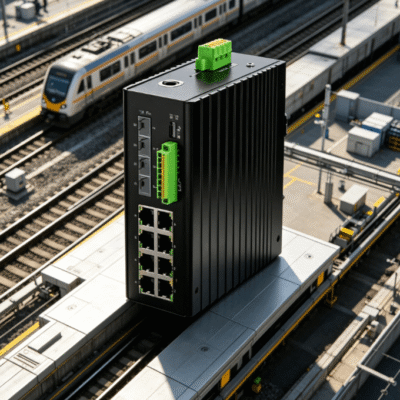
In modern industrial automation, standard networking hardware often fails under pressure. A rugged industrial switch is a specialized networking device designed to operate reliably in harsh environments. These switches differ significantly from commercial-grade equipment found in climate-controlled offices. They feature hardened components that withstand extreme temperatures, moisture, and intense vibrations.
Unlike standard models, these devices prioritize uptime in mission-critical applications. Engineers deploy them in locations where hardware failure could lead to dangerous system collapses. Their robust architecture ensures continuous data transmission for factories, power plants, and transportation hubs. Understanding their unique capabilities is essential for building a resilient industrial network.
Why You Need a Rugged Industrial Switch for Harsh Environments
Traditional switches typically operate within a narrow temperature range of 0°C to 40°C. In contrast, a rugged industrial switch is engineered to function between -40°C and 85°C. This wide thermal tolerance prevents hardware damage in unconditioned outdoor cabinets or high-heat manufacturing floors. High-quality industrial models often utilize fanless designs to minimize mechanical failure points.
Mechanical durability is another defining characteristic of these devices. They are tested to resist significant physical shock and constant vibration from heavy machinery. Most units carry an IP30 or IP40 rating, protecting internal circuits from dust and solid objects. These physical protections ensure that the network remains stable even in physically demanding settings.
Electromagnetic interference (EMI) poses a constant threat in industrial zones. Heavy motors and high-voltage equipment generate electrical noise that can corrupt data packets. A rugged industrial switch incorporates advanced shielding and surge protection to maintain signal integrity. This reliability is vital for maintaining the high-speed connectivity required by modern sensors and controllers.
| Feature | Commercial Switch | Rugged Industrial Switch |
| Operating Temp | 0°C to 40°C | -40°C to 85°C |
| Cooling Method | Internal Fans | Fanless Heat Dissipation |
| Input Power | Single AC Input | Dual Redundant DC Inputs |
| Mounting | Desktop / 19″ Rack | DIN-Rail / Wall Mount |
| Housing | Plastic / Thin Metal | Reinforced Aluminum / Steel |
Core Technical Features of Industrial Grade Hardware
Power reliability is a cornerstone of industrial networking. Most rugged industrial switch models support dual redundant power inputs ranging from 12V to 48V DC. If one power source fails, the switch seamlessly switches to the backup without losing a single packet. This redundancy is critical for remote sites where power stability is often inconsistent.
Data recovery speed is another area where these switches excel. They utilize specialized protocols like ERPS (Ethernet Ring Protection Switching) to handle network loops. In the event of a cable break, a rugged switch can reroute data in less than 20ms. This near-instant recovery prevents system downtime in complex industrial topologies.
Connectivity and PoE Integration
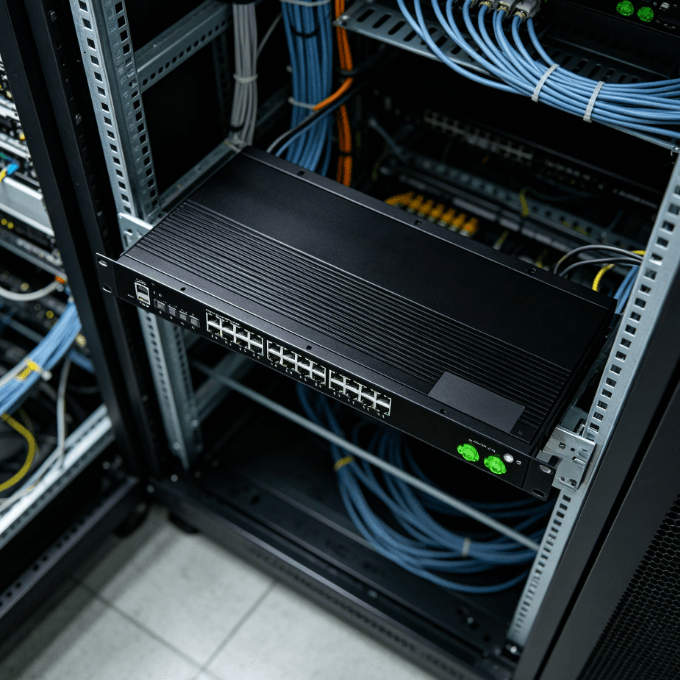
Connectivity options are tailored for diverse industrial needs. High-performance models offer a mix of Gigabit RJ45 ports and SFP fiber slots for long-distance transmission. For example, professional industrial grade switches provide up to 10 ports, including PoE+ (Power over Ethernet) capabilities. This allows the switch to power IP cameras and wireless access points directly through the data cable.
Primary Use Cases Across Global Industries
In the energy sector, a rugged industrial switch facilitates real-time monitoring of solar farms and wind turbines. These locations experience extreme weather fluctuations and lightning strikes. The switch’s integrated surge protection and wide temperature range are non-negotiable for these assets. Reliable data flow ensures that operators can balance the grid effectively.
The transportation industry relies heavily on hardened networking for traffic management systems. Switches installed in roadside cabinets must endure constant vibrations from passing vehicles. They connect high-definition cameras and vehicle sensors to central control rooms. A rugged industrial switch ensures these safety systems remain online 24/7, regardless of outdoor conditions.
Manufacturing and Industry 4.0
Manufacturing facilities use these switches to connect Programmable Logic Controllers (PLCs) on the factory floor. The presence of oil mist, metallic dust, and chemical vapors would quickly destroy standard gear. By using rugged industrial switch hardware, manufacturers reduce maintenance costs and improve Overall Equipment Effectiveness (OEE). This connectivity is the backbone of the Industry 4.0 revolution.
Selecting the Right Switch for Your Infrastructure
Choosing the correct networking hardware requires a deep understanding of your operational environment. You must first evaluate the specific temperature extremes and potential exposure to moisture. If your equipment resides in a wash-down area, a higher IP rating is mandatory. Always prioritize a rugged industrial switch that meets the specific certifications for your industry.
Compatibility with existing power systems is another vital consideration for integration. Many industrial sites use DC power rails rather than standard AC wall outlets. Ensure the switch supports the voltage range provided by your industrial power supplies. Additionally, consider whether you need managed features for remote troubleshooting and VLAN configuration.
Mounting constraints often dictate the physical form factor of the device. Space-constrained cabinets usually require DIN-Rail mounting for easy installation alongside other controllers. Choosing a compact yet durable design allows for high-density port configurations in tight spaces. Quality hardware should feel substantial and feature a professional-grade metallic casing.
Summary
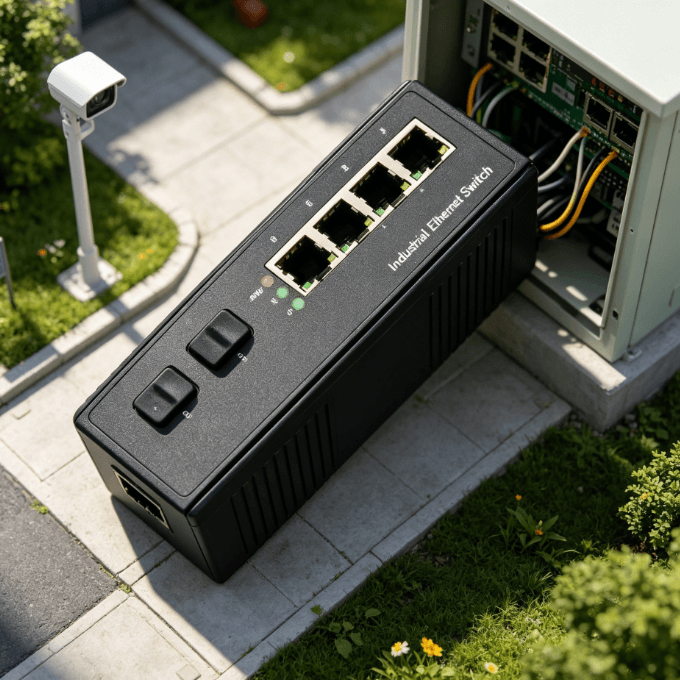
A rugged industrial switch provides the durability and reliability required for harsh environments. It features wide temperature tolerances, EMI protection, and rapid data recovery protocols. By investing in these hardened devices, organizations can prevent costly downtime and ensure consistent data transmission. These switches are the essential building blocks for any resilient industrial network.
FAQ
1. What makes a switch rugged compared to standard models?
A rugged switch uses industrial-grade components, fanless cooling, and reinforced metal housing. These features allow it to survive extreme temperatures, vibration, and electrical interference that would break standard hardware.
2. Can a rugged industrial switch operate in sub-zero temperatures?
Yes, most industrial-grade switches are rated to operate down to -40°C. They are designed with specialized internal circuitry that does not require warming cycles to start.
3. Why is redundant power important in industrial switches?
Redundant power prevents network failure if a single power supply or circuit goes offline. This ensures that critical monitoring and control systems stay connected during localized power issues.
4. Do these switches support Power over Ethernet (PoE)?
Many rugged models include PoE or PoE+ ports to deliver up to 30W of power per port. This simplifies the installation of outdoor security cameras and sensors in remote areas.
Reference Sources
IEEE Xplore: Standards for Industrial Ethernet and Environmental Testing