
How Industrial Edge AI Gateways Enable Real-Time Data?

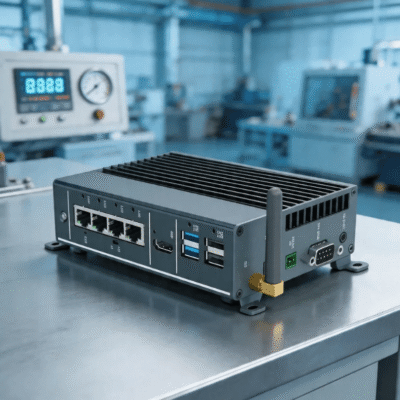
The rapid expansion of the Industrial Internet of Things (IIoT) has created a massive influx of sensor data. Traditional cloud computing often struggles with the high latency required for critical decision-making. Using an edge ai gateway industrial solution allows companies to process data locally. This shift ensures that automated systems react within milliseconds to environmental changes.
Modern manufacturing environments demand precision and immediate feedback loops. Relying on remote servers introduces delays that can compromise machine safety. By integrating AI at the edge, facilities can achieve autonomous operations without constant internet dependency. This localized approach is the cornerstone of the next industrial revolution.
How Edge AI Gateways Reduce Latency for Industrial Applications
Real-time processing is defined by the ability to handle data as it arrives. An edge ai gateway industrial device eliminates the need to send raw data to a centralized cloud. Instead, it performs complex inferencing directly on the factory floor. This reduces the round-trip time from hundreds of milliseconds to under 10 milliseconds.
Bandwidth optimization is another critical benefit of edge processing. Transferring terabytes of raw video or vibration data is costly and slow. Edge gateways filter this information, sending only relevant alerts to the cloud. This efficiency ensures that critical emergency protocols trigger instantly when an anomaly is detected.
Local data processing also enhances reliability during network outages. In a traditional setup, a lost connection could halt production entirely. High-performance AI artificial intelligence gateways allow local controllers to maintain logic and safety functions independently. This resilience is vital for high-stakes industries like chemical processing.
Technical Features of the Industrial Intelligent Controller SIE2000K4
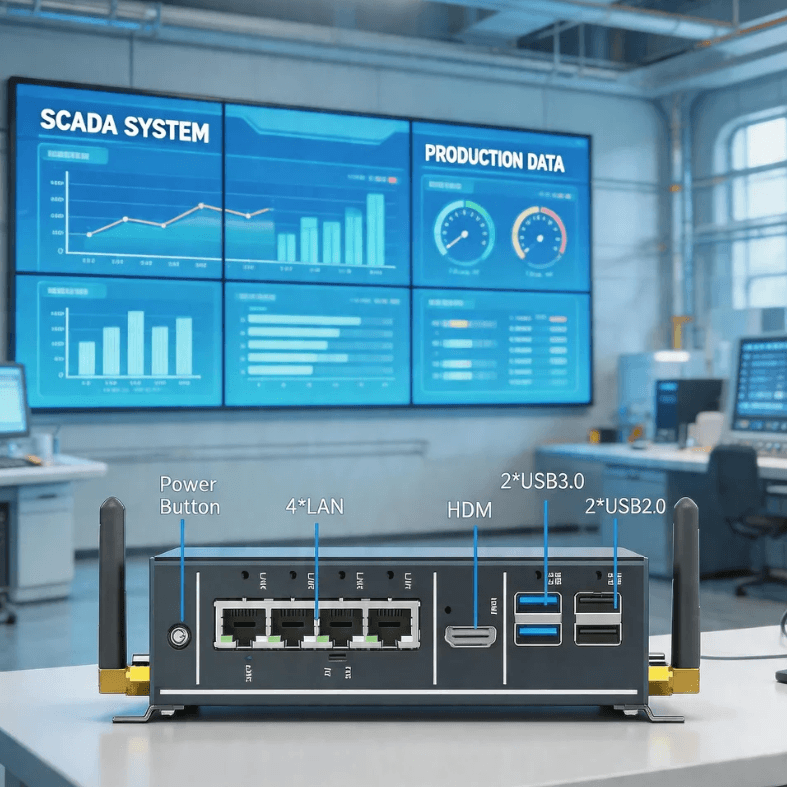
The Industrial Intelligent Controller SIE2000K4 represents a significant leap in edge computing hardware. It features high-performance processing capabilities designed specifically for rugged environments. This model supports diverse I/O interfaces to connect seamlessly with legacy and modern machinery. Its architecture is optimized for running deep learning models with low power consumption.
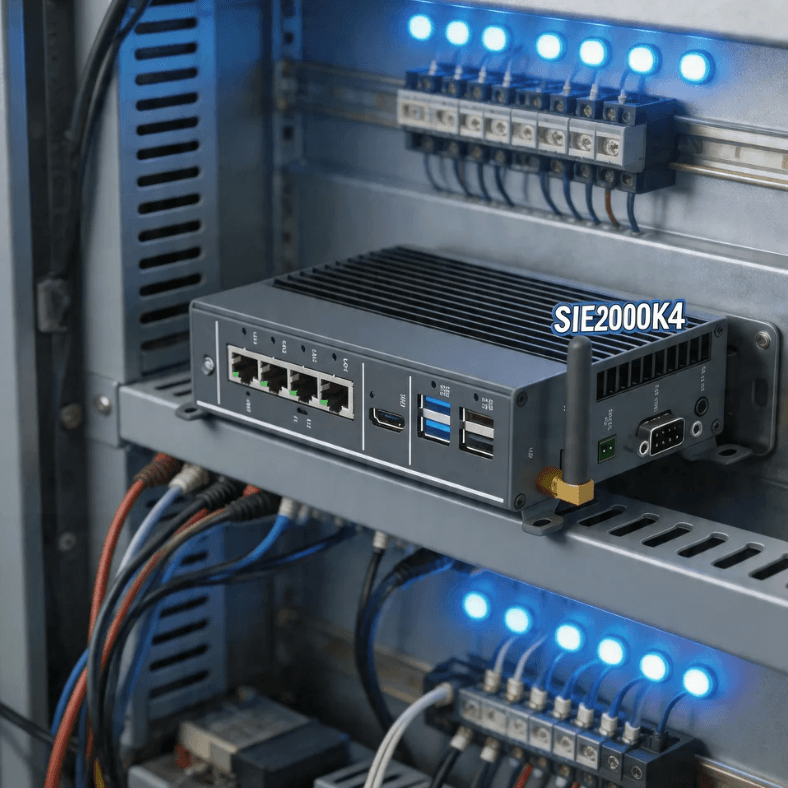
Equipped with advanced thermal management, the SIE2000K4 operates reliably in extreme temperatures. It integrates seamlessly into a modern industrial network, providing a bridge between OT and IT layers. The device supports multiple communication protocols, ensuring data flows smoothly from sensors to the edge engine.
| Feature | Specification | Industrial Benefit |
| Processor | High-Performance AI Engine | Rapid neural network inferencing |
| Connectivity | Multi-protocol Support | Universal machine integration |
| Durability | Industrial-grade casing | Stable operation in harsh settings |
| Latency | < 5ms Processing | Real-time safety intervention |
Why Real-Time Data is Essential for Predictive Maintenance
Predictive maintenance relies on the constant analysis of vibration, sound, and temperature. An edge ai gateway industrial unit analyzes these patterns to predict failures before they occur. According to industry research, real-time analytics can reduce maintenance costs by up to 30%. It also extends the lifespan of expensive machinery by preventing catastrophic breakdowns.
Wait times for cloud-based analysis can result in missed windows for intervention. Edge AI models can detect a “bearing wear” signature in a fraction of a second. The gateway then signals the PLC to adjust speed or stop the line. This proactive stance transforms maintenance from a reactive burden into a strategic advantage.
Furthermore, edge processing protects sensitive intellectual property. Keeping operational data within the local network reduces the surface area for cyberattacks. Manufacturers can train models on-site without exposing proprietary production techniques to the public internet. This combination of speed and security is driving global adoption.
Selecting the Right Hardware for Your Edge Infrastructure
Choosing an appropriate gateway requires balancing computational power with physical constraints. You must evaluate whether a device can handle specific AI frameworks like TensorFlow or PyTorch. The SIE2000K4 is a prime example of a balanced edge solution. It offers enough “TOPS” (Tera Operations Per Second) for complex vision tasks while remaining compact.
Environmental factors also play a huge role in the selection process. Industrial sites often deal with dust, vibration, and electromagnetic interference. Ensure your chosen hardware meets specific IP ratings and shock resistance standards. A failure in the gateway could lead to a total loss of visibility into the production process.
Compatibility with existing software stacks is the final consideration. Look for hardware that supports containerized applications, such as Docker. This allows for easy deployment of AI models across hundreds of different edge nodes. A flexible hardware platform ensures your investment remains relevant as AI models evolve.
Summary
Industrial Edge AI gateways enable real-time data processing by moving intelligence to the network perimeter. This architecture slashes latency, saves bandwidth, and secures sensitive operational data. By implementing robust hardware, industries can achieve the millisecond responsiveness required for modern automation and predictive maintenance.
FAQ
1. What is an edge AI gateway in an industrial setting?
An edge ai gateway industrial is a specialized hardware device that collects data from local sensors and processes it using artificial intelligence on-site.
It acts as a bridge between industrial equipment and the cloud, providing immediate analytical results without relying on remote servers.
2. How does an AI gateway improve factory safety?
It provides near-instantaneous response times for safety-critical systems by processing data at the source.
By analyzing video or sensor feeds locally, the gateway can trigger emergency stops faster than any human or cloud-based system.
3. Can the SIE2000K4 handle computer vision tasks?
Yes, the SIE2000K4 industrial intelligent controller is designed with high-performance logic to support complex AI tasks.
This includes real-time object detection, quality inspection, and spatial analysis on the factory floor.
4. Does edge AI work without an internet connection?
Yes, one of the primary advantages of these gateways is their ability to perform data processing and decision-making offline.
This ensures continuous operation and safety protocol execution even during total network failures.
5. How much data can an industrial edge gateway save?
By filtering out “noise” and only sending relevant anomalies to the cloud, edge gateways can reduce data transmission volumes by over 90%.
This significantly lowers connectivity costs and reduces the load on enterprise IT infrastructures.
Reference Sources
IEEE Xplore – Edge Computing for Real-Time Industrial Applications
International Society of Automation (ISA) – The Role of AI in Industrial Automation