
Improving Uptime with Industrial Ring Redundancy

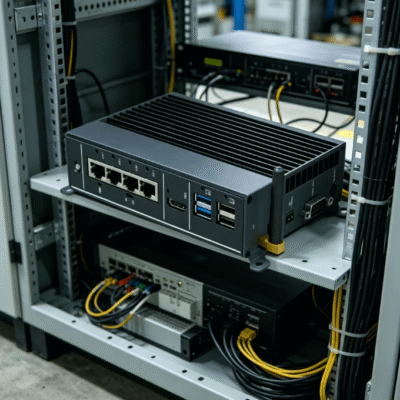
In modern manufacturing, even a few seconds of network downtime can result in massive financial losses. Traditional linear or star topologies often lack the resilience needed for critical infrastructure. An industrial ring network redundancy strategy provides a fail-safe path for data packets. This structure ensures that if one cable fails, the system reroutes traffic instantly. By closing the loop, engineers create a self-healing environment that maintains constant communication.
Industrial environments face harsh conditions like high temperatures, electromagnetic interference, and physical vibrations. Standard commercial hardware often fails under these specific stresses. Therefore, choosing ruggedized equipment is the first step toward a reliable architecture. High-performance industrial grade switches are designed to handle these environmental challenges while managing complex protocols. These devices form the backbone of a resilient ring, ensuring high availability for PLCs and sensors.
Implementing a ring topology requires a deep understanding of recovery times and protocol limitations. Rapid Spanning Tree Protocol (RSTP) was once the standard, but it often lacks the speed for motion control. Modern industrial standards now prioritize proprietary or specialized ring protocols for faster healing. These technologies allow networks to recover in less than 20 milliseconds. This level of performance is essential for maintaining safety and synchronization in automated production lines.
How to Design a Redundant Ring Network for Industrial Systems
Designing a robust ring begins with mapping the physical layout of your facility. You must identify all critical nodes that require 100% uptime. Connect these nodes in a circular fashion using high-quality fiber or shielded Ethernet cables. This physical loop creates the necessary redundant paths for data. However, a physical loop without logic will cause a broadcast storm, crashing the entire system.
To prevent loops while maintaining redundancy, you must configure a “Ring Master” or “Manager” node. This switch logically breaks the loop during normal operations to prevent data circling. If the manager detects a link failure, it instantly unblocks the backup path. This transition must be seamless to avoid interrupting time-sensitive industrial processes. Selecting switches with dedicated ring management software simplifies this complex configuration process.
| Feature | RSTP (Standard) | MRP (IEC 62439-2) | Proprietary Ring |
| Recovery Time | 1–5 Seconds | < 200 ms | < 20 ms |
| Complexity | Moderate | High | Low/Moderate |
| Scalability | High | Medium | High |
The choice of cabling also impacts the effectiveness of your industrial ring network redundancy setup. Fiber optic cables provide immunity to electrical noise, making them ideal for long-distance rings. In contrast, copper is suitable for shorter runs within a single control cabinet. Ensuring that every link in the ring has sufficient bandwidth is vital. Congestion on a backup path can be just as damaging as a physical break.
Optimizing Recovery Speed with Modern Protocols
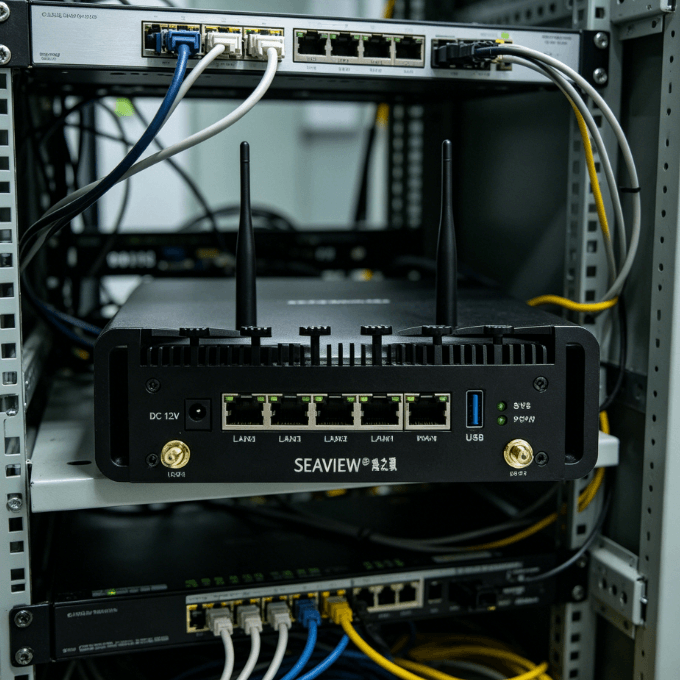
To achieve maximum stability, engineers should utilize digital connectivity solutions that offer real-time monitoring. Managed switches provide diagnostic data, such as port status and error rates. This allows maintenance teams to identify a “hidden” failure in a redundant link. Without monitoring, a ring might run on its backup path for weeks without anyone knowing. If the second link then fails, the entire network goes dark.
Reliability in a ring network is often measured by its convergence time. In high-speed automotive assembly, a delay of 100ms can trigger an emergency shutdown. Using specialized protocols like Media Redundancy Protocol (MRP) ensures much faster recovery than generic IT solutions. These protocols are specifically tuned for the cyclical data traffic found in industrial automation. They prioritize control signals over standard management traffic during a failover event.
| Metric | Goal for Industrial Rings | Impact of Failure |
| Network Availability | 99.999% (Five Nines) | High production loss |
| Packet Loss Rate | < 0.01% | Control logic errors |
| Max Latency | < 5 ms | Synchronization issues |
Implementing Industrial Ring Network Redundancy for Reliable Uptime
Hardware selection must focus on “mean time between failures” (MTBF) ratings. Switches used in a redundant ring should ideally have an MTBF of over 500,000 hours. Furthermore, dual power inputs are a mandatory feature for these critical devices. If one power supply fails, the switch remains active, preserving the ring integrity. Redundancy should exist at both the network layer and the physical hardware layer.
The success of your network depends on the compatibility of your hardware and software. When building a ring, it is best to use switches from the same series. This ensures that proprietary recovery protocols function at their peak performance. Mixing brands can lead to longer recovery times due to protocol negotiation delays. Focus on devices that support advanced Layer 2 management features for better traffic control.
Advanced Features for Enhanced Ring Management
Modern industrial grade switches offer more than just basic connectivity. Look for features like IGMP snooping to manage multicast traffic from video or sensors. Quality of Service (QoS) settings are also crucial for prioritizing safety-critical data. These features ensure that the ring remains efficient even under heavy loads. Always verify that the switch firmware supports the specific ring protocol your project requires.
Integrating your network with a centralized management platform enhances long-term reliability. Software tools can visualize the ring topology and alert users to link breaks. This proactive approach reduces the “Mean Time to Repair” (MTTR), which is as important as uptime. A well-documented network with clear labeling makes troubleshooting significantly faster during an outage. Investing in organized digital connectivity infrastructure pays off during critical maintenance windows.
Criteria for Evaluating Industrial Network Solutions
Choosing between different networking architectures requires a clear understanding of your operational needs. You should first determine the maximum allowable downtime for your specific application. If your process can tolerate a few seconds of interruption, a standard mesh may suffice. However, if any pause causes equipment damage, a dedicated high-speed ring is necessary. Evaluate the environment for factors like extreme heat or high vibration levels.
The scale of your facility also dictates the complexity of the ring design. Large-scale plants might require “Sub-Rings” connected to a main backbone for better segmentation. This prevents a local failure from impacting the global network. You should also consider the ease of expansion for future equipment additions. A flexible system allows you to add nodes without taking the entire ring offline.
Technical support and documentation are often overlooked but critical selection factors. Ensure your hardware provider offers detailed configuration guides for redundant setups. Reliable industrial grade switches should be backed by strong warranties and expert technical assistance. Furthermore, explore comprehensive digital connectivity portfolios to find compatible modules and cables. High-quality components reduce the risk of intermittent signals that plague cheaper alternatives.
Summary
Designing an industrial ring network redundancy system is the most effective way to guarantee uptime. By utilizing managed switches and specialized protocols, you eliminate single points of failure. This architecture provides the 20ms recovery times required by modern automation. Selecting the right hardware ensures your network survives the rigors of the factory floor.
FAQ
1. What is the main benefit of an industrial ring network?
The primary benefit is high availability through rapid path recovery. If a link fails, the network automatically reroutes data to prevent system downtime.
2. How does a ring network handle broadcast storms?
Managed switches use protocols like MRP or RSTP to logically block one path. This prevents data from looping infinitely while keeping a backup path ready.
3. Can I mix different switch brands in one ring?
While possible with standard protocols like RSTP, it is not recommended for high-speed rings. Using consistent hardware ensures the fastest recovery times and better compatibility.
4. What is the difference between a ring and a star topology?
A star topology connects all devices to a central hub, creating a single failure point. A ring connects devices in a loop, providing two paths for every node.
Reference Sources
IEEE Xplore: Analysis of Recovery Time in Industrial Ethernet Ring Topologies.
ODVA (Open DeviceNet Vendors Association): EtherNet/IP Network Infrastructure Solutions.
Cisco Systems: Industrial Ethernet Switching and Redundancy Design Guide.