
What is Industrial Wireless Communication?

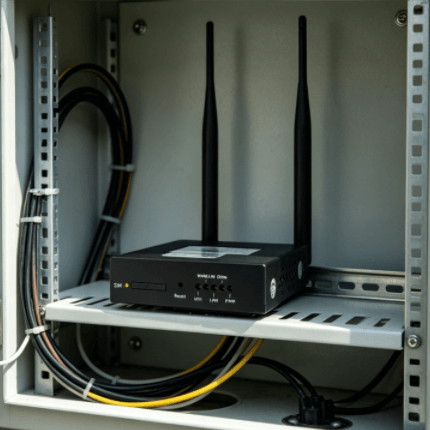
The modern manufacturing landscape is undergoing a radical shift toward total connectivity. Industrial wireless communication represents the foundation of this digital transformation. It allows machines to share data without the constraints of physical cables. This technology enables the flexibility required for agile production in 2026.
By removing wires, factories can reorganize production lines with minimal effort. Industrial wireless communication supports the massive scale of the Industrial Internet of Things. It connects thousands of sensors and actuators to a centralized control system. This leads to better visibility and faster decision-making across the plant.
Reliability and low latency are the hallmarks of these industrial systems. Unlike consumer Wi-Fi, industrial networks must operate in environments with high interference. They ensure that mission-critical data reaches its destination within milliseconds. This level of performance is essential for autonomous systems and robotics.
What is Industrial Wireless Communication exactly?
At its most basic level, industrial wireless communication is the exchange of data over radio waves. It connects industrial controllers, human-machine interfaces, and remote field devices. These systems are specifically designed to meet the rigorous demands of factory environments. They prioritize high availability and data integrity over simple connection speed.
Various radio frequencies are utilized depending on the specific industrial application. Low-frequency bands provide long-range coverage for outdoor assets like oil pipelines. Higher frequencies offer the massive bandwidth needed for high-definition video monitoring. Modern factories often use a combination of different wireless protocols simultaneously.
The market for these technologies is projected to grow significantly by 2026. Experts estimate that wireless nodes in factories will increase by 25% annually. This growth is fueled by the need for real-time data harvesting. Companies use this data to optimize every stage of the manufacturing process.
The Mechanics of Signal Transmission
Transmission starts when a sensor captures physical data from a machine. This electrical signal is converted into a digital packet by a wireless transmitter. The packet is then sent via radio waves to a receiver or gateway. This process happens in a fraction of a second to maintain control loops.
Robustness is built into the signal transmission through various modulation techniques. These techniques protect the data from being corrupted by electromagnetic noise. Industrial environments are often filled with noise from motors and high-voltage equipment. Specialized wireless protocols are designed to filter out this noise effectively.
| Metric | Consumer Wireless | Industrial Wireless (2026) |
| Latency | 30ms – 100ms | < 1ms – 10ms |
| Reliability | 95% – 98% | 99.999% |
| Security | Basic WPA | AES-256 + Zero Trust |
| Interference | Low tolerance | High tolerance |
Deterministic Networking in Wireless Systems
Determinism is the guarantee that a signal arrives within a specific time. In industrial wireless communication, determinism is more important than raw speed. A late signal can cause a robotic arm to miss its target. Deterministic protocols ensure that timing is consistent across the entire network.
Time-Sensitive Networking (TSN) is now being integrated into wireless standards. This allows wireless systems to synchronize with wired Ethernet networks seamlessly. It creates a unified communication fabric across the entire industrial enterprise. Such integration was a major milestone achieved by early 2026.
Key Technologies Driving Industrial Wireless Communication Trends
The arrival of 5G has been a game-changer for industrial wireless communication. It provides the high speed and low latency required for real-time control. 5G supports network slicing, which creates dedicated channels for critical traffic. This ensures that safety signals are never delayed by non-essential data.
LPWAN technologies like LoRaWAN and Sigfox are also gaining traction. These are ideal for low-power sensors that only send data occasionally. They can cover several kilometers with very little energy consumption. This makes them perfect for monitoring environmental conditions or tank levels.
Bluetooth Low Energy (BLE) is frequently used for short-range diagnostic tasks. Maintenance technicians can connect to machines using handheld devices without opening cabinets. This increases safety and reduces the time needed for routine inspections. BLE has become a standard feature in most industrial sensors by 2026.
The Power of 5G URLLC
Ultra-Reliable Low-Latency Communication (URLLC) is a core feature of 5G. It is specifically designed for the most demanding industrial wireless communication tasks. URLLC reduces latency to less than one millisecond in many scenarios. This allows for wireless control of high-speed motion systems.
By 2026, many factories have replaced their internal wiring with private 5G networks. These networks offer the security and performance of a wired connection. However, they retain the mobility and flexibility of a wireless system. Private 5G is now a standard requirement for Tier 1 manufacturing facilities.
Evolution of Wi-Fi 6 and 6E
Wi-Fi 6 is another major pillar of the modern industrial network. It handles high-density environments much better than previous Wi-Fi versions. It uses Orthogonal Frequency Division Multiple Access (OFDMA) to manage multiple devices. This prevents network congestion when hundreds of sensors are active.
Wi-Fi 6E extends these capabilities into the 6GHz spectrum. This provides more channels and less interference from older legacy devices. It is an excellent choice for bandwidth-heavy applications like augmented reality. Workers can use AR glasses for guided assembly without experiencing lag.
Why is Industrial Wireless Communication Essential for Smart Factories?
The shift toward smart manufacturing requires a constant flow of data. Industrial wireless communication provides the “nervous system” for these intelligent plants. It connects every asset, from the smallest sensor to the largest robot. This connectivity is the primary driver of operational efficiency in 2026.
Flexibility is perhaps the greatest advantage of a wireless factory. Traditional factories are restricted by their fixed wiring and stationary machines. In a smart factory, autonomous mobile robots (AMRs) move goods freely. These robots rely entirely on wireless links for navigation and task coordination.
Wireless systems also significantly reduce the cost of factory upgrades. Running new cables through a large facility is expensive and time-consuming. Wireless nodes can be installed and configured in a matter of hours. This allows companies to respond quickly to new market opportunities.
Boosting Predictive Maintenance Efforts
Predictive maintenance relies on continuous monitoring of machine health. Wireless sensors can be easily retrofitted onto older equipment. They track parameters like vibration, heat, and power consumption. This data is then transmitted via industrial wireless communication for analysis.
AI algorithms analyze these data streams to predict when a part will fail. This prevents unplanned downtime, which can cost thousands of dollars per hour. In 2026, predictive maintenance has reduced overall repair costs by 30%. It has become a standard practice for competitive manufacturing firms.
Enhancing Worker Safety and Ergonomics
Wireless technology directly contributes to a safer working environment. It eliminates cables on the floor that can cause tripping accidents. Wireless emergency stop buttons can be placed exactly where they are needed. Workers can also monitor hazardous zones from a safe distance using wireless tablets.
Wearable sensors can track the vital signs and locations of employees. If a worker enters a restricted zone, the system can automatically halt machinery. This proactive approach to safety has significantly reduced workplace injuries. Industrial wireless communication ensures these safety alerts are transmitted instantly.
Strategic Selection of Industrial Connectivity Hardware
Choosing the right equipment is the foundation of a successful wireless strategy. The environment of a factory is much harsher than a standard office. Dust, moisture, and vibration can quickly destroy consumer-grade electronics. Therefore, only ruggedized hardware should be considered for industrial wireless communication deployments.
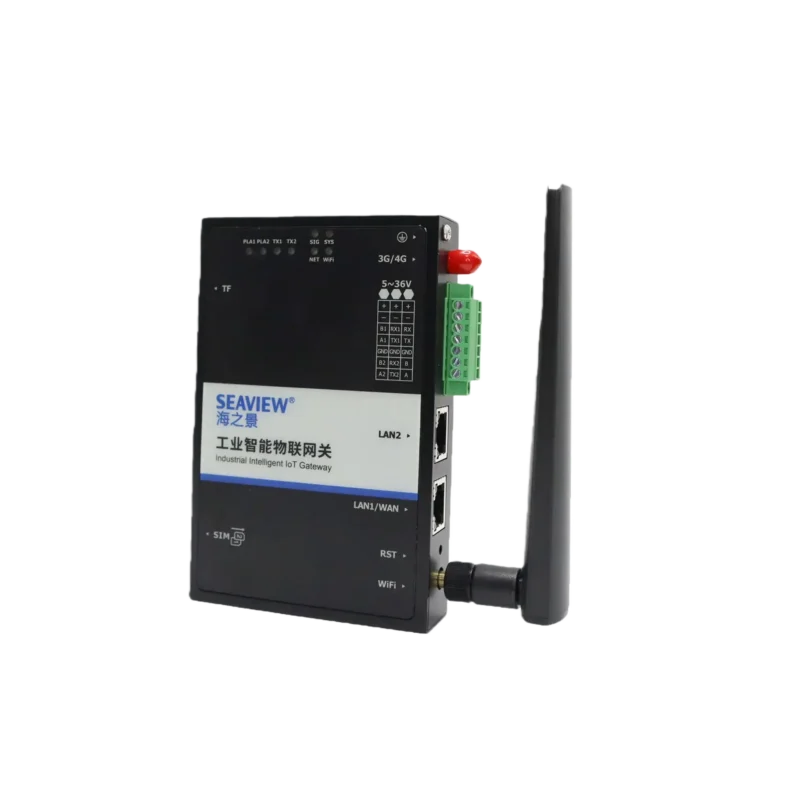
For facilities requiring local data processing, specialized gateways are essential. Many organizations find that 4G/5G edge computing gateways provide the necessary intelligence. These devices process data at the source, reducing the load on the central network. They act as a bridge between local sensors and cloud-based analytics platforms.
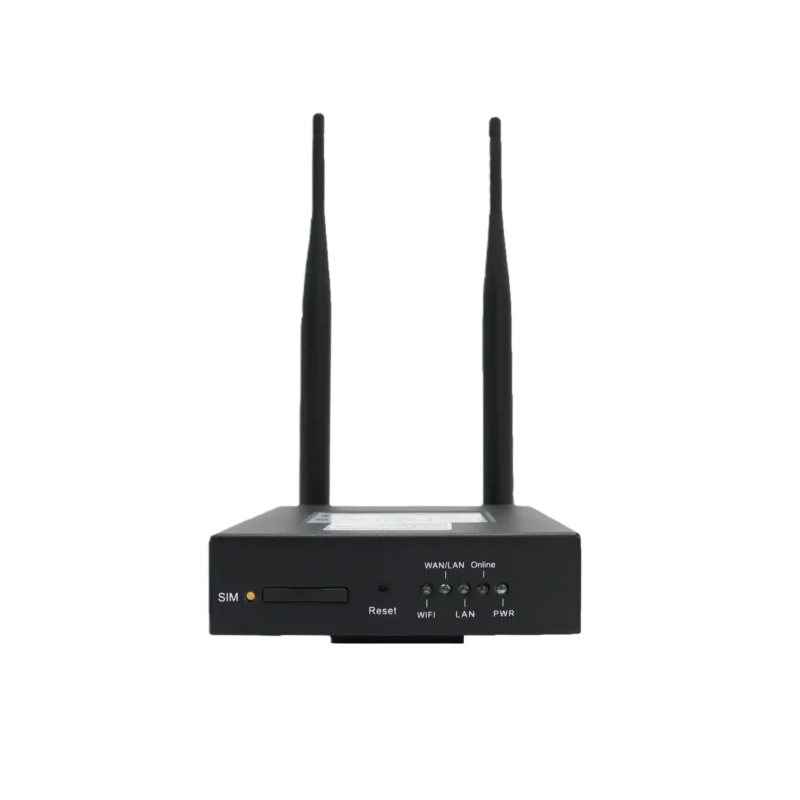
Stability is the most critical factor for mobile assets like AGVs. To ensure constant connectivity, businesses often utilize high-performance 4G/5G industrial routers and CPE devices. These routers are designed to maintain signals even while moving through different network zones. They often feature multiple antenna ports to maximize signal reception in complex layouts.
Compatibility with existing infrastructure must also be a priority. Most factories contain a mix of new and legacy equipment. A good wireless gateway should support a variety of industrial protocols. This ensures that data can flow freely between different brands of machinery.
Finally, consider the ease of remote management for your wireless hardware. Managing a network of hundreds of devices can be a massive challenge. Look for platforms that offer centralized configuration and real-time health monitoring. This reduces the need for onsite IT support and simplifies network maintenance.
Summary
Industrial wireless communication is the key technology that enables the smart, flexible factories of 2026. It replaces rigid wiring with high-speed, reliable data links that support 5G and edge computing. By selecting ruggedized routers and gateways, manufacturers can achieve the real-time visibility needed to stay competitive. Ultimately, a well-implemented wireless strategy drives productivity and reduces long-term operational costs.
FAQ
1. What are the primary benefits of industrial wireless communication?
Increased flexibility and lower installation costs are the primary benefits. Wireless systems allow for rapid reconfiguration of production lines and easier retrofitting of sensors. They also enable the use of mobile assets like autonomous robots and handheld diagnostic tools.
2. Is industrial wireless communication reliable enough for safety-critical tasks?
Modern industrial wireless protocols are designed for 99.999% reliability. Technologies like 5G URLLC provide the low latency and high availability required for safety systems. When properly designed with redundancy, these networks meet the most stringent industrial standards.
3. How do I choose between a 4G/5G router and an edge computing gateway?
A router is primarily for data transport, while a gateway provides local processing power. If you need to filter or analyze data before it reaches the cloud, choose an edge computing gateway. If your goal is simply high-speed connectivity for a remote site, a standard industrial router is sufficient.
4. What is the impact of 5G on industrial wireless communication in 2026?
5G has enabled the massive scaling of IoT devices and ultra-low latency control. It allows for private networks that offer better security and performance than traditional Wi-Fi. 5G is now the preferred choice for connecting mission-critical industrial assets.
5. Can industrial wireless signals handle interference from large machines?
Industrial-grade hardware uses specialized frequencies and modulation to overcome interference. Techniques like frequency hopping and MIMO (Multiple Input Multiple Output) ensure signal stability. Site surveys are used to determine the best placement for antennas to avoid signal dead zones.
Reference Sources
IEEE Xplore Guidelines for Industrial Wireless Networks
5G Alliance for Connected Industries and Automation White Paper on 5G for Industrial IoT
GSMA The Role of 5G in the Era of Industrial IoT
National Institute of Standards and Technology Guide to Industrial Wireless Systems Security