
Top Benefits of Using an Industrial 4G Router

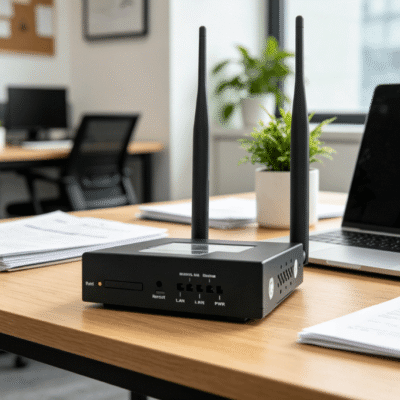
The global industrial sector increasingly demands seamless data transmission between remote sites and central offices. An industrial 4G router provides the necessary infrastructure to maintain these vital connections across vast distances. These devices leverage high-speed cellular networks to bypass the limitations of traditional wired broadband. Unlike standard networking equipment, they are built to survive in environments that would destroy consumer-grade hardware. By ensuring constant communication, they allow businesses to monitor assets in real-time and respond to issues immediately.
Reliability is the primary driver behind the adoption of cellular technology in industrial settings. These routers are engineered with industrial-grade components that offer superior longevity and performance. They handle high data loads for Machine-to-Machine (M2M) communication without overheating or losing signal. As companies embrace the Internet of Things (IoT), the role of the industrial 4G router becomes even more critical. It serves as a secure gateway that protects data integrity while maximizing operational efficiency across diverse geographical locations.
Why Is an Industrial 4G Router Necessary for Remote Operations?
Many industrial projects are located in areas where fiber optic cables cannot reach economically. An industrial 4G router offers a flexible and immediate solution by utilizing existing mobile network towers. This capability is essential for sectors like oil and gas, where sensors must transmit data from offshore platforms. The deployment speed of cellular hardware is significantly faster than waiting for physical line installations.
These routers are designed to operate autonomously without constant human intervention. They feature internal monitoring systems, often called hardware watchdogs, that detect connection failures. If a link goes down, the device will automatically attempt to reconnect or reboot. This self-healing capability is vital for remote monitoring stations that are difficult for technicians to access regularly.
Advanced Durability Features of Industrial Networking Hardware
Standard routers often fail when exposed to dust, moisture, or extreme temperature fluctuations. An industrial 4G router features a ruggedized metal enclosure, often rated IP30 or higher for protection. This housing shields the internal electronics from physical impact and environmental contaminants. Such durability ensures the device remains operational in environments ranging from freezing mountain peaks to scorching desert plains.
Temperature resistance is a standout feature for these specialized devices. Most units are tested to function within a wide range of -40°C to 75°C. This allows them to be installed inside outdoor enclosures or near heat-generating machinery without the risk of thermal shutdown. High-quality capacitors and solid-state components contribute to a much higher Mean Time Between Failures (MTBF) compared to plastic consumer models.
Strengthening Data Protection Through Secure VPN Tunnels
Security is a major concern when sending proprietary data over public cellular networks. An industrial 4G router supports multiple Virtual Private Network (VPN) protocols to ensure end-to-end encryption. Protocols such as IPsec, OpenVPN, and GRE allow businesses to create secure tunnels for their data. This prevents hackers from intercepting sensitive information as it travels from the field to the cloud.
In addition to encryption, these devices offer advanced firewall capabilities. Administrators can implement packet filtering and stateful inspection to block unauthorized traffic. By controlling which IP addresses can access the network, companies reduce the risk of cyberattacks on critical infrastructure. This level of security is standard for routers used in financial services, such as connecting remote ATMs.
Redundancy and Reliability with Dual SIM Technology
Network downtime can result in massive financial losses or safety hazards in industrial sectors. To combat this, an industrial 4G router often includes dual SIM slots for carrier redundancy. If one mobile network experiences a signal drop, the router switches to the backup SIM automatically. This ensures that the connection remains active even during localized carrier outages or maintenance.
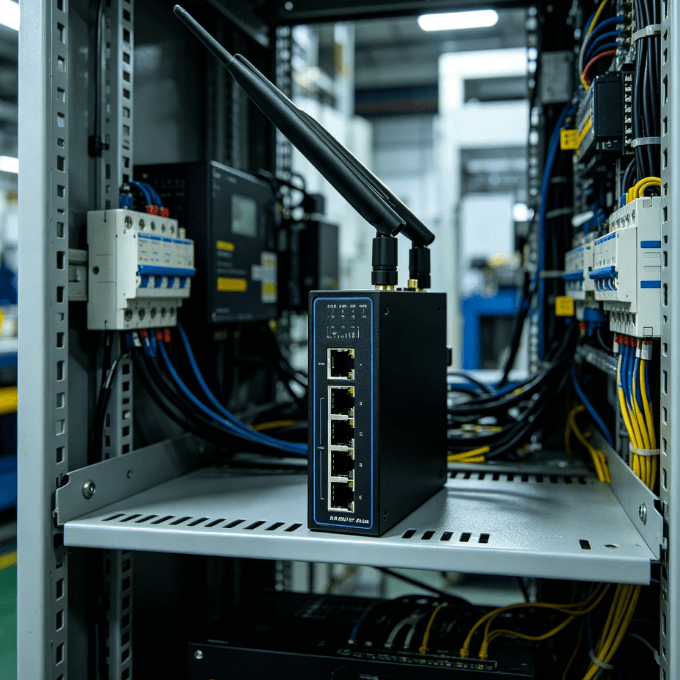
The failover mechanism is not restricted to switching between two cellular providers. Many routers support WAN failover, where a wired connection acts as the primary link. If the wired line is compromised, the industrial 4G router instantly activates the cellular modem. This hybrid approach guarantees nearly 100% uptime for critical applications like smart grids and emergency response systems.
| Specification | Standard Router | Industrial 4G Router |
| Casing Material | Plastic | Metal / Aluminum |
| Protection Rating | N/A | IP30 / IP40 |
| Data Redundancy | Single WAN | Dual SIM / WAN Failover |
| EMC Protection | Low | Level 3 or 4 |
| Vibration Proof | No | MIL-STD-810G Compliant |
How to Select the Right Router for Your Infrastructure
Determining the best hardware for your project involves analyzing both environmental and technical requirements. It is vital to consider the power input options available on-site. Many industrial routers support a wide DC voltage range, typically 9V to 36V, allowing them to run on solar power or vehicle batteries. This flexibility simplifies the installation process in mobile or off-grid locations.
The type of hardware interfaces required depends on the equipment you need to connect. Some applications might require high-speed Gigabit Ethernet ports for video surveillance. Other legacy systems may still rely on RS232 or RS485 serial ports for data logging. Choosing a versatile device ensures that all local machinery can communicate effectively through a single gateway.
Furthermore, remote management software is a key factor for large-scale deployments. An effective industrial 4G router should be compatible with centralized platforms that allow for remote firmware updates and configuration. This reduces the need for on-site visits and allows IT teams to monitor signal quality from a central dashboard. For those seeking specialized hardware that meets these criteria, the 4G/5G Industrial Routers & CPE selection provides various models designed for high-performance industrial connectivity.
Summary
An industrial 4G router provides a robust, secure, and highly reliable connection for modern industrial applications. It thrives in harsh conditions where standard equipment fails, offering features like dual SIM failover and extreme temperature tolerance. By selecting the right industrial-grade hardware, businesses can ensure continuous data flow and protect their critical infrastructure from costly downtime.
FAQ
1. What makes a router “industrial” compared to a normal 4G router?
An industrial router is defined by its rugged hardware, specialized cooling, and advanced software features. It uses metal casings and components that resist electromagnetic interference and extreme temperatures. Normal routers lack these protections and are only suitable for controlled indoor environments.
2. How does an industrial 4G router handle signal interference?
These devices use high-quality shielding and advanced signal processing to maintain stability. Many models feature external high-gain antennas that can be positioned for better reception. They are also built to resist Electrostatic Discharge (ESD) common in factory settings with heavy machinery.
3. Can I manage multiple industrial routers from one location?
Yes, most industrial-grade routers support centralized management systems. These platforms allow administrators to monitor the health, signal strength, and data usage of thousands of devices simultaneously. This makes large-scale IoT deployments much easier to maintain and troubleshoot remotely.
4. What is the benefit of a wide voltage input in these routers?
A wide voltage input allows the router to be powered by various sources without needing a converter. This is particularly useful in vehicles or solar-powered stations where voltage might fluctuate. It ensures the device remains stable even when the power supply is not perfectly consistent.
Reference Sources
IEEE Xplore – Industrial Wireless Communication Standards