
How Industrial IoT Is Changing Manufacturing

The global manufacturing landscape is undergoing a massive digital shift. Traditional factories are evolving into smart ecosystems using connected devices. This process relies heavily on industrial iot manufacturing to bridge the gap between physical hardware and digital software. These systems collect and analyze data in real-time to optimize production.
Manufacturers no longer rely solely on manual inspections or periodic maintenance schedules. Instead, they use sensors to track machine health constantly. This shift reduces the risk of sudden equipment failure. It also allows managers to make faster, more informed decisions on the plant floor.
Modern industrial environments require high-speed data transmission to function correctly. Without stable connectivity, the benefits of IoT remain unreachable. High-performance networking hardware ensures that every sensor and machine stays synchronized. This connectivity is the foundation of the modern Fourth Industrial Revolution.
Why is Industrial IoT Manufacturing Essential for Modern Factories?
The primary goal of industrial iot manufacturing is to maximize operational efficiency. According to recent industry reports, smart factories can increase production capacity by up to 20%. This growth happens because data identifies bottlenecks that humans might overlook. Real-time monitoring allows for immediate adjustments to assembly line speeds.
Cost reduction is another significant driver for adopting these advanced technologies. Industrial iot manufacturing helps companies lower energy consumption by optimizing machine usage. Sensors can detect when a machine is idling unnecessarily. The system then automatically powers down or enters a low-energy state.
Data accuracy is vital for maintaining high product quality standards. Automated systems record every step of the manufacturing process with precision. This creates a detailed digital record for every unit produced. If a defect occurs, engineers can trace the exact cause within seconds.
The integration of smart sensors enhances worker safety significantly. Wearable IoT devices can monitor the environmental conditions around factory staff. They alert workers if they enter hazardous zones or if gas levels rise. This proactive approach prevents accidents before they occur on the production floor.
| Feature | Traditional Manufacturing | Industrial IoT Manufacturing |
| Maintenance | Reactive (Fix after break) | Predictive (Fix before break) |
| Data Collection | Manual and periodic | Automated and continuous |
| Efficiency | Limited by human oversight | Optimized by AI and algorithms |
| Connectivity | Isolated machines | Fully networked ecosystem |
How High-Performance Network Hardware Powers Smart Factories
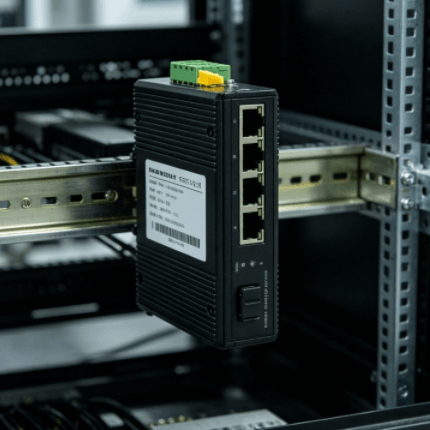
Reliable data transmission is the lifeblood of any connected industrial facility. Standard office equipment cannot withstand the harsh conditions found in a factory. Manufacturers must use automation industry switches to ensure network uptime. These devices are designed to handle extreme temperatures and heavy vibrations.
Electronic noise and electromagnetic interference (EMI) often disrupt signals in industrial settings. Specialized switches feature robust shielding to maintain signal integrity. They offer redundant power inputs to prevent network crashes during electrical failures. This level of reliability is critical for continuous production cycles.
Security is a major concern when connecting factory machines to the internet. Modern industrial switches include advanced management features to protect sensitive data. They allow administrators to segment the network into secure zones. This prevents a single breach from compromising the entire manufacturing facility.
Managed switches provide visibility into the health of the network itself. Technicians can monitor data traffic and identify potential points of failure. They support various protocols common in industrial automation. This flexibility makes them essential for integrating different types of machinery.
Scaling a network becomes much easier with the right hardware. DIN-rail mounting options allow for easy installation in standard control cabinets. As a factory adds more IoT devices, the network can expand without major rewiring. High-bandwidth ports ensure the system handles increasing data loads effortlessly.
Bridging Data Gaps with Industrial Wireless Data Terminals
Many legacy machines lack built-in networking capabilities for modern communication. Connecting these older assets is a common challenge in industrial iot manufacturing. Industrial wireless data terminals (DTU) provide an effective solution for this problem. They act as a bridge between serial devices and cellular or Wi-Fi networks.
A DTU can convert RS232 or RS485 signals into data packets for cloud transmission. This allows managers to monitor old equipment from a remote location. It eliminates the need for expensive cable installations across large factory floors. Wireless connectivity provides the flexibility to move machinery without losing data links.
Remote monitoring is particularly useful for geographically dispersed industrial assets. A wireless terminal can transmit status updates from a distant pump station or warehouse. This capability ensures that the central control center has a complete view of operations. Operators receive instant alerts if any remote device falls outside of normal parameters.
Reliability in wireless communication is achieved through advanced 4G or LTE support. These terminals maintain stable connections even in remote or signal-challenged areas. They often feature a “watchdog” timer to reset the device automatically if a crash occurs. This ensures continuous data flow without requiring manual onsite resets.
The use of a DTU simplifies the integration of Modbus and other industrial protocols. They handle complex data conversion tasks internally. This allows the software to receive clean, usable data for analysis. By digitizing legacy assets, companies extend the useful life of their existing investments.
The Economic Impact and Scientific Value of IIoT Integration
The financial benefits of industrial iot manufacturing are well-documented by global research firms. McKinsey & Company estimates that IIoT applications could generate $1.2 trillion to $3.7 trillion in value by 2025. Much of this value comes from improved asset utilization and labor productivity. Companies that adopt these technologies early gain a massive competitive advantage.
Predictive maintenance is perhaps the most scientifically advanced application of IoT. By using vibration and thermal sensors, systems can predict mechanical failure with high accuracy. Studies show that predictive maintenance can reduce maintenance costs by 30%. It also extends the overall lifespan of expensive industrial machinery.
Supply chain transparency reaches new levels with integrated IoT systems. Manufacturers can track raw materials from the supplier to the factory floor. This visibility reduces inventory holding costs and prevents production delays. Real-time data ensures that the right materials arrive exactly when they are needed.
| Metric | Estimated Improvement | Source Focus |
| Downtime Reduction | 30% – 50% | Predictive Maintenance |
| Productivity Gain | 10% – 25% | Process Optimization |
| Energy Savings | 10% – 20% | Resource Management |
| Maintenance Costs | 15% – 30% | Asset Health Tracking |
Sustainability is a growing priority for modern industrial leaders. Industrial iot manufacturing enables precise control over resource consumption. It tracks water usage, chemical waste, and carbon emissions in real-time. This data helps factories meet strict environmental regulations and lower their ecological footprint.
AI-driven analytics transform raw data into actionable business intelligence. Machine learning algorithms identify patterns that suggest long-term efficiency trends. These insights help executives plan for future capacity expansions. Data-driven strategies replace guesswork in the boardroom.
Choosing the Right Connectivity Standards for Your Facility
Selecting hardware for industrial iot manufacturing requires a clear understanding of your environment. You must evaluate the physical conditions where the devices will operate. High-grade equipment should have an IP30 or higher rating for dust protection. It should also operate across wide temperature ranges, typically from -40°C to 75°C.
Protocol compatibility is another vital factor to consider during the selection process. Ensure your switches and terminals support standard industrial languages like Modbus or Profinet. This compatibility ensures that different brands of hardware can communicate seamlessly. A unified network prevents “data silos” that hide important information.
Bandwidth requirements will vary based on the number of connected sensors. Video surveillance and high-speed motion control require more throughput than simple temperature sensors. Plan for future growth by selecting hardware with gigabit speeds. This prevents the need for a full network overhaul in a few years.
Power redundancy is essential for mission-critical industrial applications. Look for devices that support dual power inputs from different sources. This feature ensures that the network stays active even if one power supply fails. Continuous operation is the key to preventing costly production restarts.
Technical support and long-term availability are often overlooked during purchasing. Choose hardware from vendors that provide detailed documentation and firmware updates. Industrial equipment usually stays in service for a decade or longer. Ensuring the manufacturer supports the product for its entire lifecycle is a wise investment.
How to Determine Which Industrial Hardware Fits Your Needs
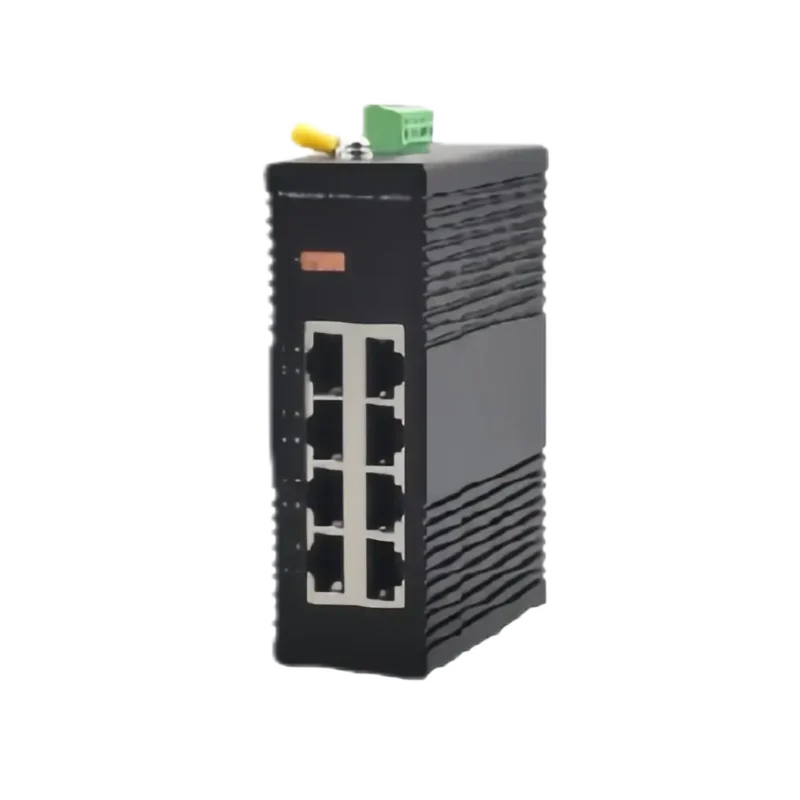
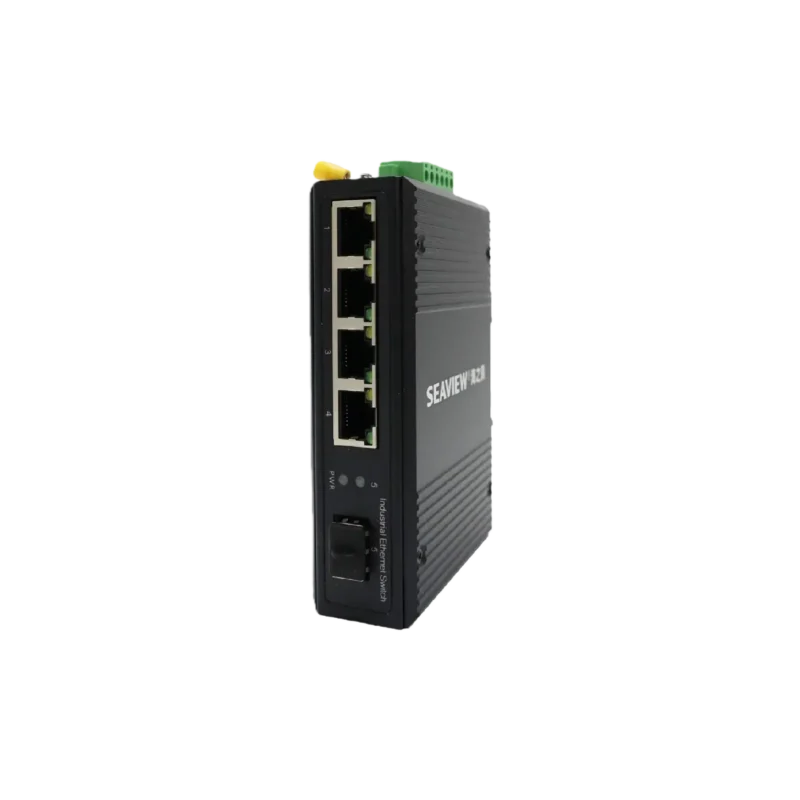
Identifying the right connectivity solution depends on the scale of your digital transformation. If you are building a new facility, focus on high-density automation industry switches for a robust backbone. These switches provide the necessary ports for a fully integrated, high-speed wired environment. They are the best choice for high-speed production lines with many sensors.
For existing factories with older machines, the focus shifts to data extraction. Using industrial wireless data terminals (DTU) is often the most cost-effective path. They allow you to add IoT capabilities without replacing your current machinery. This approach minimizes initial investment while providing immediate access to operational data.
Evaluate the distance between your machines and your central control unit. Wired connections offer the highest reliability but are expensive to install over long distances. Wireless terminals solve this by using cellular networks for wide-area coverage. Use a combination of both to create a flexible and resilient network infrastructure.
The level of network management you require will dictate your hardware choices. Unmanaged switches are simple and cost-effective for small, isolated machine cells. Managed switches are necessary for facility-wide networks that require security and traffic control. Always prioritize hardware that offers a balance of durability, security, and ease of integration.
Summary
Industrial iot manufacturing is fundamentally changing how factories operate by enabling data-driven decision-making. By integrating high-performance automation industry switches and wireless DTUs, companies can achieve unprecedented levels of efficiency and reliability. This digital transformation reduces costs, improves safety, and ensures long-term global competitiveness.
FAQ
What is the role of industrial iot manufacturing in smart factories?
Industrial iot manufacturing connects physical machines to digital networks to collect real-time data. This connectivity enables predictive maintenance, reduces downtime, and optimizes overall production efficiency.
Why are industrial switches better than regular office switches?
Industrial switches are built for harsh environments, offering wide temperature ranges and EMI protection. They ensure high reliability and network uptime in conditions that would cause standard equipment to fail.
How do wireless data terminals (DTU) help in manufacturing?
A DTU connects legacy machinery to the internet using wireless signals like 4G or LTE. This allows manufacturers to monitor older equipment remotely without installing extensive cabling.
Can industrial IoT improve worker safety on the factory floor?
Yes, IoT sensors monitor environmental hazards and machine health to prevent accidents. Wearable devices can also track worker locations to ensure they stay clear of dangerous areas.
Is predictive maintenance really effective for cost reduction?
Predictive maintenance can reduce repair costs by up to 30% by identifying issues early. It prevents the high costs associated with sudden machine failures and unplanned production stops.
Reference Sources
Deloitte – The Smart Factory: Responding to Manufacturing’s Digital Transformation
McKinsey & Company – The Internet of Things: Catching up to an Accelerating Opportunity
IEEE Xplore – Communication Protocols and Networking for Industrial IoT
Statista – Industrial Internet of Things (IIoT) Market Size Worldwide