
Why Use Edge vs Cloud for Industrial Data Processing?

The rapid expansion of the Industrial Internet of Things (IIoT) has transformed manufacturing landscapes globally. Modern factories generate massive volumes of raw data every second from thousands of sensors. Deciding where to process this information is a critical architectural choice for engineers and IT managers. Edge data processing industrial vs cloud computing represents two distinct approaches to managing this digital influx. Choosing the right method directly impacts operational speed, system reliability, and long-term infrastructure costs.
Industrial environments require high precision and immediate response times to maintain safety and productivity. Traditional cloud models often struggle with the sheer volume of data transmitted over long distances. Conversely, localized processing offers immediate insights but may lack the deep analytical power of centralized servers. Edge data processing industrial vs cloud architectures are often used together to create a balanced digital ecosystem. Understanding the technical nuances of each helps organizations build more resilient and scalable industrial networks.
The decision-edge often rests on the specific requirements of the industrial application involved. High-speed robotics and automated assembly lines demand near-zero latency that only local hardware can provide. Meanwhile, fleet-wide performance monitoring and predictive maintenance benefit from the vast storage of the cloud. This article explores the technical differences, benefits, and strategic considerations for implementing these technologies effectively. Edge data processing industrial vs cloud selection determines how well a facility can compete in the modern digital era.
Comparing Edge and Cloud for Industrial Workflows
The primary distinction between edge and cloud processing lies in the physical location of the computing resources. Edge computing occurs at or near the source of data generation, such as a gateway or local controller. Cloud computing happens in centralized data centers located hundreds or thousands of miles away. Edge data processing industrial vs cloud performance varies significantly across different operational metrics. The following table provides a clear comparison of these two computing paradigms.
| Feature | Industrial Edge Processing | Industrial Cloud Processing |
| Latency | Ultra-low (typically <10ms) | Higher (typically 50ms to 200ms+) |
| Bandwidth Usage | Low (filters data locally) | High (sends raw data to the cloud) |
| Data Security | High (data stays on-site) | Moderate (requires encryption in transit) |
| Processing Power | Limited (optimized for specific tasks) | Massive (highly scalable resources) |
| Storage Capacity | Short-term (buffer for immediate use) | Long-term (massive historical archives) |
| Cost Structure | High initial hardware investment | Ongoing subscription and data fees |
As shown, the edge data processing industrial vs cloud debate is not about which is “better” overall. Instead, it is about which is better for a specific industrial task or environment. Engineers must evaluate whether their priority is real-time control or long-term business intelligence. Edge data processing industrial vs cloud strategies often overlap to ensure no data is wasted. By mapping these features to operational goals, companies can minimize technical debt and maximize ROI.
What Are the Key Benefits of Edge Data Processing in Industry?
The most significant advantage of edge data processing industrial vs cloud is the reduction of latency. In high-stakes environments like chemical processing or precision machining, a delay of 100 milliseconds can be catastrophic. Edge devices process data locally to trigger immediate safety protocols without waiting for a cloud handshake. This local intelligence ensures that critical systems remain operational even if external internet connectivity is lost. Edge data processing industrial vs cloud reliability is a cornerstone of modern industrial safety standards.
Bandwidth optimization is another crucial factor when considering edge data processing industrial vs cloud deployment. Sending raw high-frequency vibration data from 500 motors to the cloud is prohibitively expensive. Edge gateways can analyze this data locally and only transmit anomalies or summarized reports to the central server. This “data thinning” reduces network congestion and lowers monthly cloud storage costs significantly. Research indicates that edge pre-processing can reduce data transmission volumes by over 90% in large-scale deployments.
Furthermore, edge processing enhances data privacy and security for sensitive industrial intellectual property. By keeping proprietary process data within the local area network (LAN), companies reduce their attack surface. Edge data processing industrial vs cloud security considerations often lead highly regulated industries to favor localized solutions. Many organizations use edge devices as a “security filter” before any data reaches the public internet. This localized control allows for stricter compliance with regional data sovereignty laws and internal corporate policies.
How Cloud Computing Enhances Industrial Scalability and Analytics
While the edge excels at real-time action, the cloud is unparalleled for deep, historical analysis. Edge data processing industrial vs cloud dynamics shift when looking at the “big picture” across multiple factory locations. The cloud provides the computational muscle needed to run complex machine learning models on years of data. These models can identify subtle trends in equipment wear that local edge devices might miss. Edge data processing industrial vs cloud integration allows these cloud-trained models to be pushed back down to the edge.
Scalability is a defining feature that separates edge data processing industrial vs cloud capabilities. Adding processing power in the cloud is as simple as upgrading a subscription or spinning up new virtual machines. In contrast, scaling edge capacity requires purchasing and installing new physical hardware across the plant floor. For enterprises managing global supply chains, the cloud acts as the “single source of truth.” It aggregates data from various edge nodes to provide a comprehensive view of overall equipment effectiveness (OEE).
Data persistence is also a core strength of the cloud compared to the edge. Edge devices typically have limited storage and are designed to overwrite old data once processed. The cloud provides a permanent, searchable archive that is essential for regulatory audits and long-term quality control. Edge data processing industrial vs cloud data management ensures that localized speed is balanced with centralized record-keeping. This historical depth is vital for forensic analysis after a production failure or for optimizing supply chain logistics.
Why You Should Choose a Hybrid Architecture for Industrial IoT
Most successful industrial leaders no longer view edge data processing industrial vs cloud as a binary choice. Instead, they implement a hybrid architecture that leverages the strengths of both platforms simultaneously. In this model, the edge handles high-speed control, data filtering, and immediate safety alarms. The cloud receives a streamlined data feed for advanced visualization, remote management, and global reporting. This hybrid approach optimizes both local performance and corporate-level strategic visibility.
A hybrid model also provides a failsafe mechanism for modern digital factories. If the cloud connection fails, the edge nodes continue to manage the production line autonomously. Once connectivity is restored, the edge device synchronizes the saved data with the cloud platform. Edge data processing industrial vs cloud synergy ensures that no data gaps occur during network outages. This resilience is essential for industries operating in remote locations or regions with unstable telecommunications infrastructure.
Implementing a hybrid system allows for more flexible cost management over time. Companies can start with robust edge processing to stabilize their local operations without massive cloud fees. As their data needs grow, they can gradually integrate cloud services for broader analytical insights. Edge data processing industrial vs cloud flexibility enables a modular approach to digital transformation. This ensures that the technology stack grows alongside the actual business needs of the industrial facility.
Determining Your Industrial Connectivity Requirements
Choosing between edge data processing industrial vs cloud solutions depends on your specific operational environment. You must first assess your tolerance for latency and your typical data generation rates. If your machines require sub-second response times, investing in high-performance hardware is a priority. For those managing remote assets across large distances, the focus shifts toward robust connectivity and centralized management. Knowing your requirements is the first step toward a successful industrial IoT implementation.
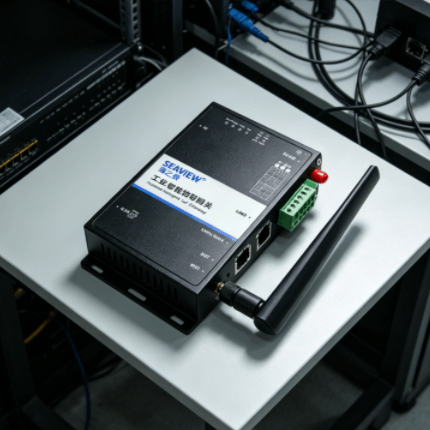
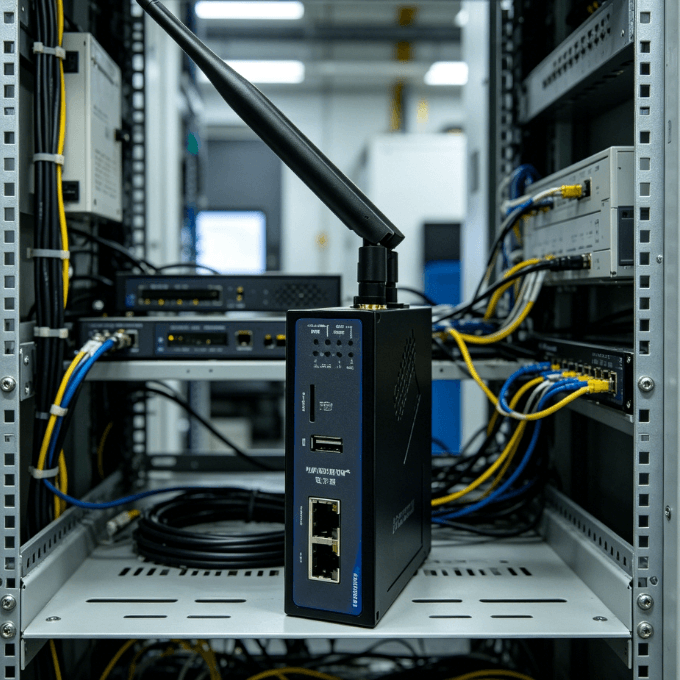
When evaluating edge hardware, look for devices that support multiple industrial protocols. Effective gateways should translate data from legacy PLC systems into modern formats like MQTT or OPC UA. You should also consider the environmental conditions of your facility, such as temperature extremes or electromagnetic interference. High-quality 4G/5G edge computing gateways provide the ruggedness and connectivity needed for these demanding tasks. These devices act as the bridge between your physical machinery and your digital intelligence.
Equally important is the selection of a centralized platform to manage your distributed assets. A unified interface allows you to monitor edge device health and update software remotely. Without a central management layer, maintaining dozens of edge nodes becomes an administrative nightmare. Comprehensive IoT business platforms provide the necessary tools for data visualization and fleet-wide device orchestration. Balancing the right hardware with a capable platform ensures your edge data processing industrial vs cloud strategy remains effective for years.
Summary
The choice between edge data processing industrial vs cloud hinges on balancing real-time responsiveness with long-term analytical depth. Edge processing is essential for low-latency, secure, and bandwidth-efficient local operations, while the cloud offers the scalability needed for enterprise-level insights. Most modern industrial facilities achieve the best results by deploying a hybrid architecture that uses edge gateways for local control and cloud platforms for global management. This dual approach ensures operational resilience, data security, and the ability to scale as production demands increase.
FAQ
Is edge processing more secure than cloud processing for industrial data?
Edge processing is generally considered more secure for localized tasks because data remains within the factory network. By limiting the amount of information sent over the public internet, you reduce the risk of interception. However, edge devices themselves must be physically secured and regularly updated to prevent local breaches.
Can I run a factory entirely on cloud processing?
Running a factory entirely on the cloud is possible but risky due to latency and connectivity issues. Most industrial systems require millisecond response times that the cloud cannot guarantee reliably. Relying solely on the cloud also makes your production line vulnerable to internet outages, which could cause significant downtime.
How does 5G affect the edge vs cloud debate?
5G technology reduces the latency of cloud connections but also empowers edge devices with faster data transfer capabilities. While 5G makes cloud processing more viable for some near-real-time tasks, it also enables more complex edge-to-edge communication. It ultimately enhances the performance of both computing models in an industrial setting.
What is the most cost-effective way to start with industrial data processing?
The most cost-effective approach is often starting with edge gateways to filter data before it reaches the cloud. This prevents high monthly cloud storage fees by ensuring only valuable, processed information is uploaded. As your needs evolve, you can scale your cloud usage based on specific analytical requirements.
Reference Sources
- Gartner: Leading Research on Edge Computing Trends and Market Growth.
- IEEE (Institute of Electrical and Electronics Engineers): Technical Standards for IIoT and Latency Requirements.
- McKinsey & Company: The Value of the Internet of Things in Industrial Manufacturing.
- NIST (National Institute of Standards and Technology): Definitions and Security Guidelines for Cloud and Edge Computing.
- Cisco: Global Networking Reports on Industrial Data Traffic and Bandwidth.