
Wired vs Wireless Industrial Communication: Which to Pick?

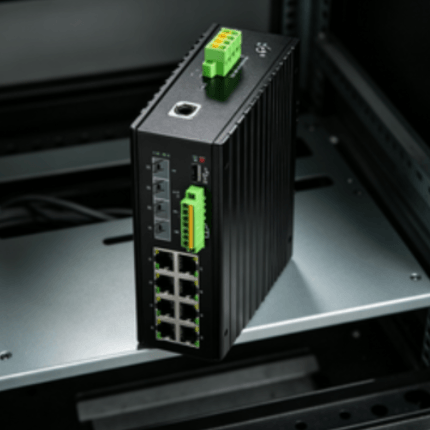
The decision between industrial wired vs wireless communication forms the backbone of any automation strategy. Engineers must balance the need for high-speed reliability with the demand for flexible deployment. Wired systems have long been the standard for critical control loops in manufacturing. However, the rapid evolution of wireless technology is challenging this dominance in modern smart factories.
Reliability and speed were traditionally the primary reasons to choose copper or fiber optics. These physical connections offer consistent bandwidth and immunity to most radio frequency interference. Conversely, wireless solutions provide a level of mobility that cables simply cannot match. This flexibility is essential for tracking mobile assets like automated guided vehicles (AGVs).
Current industrial trends favor a hybrid approach to connectivity for maximum efficiency. High-performance production lines often require the ultra-low latency of a wired Ethernet backbone. Meanwhile, remote sensors and distributed assets benefit from the lower installation costs of wireless terminals. This article explores the technical trade-offs to help you determine the best fit.
Why Select Industrial Wired vs Wireless Communication for Your Plant?
Understanding the fundamental differences in signal transmission helps determine the right architecture. Wired communication utilizes physical media like twisted-pair copper or high-speed fiber optic cables. These systems are deterministic, meaning data delivery times are highly predictable and consistent. This characteristic is vital for synchronized motion control and safety-critical shutdown systems.
Wireless communication eliminates the need for expensive physical infrastructure like conduit and cable trays. These systems use radio waves across various frequency bands to transmit data over long distances. Modern wireless protocols now incorporate advanced encryption and error correction to rival wired stability. Choosing between these technologies requires a deep analysis of your specific environmental constraints.
Evaluating the Speed and Latency of Wired Systems
Wired networks typically offer the highest data throughput available in industrial settings today. Standard industrial Ethernet supports speeds from 100 Mbps to 10 Gbps without signal degradation. This capacity allows for the simultaneous transmission of high-definition video and real-time control data. Industrial wired vs wireless communication comparisons often highlight this bandwidth advantage for data-heavy applications.
Latency in a wired environment is remarkably low, often staying well below 1 millisecond. This speed is necessary for high-frequency control loops that adjust motor speeds hundreds of times per second. Fiber optic cables provide the added benefit of total immunity to electromagnetic interference (EMI). This makes fiber the preferred choice in environments with large motors or high-voltage equipment.
Wired systems also offer a higher degree of inherent security since physical access is required. Intercepting a signal traveling through a shielded cable is significantly more difficult than capturing radio waves. For facilities handling sensitive intellectual property, this physical security layer is a major selling point. However, the rigidity of wired setups can become a bottleneck during facility expansions.
The Growing Reliability of Modern Wireless Networks
Wireless technology has matured significantly, offering reliability rates that now reach 99.9% in many industrial applications. Technologies like Wi-Fi 6 and 5G have introduced features that minimize signal interference and packet loss. These advancements allow wireless systems to handle more devices in a smaller physical area. Industrial wired vs wireless communication choices are now increasingly leaning toward wireless for non-critical monitoring.
Wireless data terminals provide a scalable solution for adding new sensors without rerouting miles of cable. This scalability is particularly useful in legacy plants where installing new conduit is physically impossible. Wireless systems also excel in outdoor environments where trenching for cables would be prohibitively expensive. They allow for the rapid deployment of environmental monitoring and energy management systems.
Reliability is further enhanced through the use of mesh networking and redundant signal paths. If one wireless node fails, the data can automatically reroute through another available terminal. This self-healing capability ensures that critical data reaches the central control room without interruption. Modern wireless hardware is also built to withstand extreme temperatures and vibrations common in industrial zones.
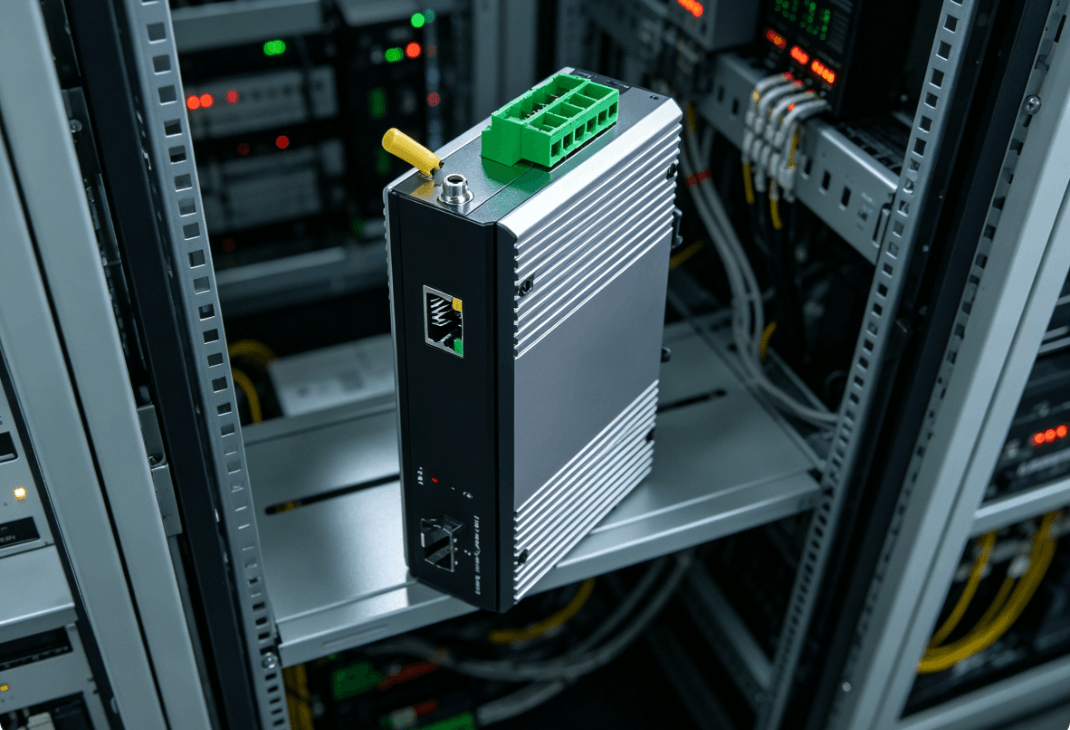
Key Factors in Selecting Industrial Connectivity Hardware
The specific requirements of your hardware will dictate the overall success of your network. You must consider factors such as the distance between nodes and the required data update frequency. Wired systems are limited by physical cable lengths, such as the 100-meter limit for standard Ethernet. Wireless systems can cover several kilometers depending on the frequency and power of the transmitter.
Data security is a non-negotiable requirement for any modern industrial communication network. Wired networks are easier to isolate, but wireless terminals now offer robust AES-256 encryption. Implementing a secure virtual private network (VPN) can further protect wireless data from external threats. Your choice should always align with the cybersecurity policies of your organization.
| Feature | Wired Industrial Ethernet | Wireless Data Terminal (DTU) |
| Data Rate | Up to 10 Gbps | Up to 150 Mbps (Cellular) |
| Typical Latency | < 1 ms | 10 ms – 100 ms |
| Installation Cost | High (Labor & Materials) | Low (Plug & Play) |
| Maintenance | Cable repair / Cleaning | Firmware updates / Battery |
| Range | Limited by cable length | Up to 15km (LoRa) / Global (Cellular) |
| EMI Resistance | High (Especially Fiber) | Moderate (Requires filtering) |
Cost Analysis: Installation and Maintenance
Initial capital expenditure for wired systems is often significantly higher than for wireless alternatives. Installing conduit, trays, and thousands of feet of cable requires specialized labor and long lead times. Studies indicate that labor costs for wired installations can be 40% to 60% higher than wireless. This makes industrial wired vs wireless communication a major factor in project budgeting.
Maintenance costs for wired systems often involve physical inspections for cable wear or corrosion. Rodents or accidental damage from heavy machinery can cause sudden and difficult-to-locate network failures. Finding a break in a buried cable can take hours or days, leading to expensive downtime. Wireless terminals, while requiring periodic firmware updates, eliminate the risk of physical cable damage.
Long-term total cost of ownership (TCO) should include the cost of future reconfigurations. A wireless network can be reorganized in minutes by simply moving a terminal and updating software settings. A wired network requires physical rewiring, which can interrupt production and increase labor costs. For dynamic manufacturing environments, the cost savings of wireless flexibility are substantial over several years.
Security Protocols and Data Protection
Security is the primary concern for many IT managers when evaluating wireless communication. Because radio waves propagate through open space, they are theoretically more vulnerable to eavesdropping. To combat this, industrial wireless terminals use sophisticated authentication methods to prevent unauthorized access. This ensures that only trusted devices can join the industrial network.
Wired networks are not entirely immune to security breaches, as any physical port is a potential entry point. However, the localized nature of a wired network makes it easier to monitor and control physical access. In many critical infrastructure projects, a “walled garden” approach uses wired connections for internal control. Wireless is then used as a secondary, isolated layer for outbound data reporting.
Recent data shows that 80% of industrial security breaches originate from internal network vulnerabilities. Therefore, both wired and wireless systems require strict password management and regular security audits. Modern hardware manufacturers now include built-in firewalls and intrusion detection systems in their communication terminals. Always verify that your chosen hardware meets the latest IEC 62443 security standards.
Selecting a Wireless Data Terminal: A Guide for Success
Deciding whether to use a wireless solution depends on the accessibility of your equipment. If your sensors are located on rotating machinery or moving platforms, wireless is the only viable option. Industrial wireless data terminals (DTU) are specifically designed to bridge the gap between field devices and the cloud. These devices provide the ruggedness required for 24/7 operation in harsh industrial climates.
When selecting a terminal, you must evaluate the communication protocol that your existing PLCs use. Many wireless terminals act as protocol converters, turning serial RS485 data into cellular or Wi-Fi packets. This allows you to modernize old equipment without replacing the entire control system. You should also check the power requirements of the terminal, especially for solar-powered remote sites.
To find the most reliable hardware for your specific application, you can explore specialized industrial wireless data terminals (DTU) designed for high-interference areas. These terminals offer the durability and range needed to ensure constant data flow from your most remote assets. Investing in industrial-grade terminals reduces the risk of signal dropouts and hardware failure.
Summary
In the comparison of industrial wired vs wireless communication, the right choice depends on your specific operational goals. Wired systems remain the gold standard for high-speed, deterministic control where low latency is mandatory. Wireless systems offer the flexibility, scalability, and cost savings required for modern IIoT and remote monitoring applications. Most successful industrial networks now utilize both technologies to maximize performance and reliability across the entire facility.
FAQ
1. Is wireless communication as reliable as wired for industrial automation?
Wireless communication has improved to 99.9% reliability, making it suitable for most monitoring and non-critical control tasks. While wired connections still offer better sub-millisecond determinism, modern wireless terminals use frequency hopping to avoid interference. Choosing between them depends on whether your process can tolerate slight variations in data timing.
2. How much can I save by choosing wireless over wired communication?
Installation costs for wireless systems are typically 40% to 60% lower than wired systems due to reduced labor and materials. You eliminate the need for expensive cabling, conduit, and the labor required to install them through walls or underground. Over time, the ease of moving wireless sensors further increases the total cost savings for dynamic factories.
3. What are the main security risks of industrial wireless communication?
The primary risk is unauthorized signal interception or data tampering since radio waves are transmitted through the air. However, industrial-grade wireless terminals mitigate this risk using AES-256 encryption, secure VPN tunnels, and advanced authentication protocols. When properly configured, a wireless industrial network can be as secure as a traditional wired system.
4. Can wireless signals pass through heavy metal walls in a factory?
Metal structures can block or reflect wireless signals, but modern industrial terminals use high-gain antennas and mesh networking to overcome this. If a direct signal path is blocked, the data can often “hop” through intermediate nodes to reach the gateway. Conducting a thorough radio frequency (RF) site survey is the best way to ensure reliable coverage in metal-dense environments.
5. Which technology is better for long-distance remote monitoring?
Wireless communication is generally superior for long-distance monitoring because it eliminates the high cost of laying miles of physical cable. Technologies like cellular 4G/5G or LoRaWAN can transmit data over many kilometers or even globally. This makes wireless terminals the ideal choice for monitoring water systems, oil pipelines, or distributed solar farms.
Reference Sources
ISA (International Society of Automation) – Industrial Communication and Security Standards
Cisco Systems – Industrial Networking Trends and Performance Reports
International Electrotechnical Commission (IEC) – Security Standards for Industrial Control Systems
Ericsson – Cellular Connectivity in Smart Manufacturing Research