
Industrial vs Traditional Gateway: Technical Comparison

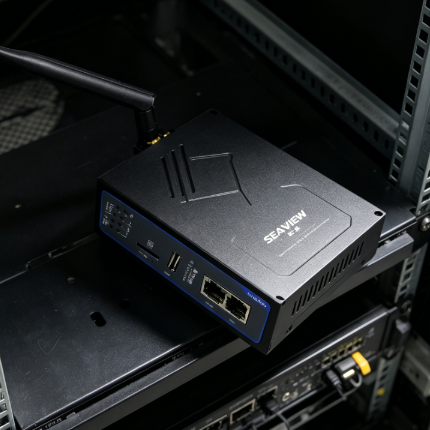
The divide between Operational Technology (OT) and Information Technology (IT) is narrowing, yet the hardware bridging these worlds remains fundamentally different. When an engineer or a project manager evaluates connectivity solutions, the choice often boils down to a critical decision: Can a traditional enterprise gateway handle the load, or is a dedicated industrial gateway required?
While a traditional gateway—like the router in your office—is designed to move data packets in controlled environments, an industrial gateway is built to survive the factory floor. It acts as a translator, a ruggedized shield, and an intelligent processor at the edge of the network. Understanding these differences is not just about specs; it is about preventing costly downtime in environments where a single minute of lost connectivity can equate to thousands of dollars in wasted production.
Hardware Engineering for Extreme Environments
The most visible difference in any industrial gateway comparison is the physical build. Traditional gateways are typically housed in plastic or light metal enclosures designed for climate-controlled server rooms or offices. They rely on active cooling—fans that pull in air, and unfortunately, dust and contaminants.
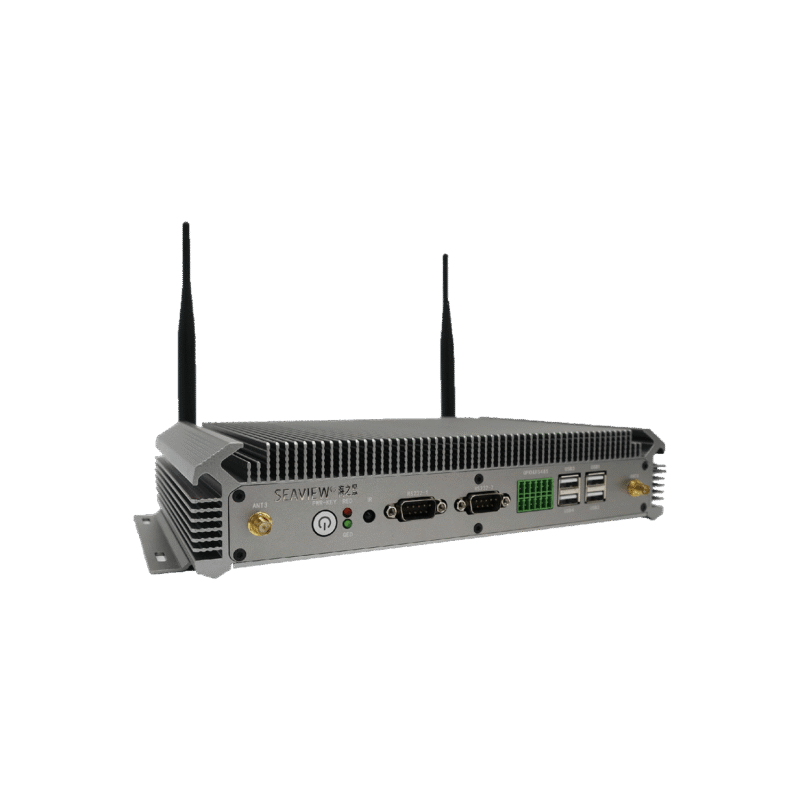
In contrast, industrial-grade hardware, such as 4G/5G edge computing gateways, is engineered for “fanless” operation. These devices use advanced heat-sink designs to dissipate thermal energy through their metal chassis. This is crucial in manufacturing plants where ambient temperatures can fluctuate between -40°C and +85°C.
Furthermore, industrial environments are plagued by Electromagnetic Interference (EMI) from heavy machinery and high-voltage lines. Industrial gateways are built with high-level ESD (Electrostatic Discharge) protection and surge isolation to prevent internal circuit frying. While a traditional gateway might reboot or fail when a large motor starts nearby, an industrial unit remains stable.
Protocol Translation: How Does Communication Differ?
Traditional gateways speak the language of the internet: Ethernet, Wi-Fi, and standard TCP/IP. They are excellent at routing web traffic or connecting VoIP phones. However, they are “deaf” to the specialized languages of the factory.
Industrial gateways function as protocol converters. They must bridge the gap between legacy serial-based protocols (like Modbus RTU or RS-485) and modern cloud-based protocols (like MQTT or OPC UA). In a typical IIoT deployment, the gateway might pull data from a 20-year-old PLC (Programmable Logic Controller), normalize that data, and then push it to an AWS or Azure cloud instance. Traditional gateways lack the physical ports (isolated RS-232/485) and the software stack required to perform this translation in real-time.
Edge Intelligence vs. Simple Data Passing
The modern industrial gateway has evolved from a simple bridge into a powerful computing node. This is the realm of “Edge Computing.”
A traditional gateway is a “pass-through” device; it receives data and sends it to its destination. In industrial scenarios, sending raw, high-frequency data from thousands of sensors to the cloud is expensive and creates latency. AI-artificial intelligence gateways allow for local data processing.
For example, instead of sending a constant video stream to a remote server for quality inspection, an AI gateway can run a local computer vision model to detect defects on the assembly line instantly. It only alerts the cloud when an anomaly is found. This local autonomy is a defining feature of industrial gateways that traditional hardware simply cannot match due to limited CPU and RAM overhead.
Industrial Gateway vs. Traditional Gateway: At-a-Glance Comparison
| Feature | Traditional/Commercial Gateway | Industrial IoT Gateway |
| Operating Temp | 0°C to 40°C (typical) | -40°C to +85°C (industrial grade) |
| Cooling | Active (Fans) | Passive (Fanless/Heat Sink) |
| Mounting | Desktop or Rackmount | DIN-Rail or Wall Mount |
| Protocols | TCP/IP, HTTP, Wi-Fi | Modbus, Profibus, EtherCAT, MQTT, OPC UA |
| Data Processing | Minimal (Routing only) | High (Edge Computing/AI Analytics) |
| Power Input | Standard AC Adapter | Wide-range DC (9V-36V) with Terminal Blocks |
| Durability | Low vibration resistance | High Shock/Vibration (MIL-STD-810G) |
Reliability, OS, and Lifecycle Management
In the consumer or enterprise world, a product lifecycle of 2–3 years is common. In the industrial world, equipment is expected to last 10 years or more. This necessitates a different approach to software.
Traditional gateways often run proprietary, closed-loop firmware that is difficult to customize. Industrial gateways are moving toward more flexible, robust operating systems. We are seeing a surge in HarmonyOS smart gateways, which offer a distributed architecture. This allows for better device-to-device collaboration and ensures that if one part of the system fails, the gateway can maintain critical logic functions.
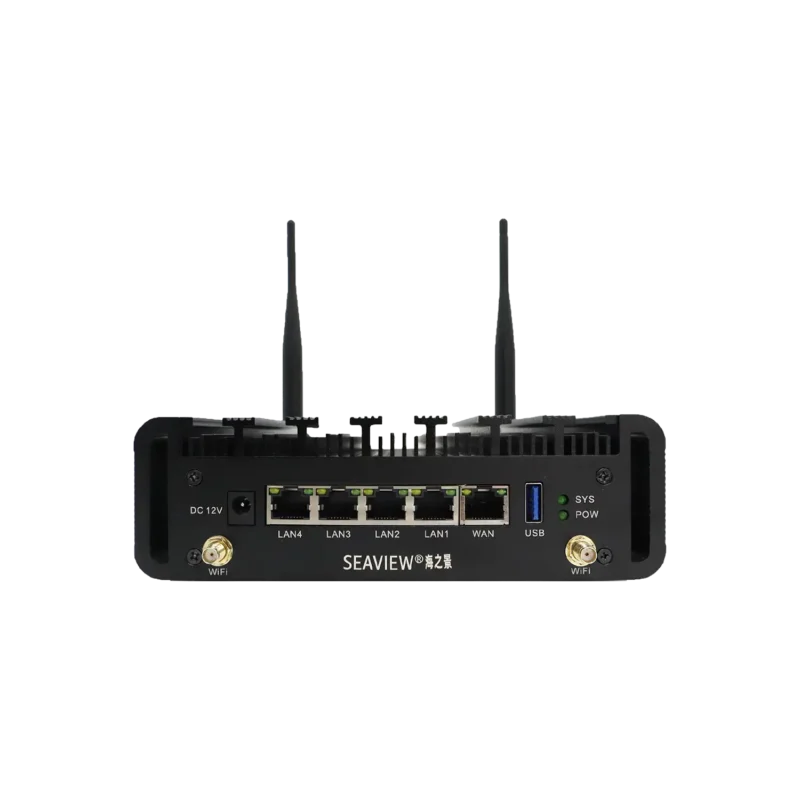
Reliability also extends to connectivity. While a traditional gateway has one WAN port, an industrial gateway often features dual-SIM failover. If the wired Ethernet fails, it immediately switches to 5G; if the primary 5G carrier drops, it switches to a secondary carrier. This level of redundancy is standard in OT but “overkill” for typical IT applications.
Summary
Choosing between an industrial and a traditional gateway is a matter of calculating the “Cost of Failure.” If your application involves a controlled environment with standard IT protocols, a traditional gateway may suffice.
However, if your project involves high-stakes manufacturing, outdoor deployments, or the need to integrate legacy machine data with modern AI, the industrial gateway is the only viable choice. The investment in ruggedization, protocol flexibility, and edge intelligence pays for itself by ensuring data integrity and system uptime in the harshest conditions on earth.
FAQ
1. Can I use a traditional router in a factory if I put it in a cooled cabinet?
While possible, it is not recommended. Cabinets can still suffer from vibration and EMI. Furthermore, a traditional router lacks the specialized serial ports and industrial protocol support (Modbus/OPC UA) needed to communicate with PLCs.
2. Why is DIN-rail mounting important for industrial gateways?
DIN-rail is the global standard for mounting equipment inside industrial electrical cabinets. It allows for quick installation and high-density packing of components while ensuring they are securely fastened against mechanical vibration.
3. What is the benefit of a 5G industrial gateway over Wi-Fi?
5G provides lower latency and higher device density capabilities compared to standard Wi-Fi. In massive industrial sites, 5G offers better penetration through metal structures and more reliable “hand-offs” for mobile assets like Automated Guided Vehicles (AGVs).
4. Do industrial gateways support cloud platforms like AWS or Azure?
Yes. Most modern industrial gateways come with pre-integrated SDKs for major cloud providers, allowing them to act as an “Edge Agent” that securely transmits normalized data to the cloud via MQTT or HTTPS.
Reference Sources
Learn more about IEC 62443 Industrial Security Standards from the IEC.
Explore IEEE 802.3 Ethernet Standards for networking technical details.
Review OPC UA Specifications for industrial interoperability.
Check MIL-STD-810G Environmental Testing for ruggedness.