
IoT Gateway Explained: Bridging Industrial Data

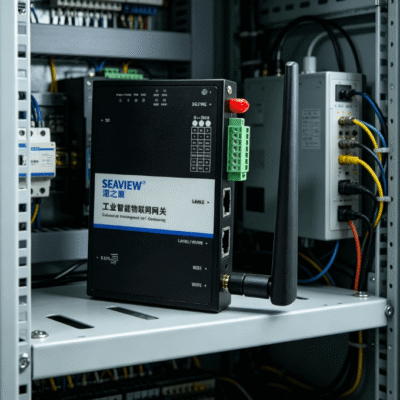
In the modern landscape of the Industrial Internet of Things (IIoT), data is the most valuable currency. However, raw data from factory floors often resides in isolated silos or uses legacy protocols that cannot communicate with the cloud. This is where an iot gateway explained as a central hub becomes essential for digital transformation. It acts as a critical bridge that translates, processes, and secures data moving between physical sensors and high-level management systems.
Industrial environments rely on a mix of old and new technology. Traditional machinery might use Serial RS232 or RS485 connections, while modern sensors utilize wireless Zigbee or LoRaWAN protocols. Without a central translator, these devices remain disconnected from the enterprise network. The iot gateway explained in this context serves as a universal translator that harmonizes these diverse languages into a single format like MQTT or HTTP.
Beyond simple translation, these devices provide a layer of local intelligence known as edge computing. By processing data at the source, a gateway reduces the volume of information sent to the cloud, saving bandwidth and lowering latency. This capability allows for real-time decision-making, such as triggering an emergency shut-off before a system fails. As factories move toward automation, the role of the gateway shifts from a passive transmitter to an active controller.
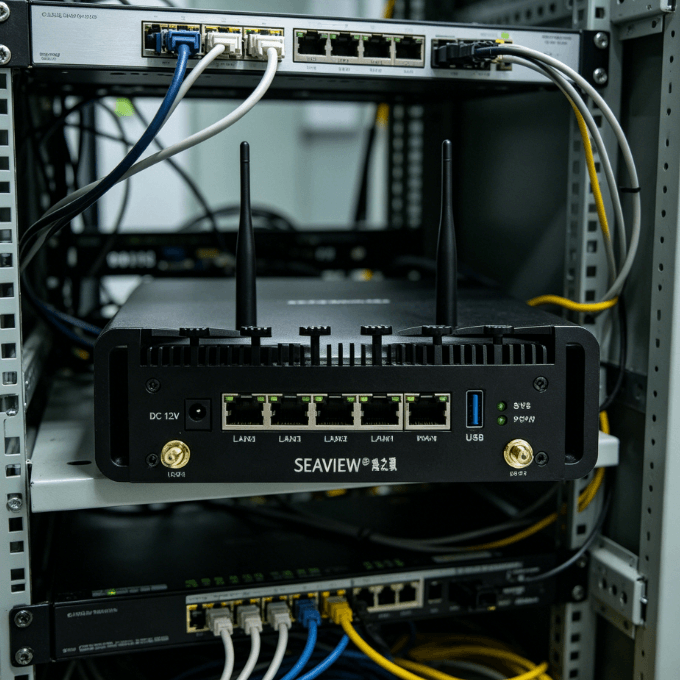
What Is an IoT Gateway and How Does It Function?
An iot gateway explained simply is a physical device or software program that serves as the connection point between controllers and the cloud. It manages all data traffic, performing critical tasks such as data protocol conversion and encryption. In an industrial setting, it often connects to Programmable Logic Controllers (PLCs) and sends their operational status to a centralized dashboard.
The functional cycle begins with data acquisition from various sensors and actuators. The gateway collects signals ranging from temperature readings to vibration patterns. Once gathered, the device filters the noise, ensuring only relevant information proceeds to the next stage. This pre-processing is vital for maintaining network efficiency in large-scale deployments.
The gateway then performs protocol conversion to ensure compatibility. It might take Modbus data from a power meter and convert it into JSON format for a cloud-based analytics platform. Finally, it establishes a secure outbound connection via Ethernet, Wi-Fi, or 4G/5G cellular networks. This multi-step process ensures that sensitive industrial data reaches its destination intact and readable.
| Feature | Description | Industrial Benefit |
| Protocol Conversion | Translates Modbus, CANbus, or OPC UA to MQTT. | Integrates legacy machines with modern software. |
| Data Filtering | Removes redundant or insignificant data points. | Reduces cloud storage costs by up to 60%. |
| Security Encryption | Uses SSL/TLS and hardware-based security chips. | Protects critical infrastructure from cyber threats. |
| Edge Computing | Local logic execution and data storage. | Enables millisecond-level response times. |
Why Edge Computing Is Essential for Modern Gateways
Edge computing is a defining feature of advanced hardware in the iot gateway explained framework. Instead of sending every bit of raw sensor data to a remote server, the gateway analyzes it locally. Studies show that edge processing can reduce network traffic by nearly 70%, which is crucial for remote sites with limited connectivity. This local processing ensures that critical alerts are handled instantly without waiting for a cloud handshake.
Furthermore, edge computing enhances system reliability during network outages. If the internet connection fails, an intelligent gateway can store data locally and sync it later. It can also continue to run automated scripts to keep the production line moving safely. This “local autonomy” prevents expensive downtime and ensures continuous data logging for compliance purposes.
Modern gateways often incorporate AI acceleration to perform complex tasks at the edge. High-performance models can run machine learning models to detect anomalies in equipment sound or thermal images. By identifying potential failures days before they occur, these systems move from reactive maintenance to proactive optimization. This shift significantly increases the lifespan of industrial assets.
Technical Performance Metrics in Industrial Deployments
When deploying these systems, performance metrics determine the overall efficiency of the network. A standard gateway should handle at least 1,000 data points per second with less than 50ms latency. In high-stakes environments like power grids, these devices must maintain a 99.99% uptime to prevent data loss. Security is equally paramount, with hardware-level TPM chips ensuring that encryption keys remain protected from physical tampering.
| Requirement | Standard Specification | Why It Matters |
| Temperature Range | -40°C to +75°C (Min) | Ensures reliability in unconditioned factory floors. |
| Cellular Support | 4G LTE Cat 4 or 5G Sub-6GHz | Provides high-speed backhaul for remote monitoring. |
| Processor Power | Quad-core ARM or dedicated AI NPU | Supports complex edge analytics and AI models. |
| OS Compatibility | Linux, OpenWrt, or HarmonyOS | Determines software flexibility and security patches. |
Identifying the Ideal Gateway Solutions for Your Facility
Determining the best fit for your infrastructure depends on your data volume and intelligence requirements. If your facility requires high-speed connectivity with low latency across vast areas, utilizing 4G/5G edge computing gateways is often the preferred choice for robust performance. These devices provide the bandwidth necessary for high-definition video monitoring or high-frequency sensor arrays. They are designed for environments where traditional wired internet is unavailable as a primary source.
For operations focusing on predictive maintenance and automated quality control, integrating AI artificial intelligence gateways offers the necessary computational overhead. These units feature dedicated neural processing units that can handle visual inspection tasks or complex vibration analysis without external server support. This is critical for manufacturers looking to reduce defect rates through real-time automated oversight and deep learning models at the source.
If your ecosystem emphasizes seamless smart integration and distributed security across multiple nodes, HarmonyOS smart gateways provide a unique advantage in device collaboration. These devices allow for better cross-device synergy and simplified management within a unified software environment. When evaluating these options, consider how much data you need to process locally versus what must be stored in the cloud. Choosing a gateway with the right balance of processing power and connectivity ensures a future-proof investment.
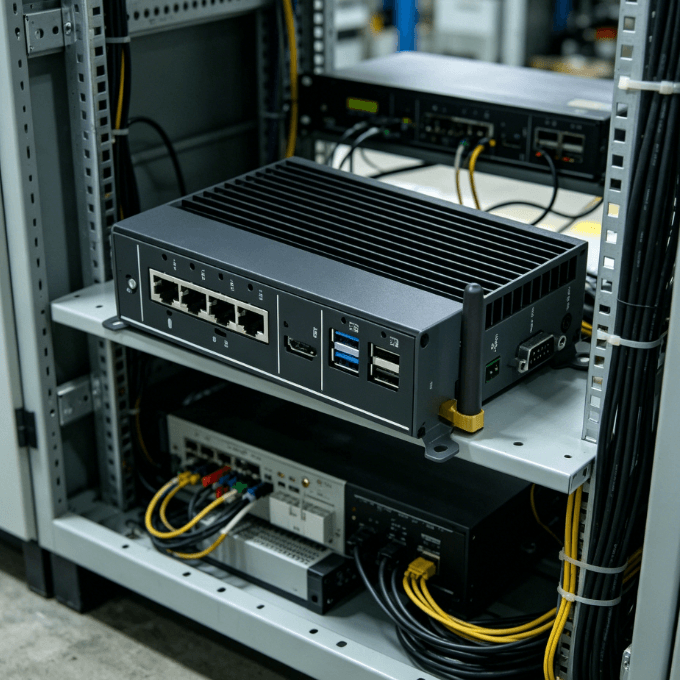
Summary
The iot gateway explained in this guide serves as the backbone of industrial connectivity by bridging the gap between local hardware and cloud intelligence. By providing protocol translation, security, and edge computing, it transforms raw data into actionable insights. Selecting a gateway with robust environmental protection and sufficient processing power is key to long-term operational success.
FAQ
1. What is the primary function of an IoT gateway?
An IoT gateway primarily acts as a bridge that translates local industrial protocols into cloud-compatible formats while securing data transmission.
It facilitates communication between different devices by converting various languages like Modbus or Zigbee into standardized internet protocols.
2. Can an IoT gateway work without an internet connection?
Yes, advanced gateways can perform local edge computing and data storage, allowing industrial processes to continue even if the cloud connection is lost.
They store the gathered information locally and synchronize it with the central server once the network connection is restored.
3. How does an IoT gateway improve industrial security?
It acts as a protective barrier or firewall between the open internet and private industrial networks, using encryption and authentication to prevent unauthorized access.
By centralizing data flow, it reduces the attack surface and ensures that all outgoing data is properly encrypted using SSL/TLS standards.
4. What is the difference between a router and an IoT gateway?
A router simply moves data packets between networks, whereas a gateway translates different communication protocols and often processes data locally before sending it.
The gateway includes specialized hardware for industrial interfaces and software for data filtering that a standard router lacks.
5. Does every IIoT system need a gateway?
Most industrial systems require a gateway to consolidate data from multiple sensors and to bridge the gap between legacy hardware and modern software platforms.
It is particularly necessary when devices use different communication standards or when local data processing is required to reduce cloud costs.
Reference Sources
IEEE Xplore – Architecture and Security Challenges in Industrial IoT Gateways