
4G vs 5G Industrial Routers: Choosing the Right Connectivity

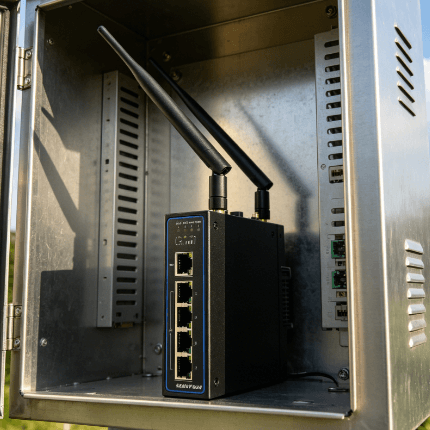
Selecting the right industrial router is no longer just about speed. For engineers and project managers, the choice between 4G LTE and 5G New Radio (NR) involves balancing infrastructure longevity, power budgets, and real-time data requirements. While 5G dominates the headlines, 4G remains the backbone of global industrial IoT (IIoT).
Understanding the technical divergence between these two standards is critical for maintaining uptime in harsh environments. This guide breaks down the performance metrics and deployment logic to help you determine which hardware suits your next project.
Technical Performance: Beyond Theoretical Speeds
In industrial settings, theoretical “peak speeds” rarely reflect reality. Engineers focus on “deterministic connectivity”—the ability of a router to deliver data within a specific timeframe consistently.
4G LTE (specifically Cat 4 and Cat 6) offers reliable throughput for most SCADA and remote monitoring applications. However, 5G introduces a paradigm shift in how data packets are prioritized.
| Feature | 4G LTE Industrial Router | 5G Industrial Router |
| Latency | 30ms – 60ms | 1ms – 20ms (URLLC) |
| Connection Density | ~10k devices per km² | ~1M devices per km² |
| Typical Throughput | 50 Mbps – 300 Mbps | 1 Gbps – 10 Gbps |
| Network Slicing | Not Supported | Supported (Private VPC) |
| Power Efficiency | High (Optimized for IoT) | Moderate (Higher processing overhead) |
5G’s primary advantage in manufacturing is Ultra-Reliable Low Latency Communications (URLLC). This allows for near-instantaneous feedback loops in motion control and robotics that 4G simply cannot support due to inherent signaling overhead.
Why 4G LTE Remains Relevant for Industrial Deployment
Despite the rollout of 5G, 4G LTE industrial routers are not obsolete. In many geographical regions and specific technical use cases, 4G is the more pragmatic choice.
1. Mature Infrastructure and Signal Penetration
4G operates on lower frequency bands compared to 5G mmWave. Lower frequencies provide better penetration through reinforced concrete, steel gantries, and underground facilities. For a remote pump station or a warehouse with dense metal shelving, a 4G router often provides a more stable link without requiring extensive signal boosters.
2. Cost Efficiency and ROI
The bill of materials (BOM) for a 5G industrial router is significantly higher due to complex antenna arrays and advanced chipsets. If your application only requires sending a few kilobytes of telemetry data every hour—such as tank level monitoring or environmental sensing—the premium for 5G offers zero functional return.
3. Power Consumption in Remote Sites
In off-grid applications powered by solar or battery, power draw is a critical constraint. 4G modules generally consume less energy during idle and active states compared to first and second-generation 5G modems.
When to Prioritize 5G Industrial Routers
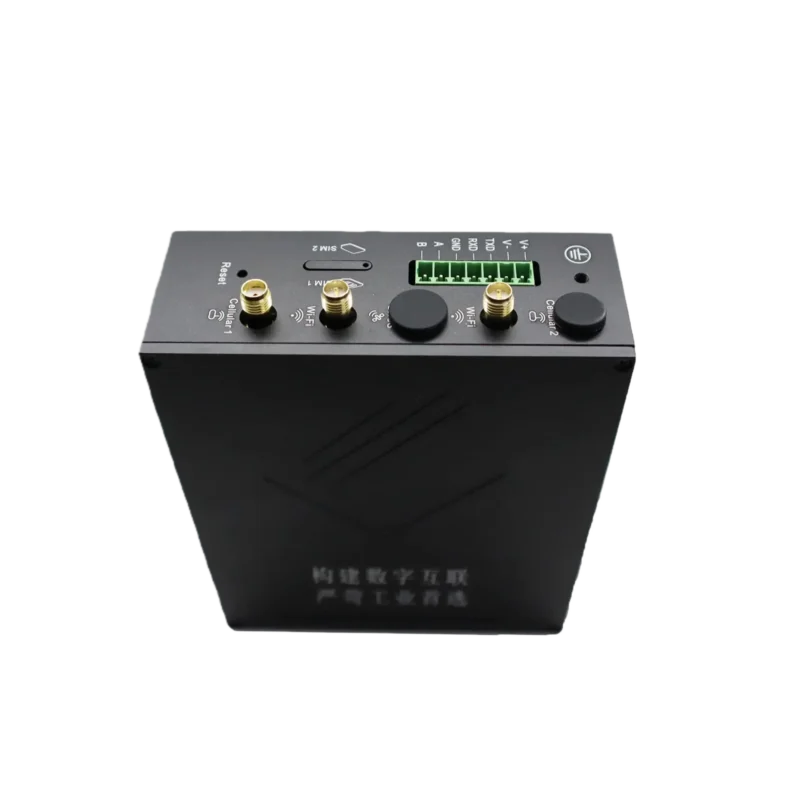
Transitioning to 5G is essential when the application moves from “monitoring” to “active control.” Industrial environments adopting Industry 4.0 protocols require the massive machine-type communications (mMTC) capabilities of 5G.
High-Definition Vision Systems
Modern quality inspection uses 4K cameras and AI-driven edge processing. Uploading high-resolution video streams for real-time analysis requires the massive uplink bandwidth that only 5G NR can provide.
Autonomous Mobile Robots (AMRs) and AGVs
In a smart factory, AGVs must communicate with a central fleet management system with sub-10ms latency. A 4G network often suffers from “jitter” (variable latency), which can cause robots to stop abruptly for safety reasons. 5G ensures smooth, continuous movement.
Private Network Slicing
One of the most powerful features of 5G for OEMs is network slicing. This allows a factory to dedicate a specific “slice” of the bandwidth exclusively to critical mission data, ensuring that guest Wi-Fi or general office traffic never interferes with production line communications.
Matching Hardware to Industrial Environments
Whether choosing 4G or 5G, the “Industrial” prefix matters more than the cellular generation. Consumer-grade routers fail in manufacturing settings due to thermal stress and vibration.
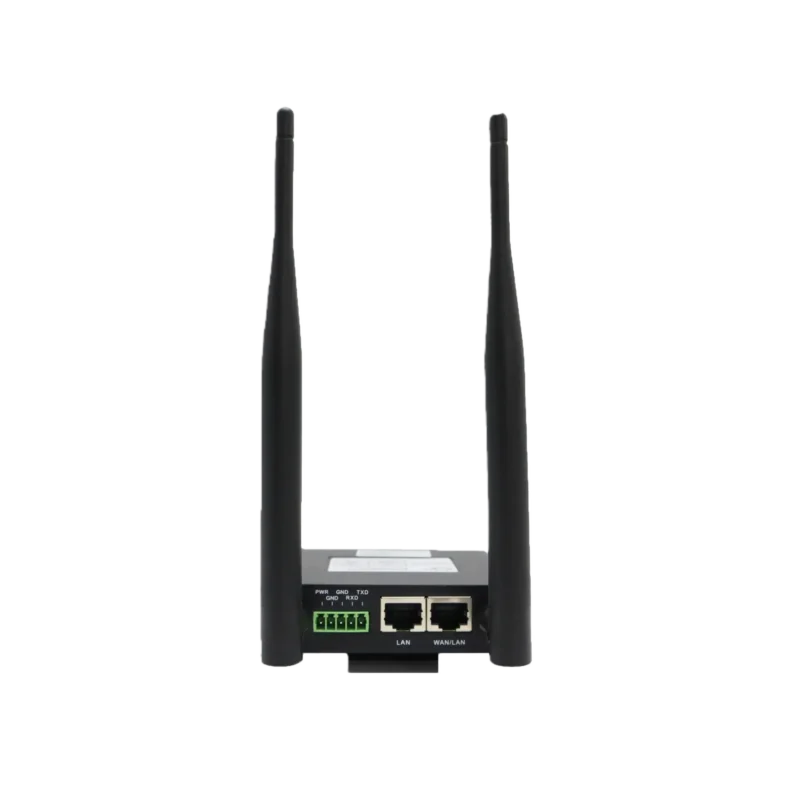
When evaluating routers, such as those found in the Seaview Industry Digital Connectivity range, look for these industrial-grade specifications:
- Ruggedized Enclosures: IP30 to IP67 ratings for dust and moisture protection.
- Extended Temperature Ranges: Capability to operate from -40°C to +75°C.
- EMC Protection: Resistance to electromagnetic interference common near high-voltage motors.
- Dual-SIM Failover: The ability to switch between carriers automatically to maintain 99.99% uptime.
- DIN-Rail Mounting: Standardized fitting for industrial electrical cabinets.
For most project managers, a “hybrid” approach is becoming common. 4G is used for legacy equipment and wide-area sensor arrays, while 5G is reserved for new, high-bandwidth production cells.
The Decision Matrix: 4G or 5G?
To determine the best fit for your facility, answer the following technical questions:
- What is the required data payload? If >100GB per month per device, consider 5G.
- Is the device mobile or stationary? Rapidly moving robots benefit from 5G’s superior handoff protocols.
- What is the expected lifecycle? If the equipment must remain in the field for 10+ years, 5G provides better future-proofing against 4G spectrum re-farming.
- Is local 5G infrastructure available? Many rural or underground sites still lack 5G coverage, making 4G the only viable option.
By aligning cellular technology with specific operational requirements, manufacturers can avoid over-engineering their connectivity while ensuring their infrastructure is ready for the demands of modern industrial automation.
FAQ
Q: Can a 5G industrial router work in an area with only 4G coverage?
A: Yes. Almost all industrial 5G routers are “backwards compatible.” They will automatically fall back to 4G LTE (or even 3G in some regions) if a 5G signal is unavailable, ensuring continuous data transmission.
Q: Is 5G more secure than 4G for industrial data?
A: 5G introduces enhanced encryption and mutual authentication between the device and the network. However, for industrial security, the router’s internal firewall, VPN support (OpenVPN, IPsec), and “Zero Trust” capabilities are more important than the cellular generation itself.
Q: How does 5G handle signal interference in a factory compared to 4G?
A: 5G uses advanced beamforming technology to direct signals specifically toward the router, which can help mitigate some interference. However, high-frequency 5G signals are more easily blocked by physical obstacles like metal walls, requiring more access points (small cells) than a 4G setup.
Q: Do I need a special SIM card for a 5G industrial router?
A: While some carriers allow standard 4G SIMs to access 5G networks, many industrial 5G features (like private network access) require a 5G-specific USIM that supports the latest 3GPP security standards.
Reference Sources
- 3GPP (3rd Generation Partnership Project): Technical specifications for 5G NR (Release 16/17) and LTE standards.
- IEEE Xplore: Research on URLLC and mMTC in industrial automation environments.
- GSMA: Reports on the global deployment of 5G for Industry 4.0 and IoT.
- NIST (National Institute of Standards and Technology): Guidelines on Industrial Wireless Systems and signal propagation.