
Why More Factories Are Deploying 5G Industrial Gateways for IIoT

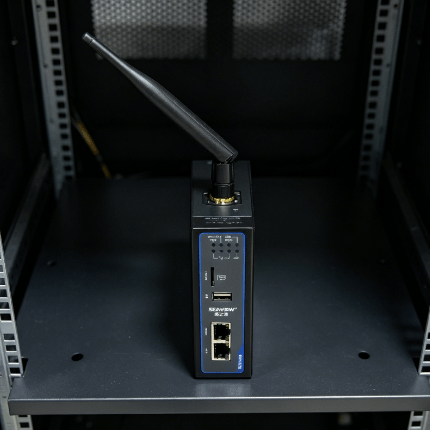
The shift toward Industry 4.0 is no longer a theoretical roadmap; it is a practical migration happening on factory floors globally. Central to this transition is the deployment of 5G industrial gateways. Unlike standard consumer routers or even traditional 4G LTE hardware, these specialized devices act as the nervous system for modern manufacturing, bridging the gap between high-speed cellular networks and legacy industrial protocols.
As manufacturing environments become more data-dense, the limitations of Wi-Fi—such as signal interference in metal-heavy environments and handoff latency for mobile assets—have become clear bottlenecks. 5G technology, specifically when delivered through ruggedized industrial gateways, provides the reliability and bandwidth required for mission-critical automation.
Why 5G Industrial Gateways are Replacing Traditional Connectivity
For decades, factories relied on Ethernet for stability and Wi-Fi for flexibility. However, the surge in Industrial IoT (IIoT) devices has saturated these networks. Managers are now turning to 5G gateways to solve three primary technical challenges: latency, device density, and mobility.
1. Ultra-Reliable Low Latency Communication (URLLC)
In a high-speed assembly line, a millisecond delay in data transmission can result in a synchronized motion error or a safety shutdown. 5G gateways support URLLC, reducing end-to-end latency to under 10ms. This is essential for:
- Synchronized Robotics: Ensuring multiple robotic arms work in perfect tandem without mechanical collision.
- Haptic Feedback: Allowing remote specialists to operate machinery with real-time sensory data.
2. Massive Machine-Type Communications (mMTC)
Standard Wi-Fi access points often struggle when more than 50-100 devices are connected. A single 5G cell can support up to 1 million devices per square kilometer. For a factory deploying thousands of vibration sensors, temperature probes, and smart meters, a 5G industrial gateway provides a stable uplink that doesn’t degrade as the device count increases.
3. Seamless Mobility for AGVs and AMRs
Automated Guided Vehicles (AGVs) often experience “drop zones” when moving between Wi-Fi access points. 5G offers superior handover logic, ensuring that mobile assets remain connected while navigating large-scale logistics centers or sprawling manufacturing plants.
Key Technical Comparison: 4G vs. 5G Industrial Gateways
| Feature | 4G Industrial Gateway | 5G Industrial Gateway | Industrial Benefit |
| Peak Data Rate | Up to 150 Mbps | Up to 10 Gbps | Real-time 4K video inspection |
| Latency | 30ms – 70ms | < 10ms | Critical for motion control |
| Device Density | ~2,000 per km² | ~1,000,000 per km² | Massive IIoT sensor arrays |
| Network Slicing | Not supported | Supported | Dedicated bandwidth for VIP data |
| Edge Computing | Basic | Advanced (AI-ready) | Faster local decision-making |
The Integration of Edge Computing in 5G Gateways
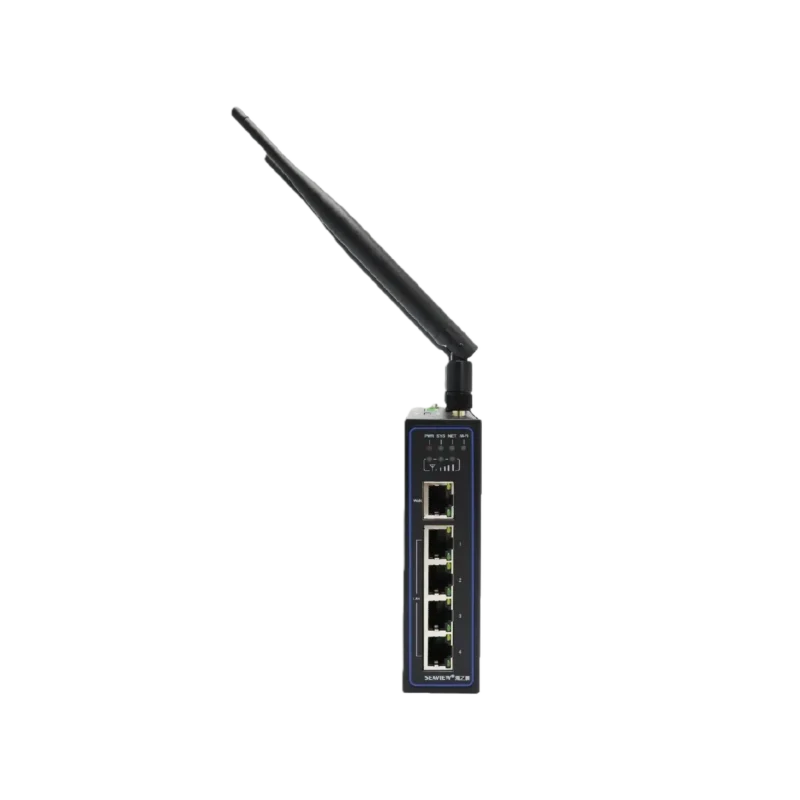
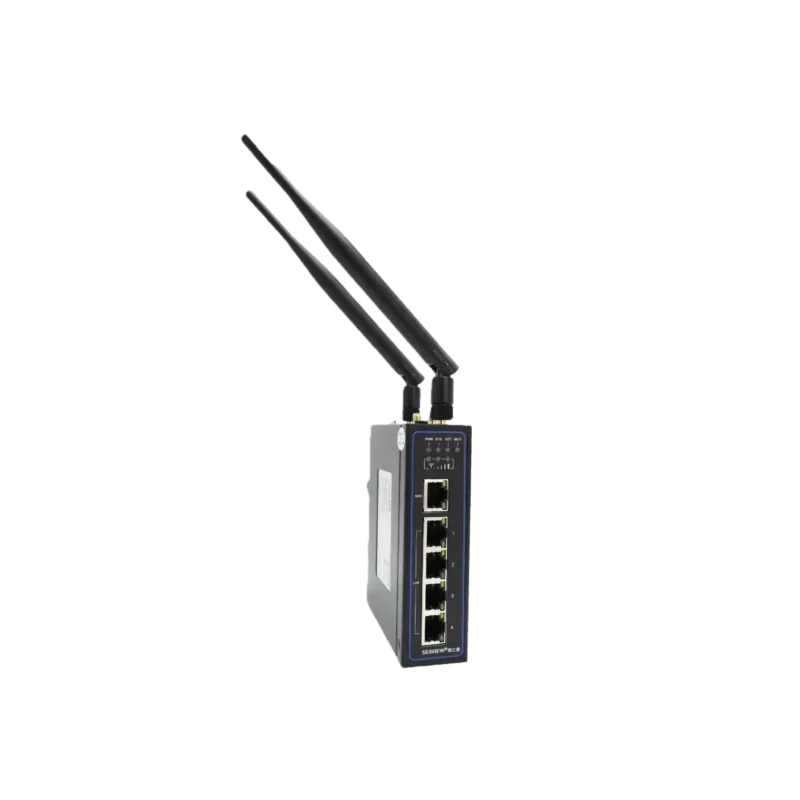
One of the most compelling reasons for the rapid adoption of hardware like Seaview Industry’s 5G Edge Computing Gateways is the convergence of connectivity and local processing.
Factories generate terabytes of raw data daily. Sending all this data to the cloud for analysis is expensive and slow. Modern 5G gateways are equipped with powerful CPUs and localized storage, allowing them to:
- Filter Data: Only transmit “out-of-tolerance” data to the cloud, saving bandwidth.
- Local Logic: Execute Python or C++ scripts to trigger local alarms if a sensor detects an anomaly.
- Protocol Translation: Convert Modbus RTU/TCP, OPC UA, and MQTT data into a unified format for ERP or MES systems.
By processing data at the “edge” of the network, factories reduce their reliance on external cloud stability and enhance data security.
Industrial-Grade Hardware: Built for the Floor, Not the Office
A critical factor in the deployment of 5G gateways is the hardware’s physical durability. Consumer-grade 5G routers fail in industrial settings due to heat, vibration, and electromagnetic interference (EMI).
When evaluating a 5G industrial gateway for deployment, engineers prioritize these “Ruggedness” specifications:
- Temperature Range: Ability to operate from -40°C to +75°C.
- Power Input: Wide voltage support (e.g., 9V to 36V DC) with terminal block connectors for industrial power rails.
- Mounting: DIN-rail or wall-mount options for standard electrical cabinets.
- EMC Protection: Level 3 or 4 electromagnetic compatibility to resist interference from high-voltage motors and welders.
Real-World Use Cases Driving Deployment
Predictive Maintenance
By connecting high-frequency vibration sensors to a 5G gateway, factories can monitor the “health” of CNC spindles in real-time. The high bandwidth of 5G allows for the transmission of rich waveform data that 4G simply cannot handle.
Vision-Based Quality Inspection
High-resolution cameras on production lines can identify microscopic defects in PCB boards. A 5G gateway provides the necessary “fat pipe” to upload these images to a local server or cloud-based AI model for instant pass/fail validation.
Remote Maintenance and AR Support
Using Augmented Reality (AR) headsets, on-site technicians can receive real-time guidance from off-site engineers. This requires high-bandwidth, low-latency video streaming, which is the hallmark of 5G industrial connectivity.
Commercial Evaluation: Selecting the Right Gateway
When moving from a pilot project to full-scale deployment, procurement teams must look beyond just “5G” as a label. The total cost of ownership (TCO) is influenced by the gateway’s ability to integrate with existing infrastructure.
Considerations for OEM and Factory Managers:
- Carrier Compatibility: Does the gateway support global 5G Sub-6GHz bands?
- Failover Logic: Does the device support dual-SIM for carrier redundancy? In industrial settings, 100% uptime is mandatory.
- VPN Support: Secure remote access (OpenVPN, IPsec, L2TP) is essential for protecting factory data from external threats.
- Software Ecosystem: Does it support Docker or custom SDKs for proprietary edge applications?
For companies looking to future-proof their connectivity, exploring specialized Digital Connectivity solutions ensures that the hardware selected today can handle the software demands of tomorrow.
FAQ: 5G Industrial Gateways
Q: Can 5G industrial gateways work with my existing 4G SIM cards?
A: Yes, 5G gateways are backwards compatible with 4G LTE networks. They will automatically switch to the strongest available signal, providing a “future-proof” path as 5G coverage expands.
Q: How do 5G gateways handle security in a factory setting?
A: Industrial-grade gateways include multi-layer security features, including hardware firewalls, encrypted VPN tunnels, and MAC address filtering. Many also support “private 5G” configurations, where data never leaves the factory premises.
Q: Is 5G better than Wi-Fi 6 for industrial automation?
A: While Wi-Fi 6 is excellent for indoor, stationary environments, 5G is superior for wide-area coverage, high-speed mobility (AGVs), and high-density sensor environments where spectrum interference is a concern.
Q: What is the typical lead time for industrial-grade gateways?
A: Lead times vary by manufacturer and customization requirements. Standard ruggedized units often have a 2-4 week lead time, while large-scale OEM orders involving custom firmware may require 8-12 weeks.
Reference Sources
- 3GPP (3rd Generation Partnership Project): Technical specifications for 5G NR (New Radio) and URLLC standards.
- IEEE Xplore: Research on “Edge Computing in Industrial IoT Gateways.”
- Industrial Internet Consortium (IIC): Best practices for IIoT connectivity and security frameworks.
- SGS/UL Certification Standards: Documentation on IP67/IP30 ratings and industrial EMC compliance.